
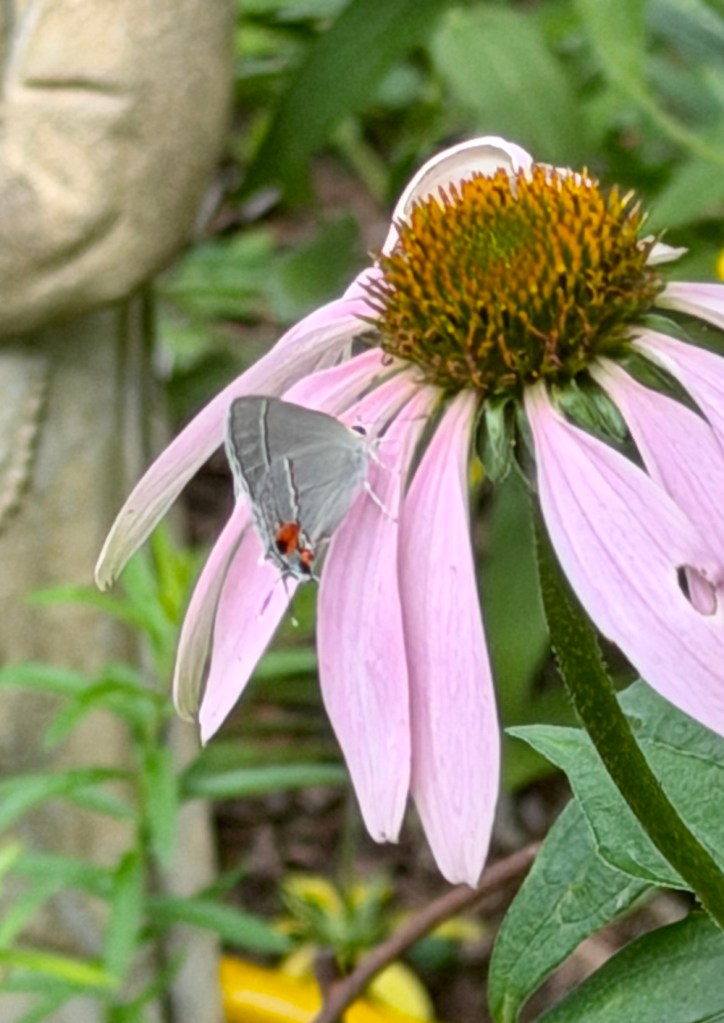
If today’s post were to have a title, it would be “The Good, the Bad, and the Oh! How Sad.” I’ll start with the good. Early yesterday morning I saw this delicate little Gray Hairstreak on the Echinacea purpurea. He spurred me on to look for some other interesting things to photograph on day so hot and humid my dogs even refused to stay outside.
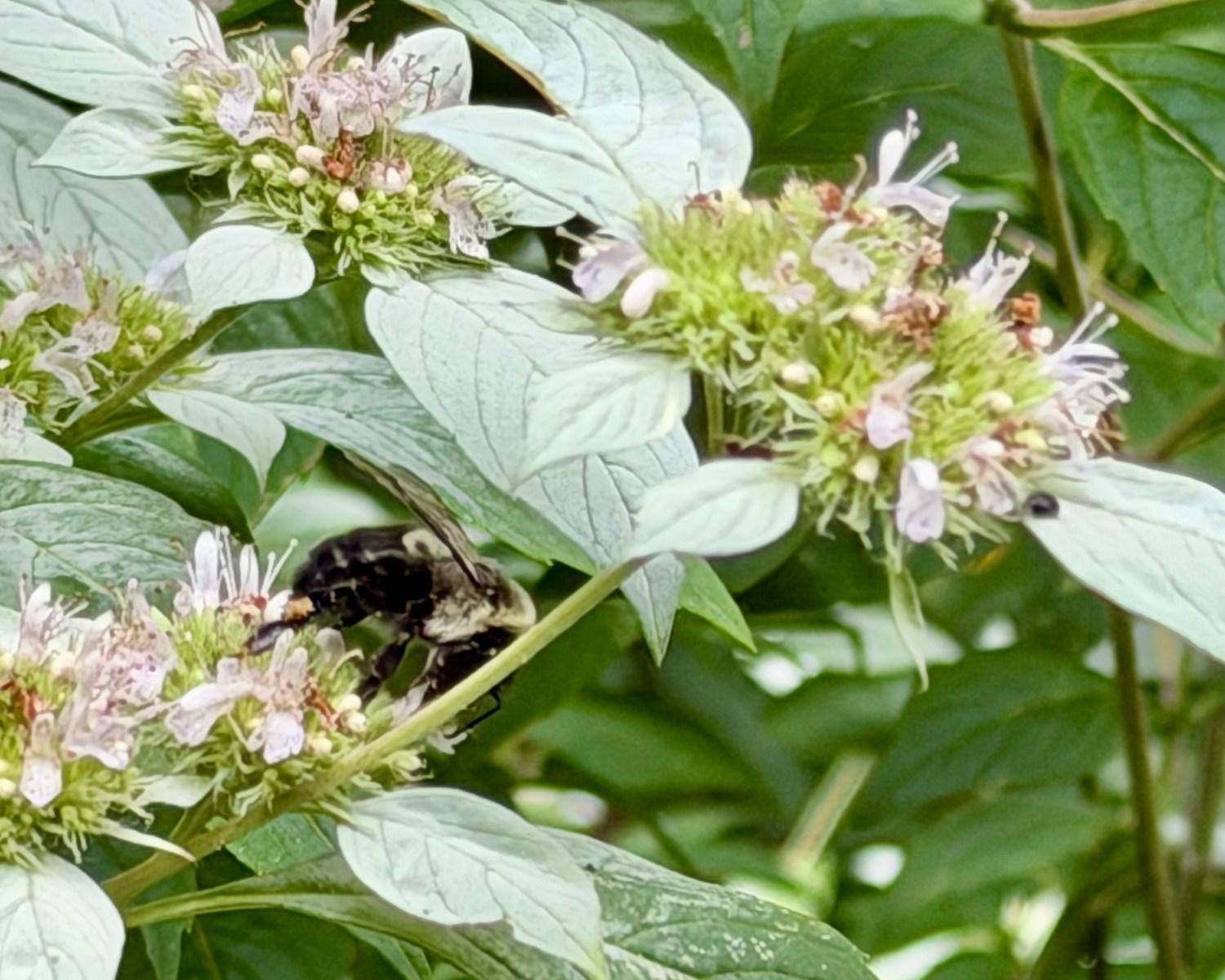
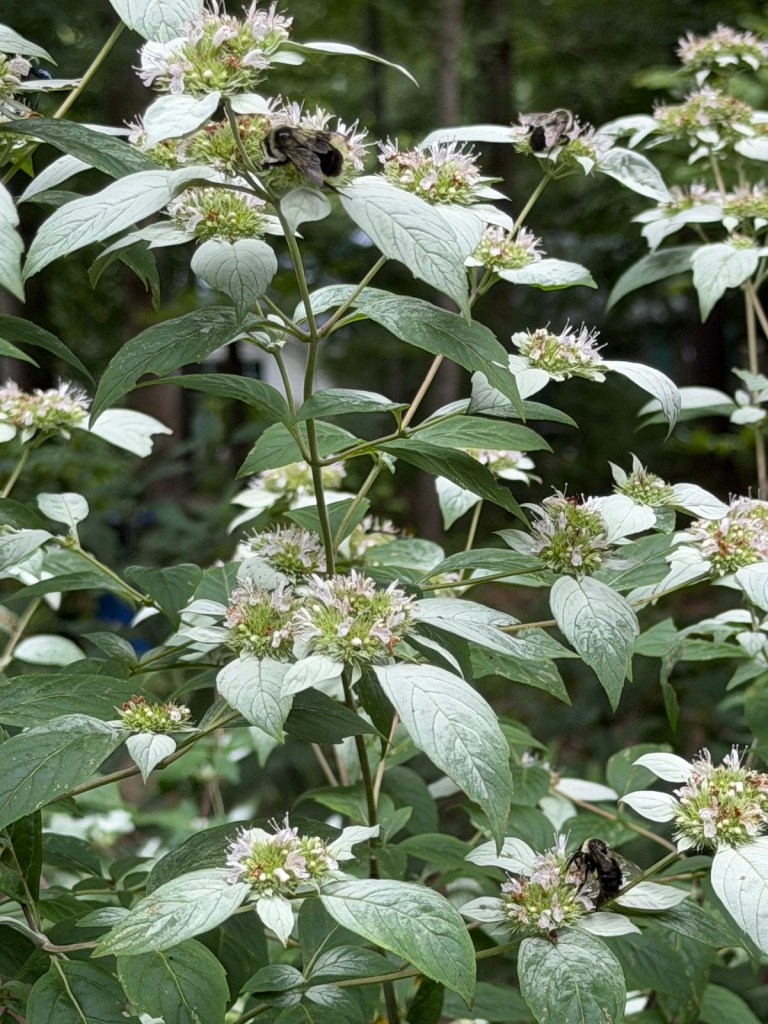
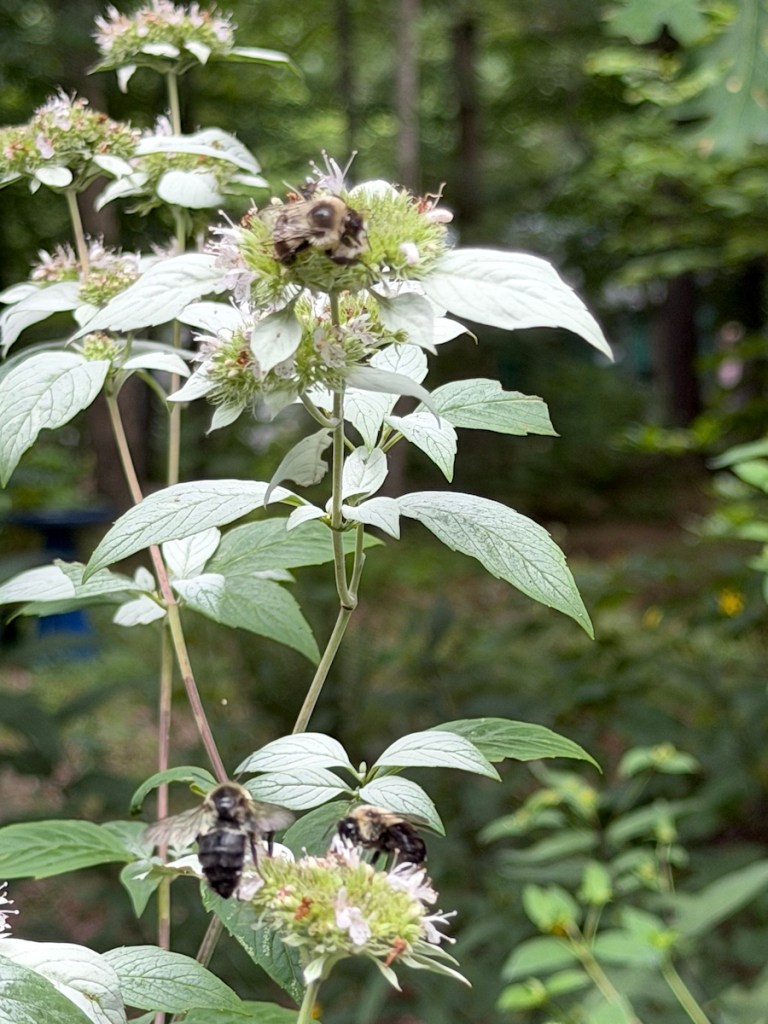
2. There were other flowers to been seen, one of the most vigorous of which right now is Mountain Mint (Pycnanthemum incanum), an herbaceous perennial native that is not just vigorous in blooming, but also in spreading on shallow rhizomes. Pollinators love it! Especially bees, as you can see in the featured photo and in the two below. It has a pleasant minty aroma and is very easy to propagate.
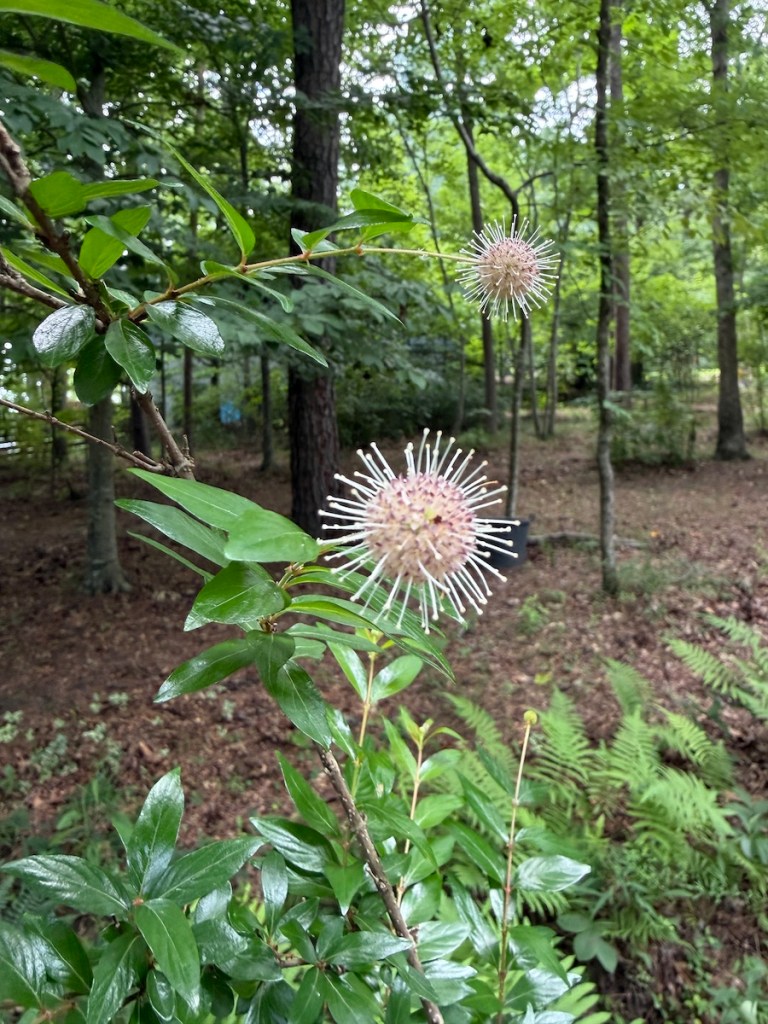
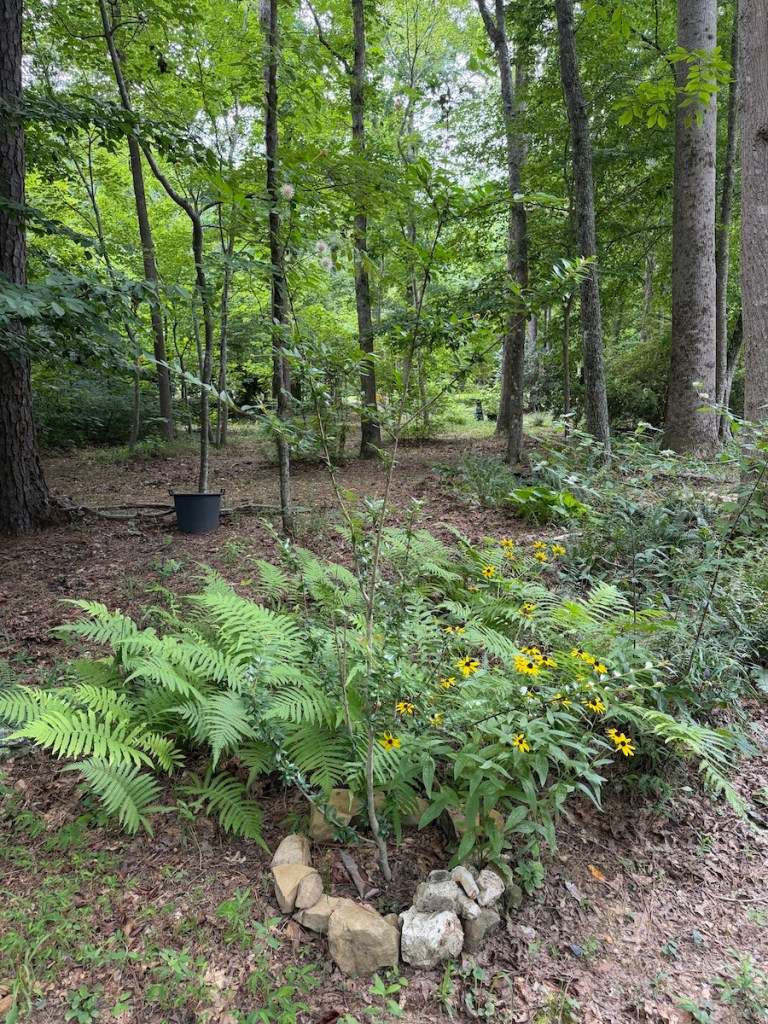
3. Another “good” is the best bloom I’ve had so far on my three-year-old Button Bush (Cephalanthus occidentalis). I know that it does not get enough sun, as the photo on the right makes clear. The ferns, Black-eyed Susans, and a sprig of Mountain Mint all but camouflage the thin Buttonbush, but it is there rising up out of that rock circle. A perceptive eye might even spot three or four buttons seemingly floating in the air like supernatural orbs.
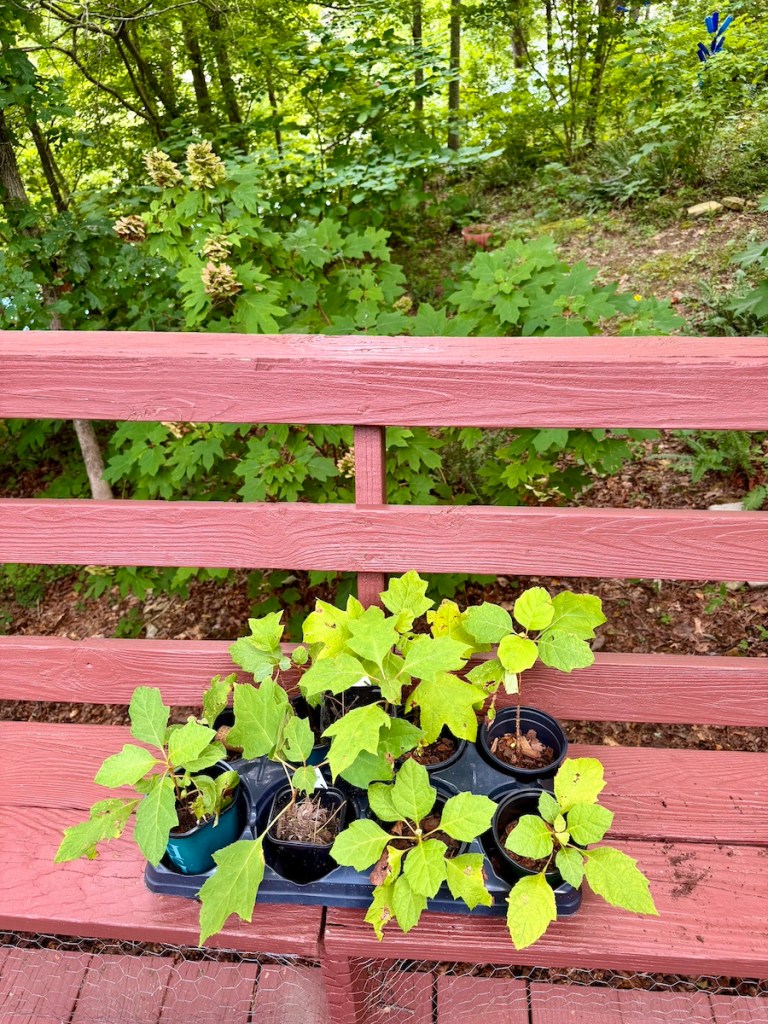
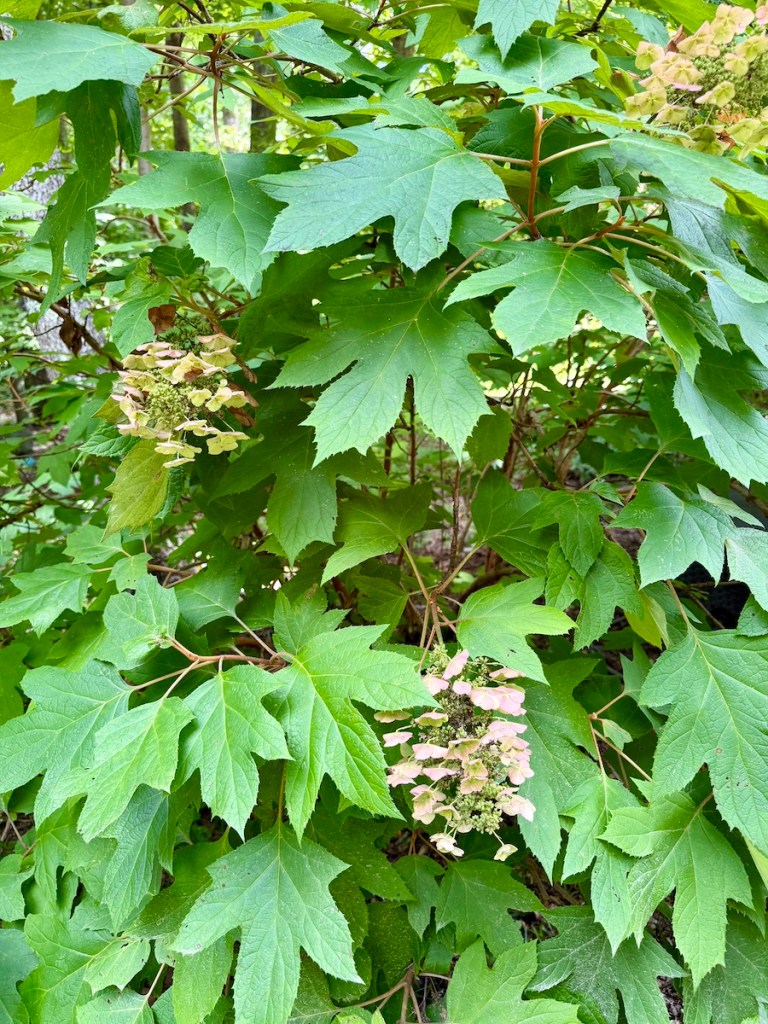
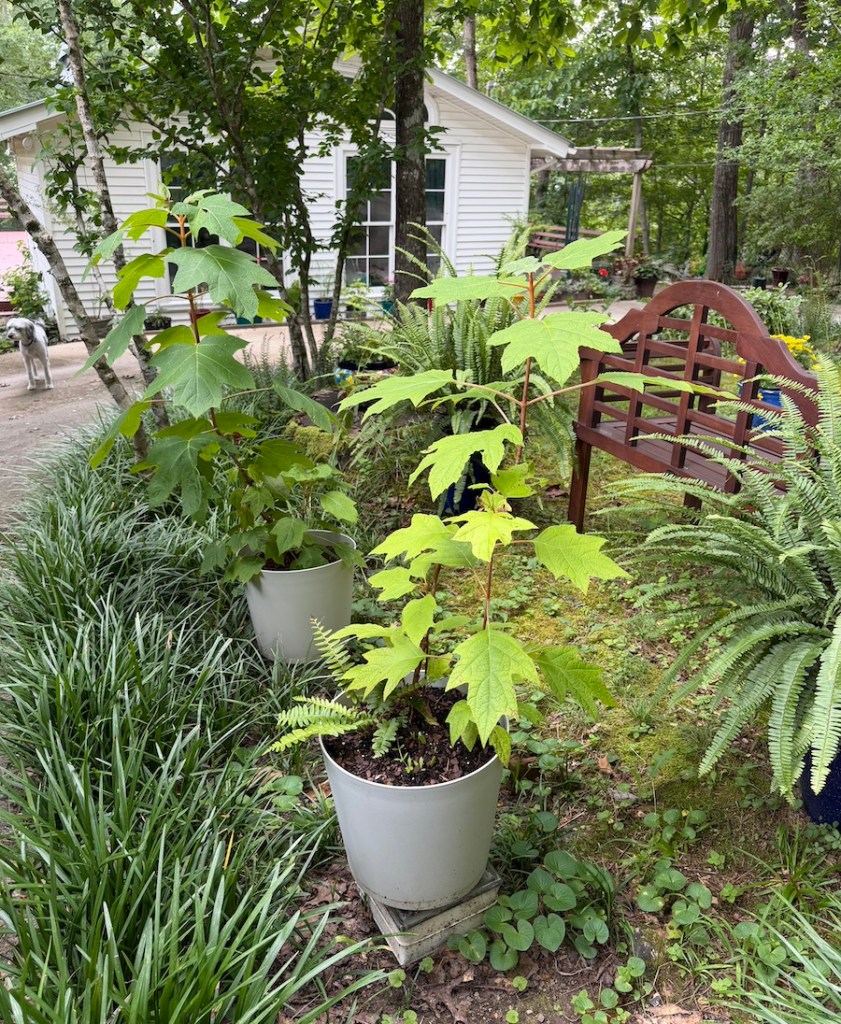
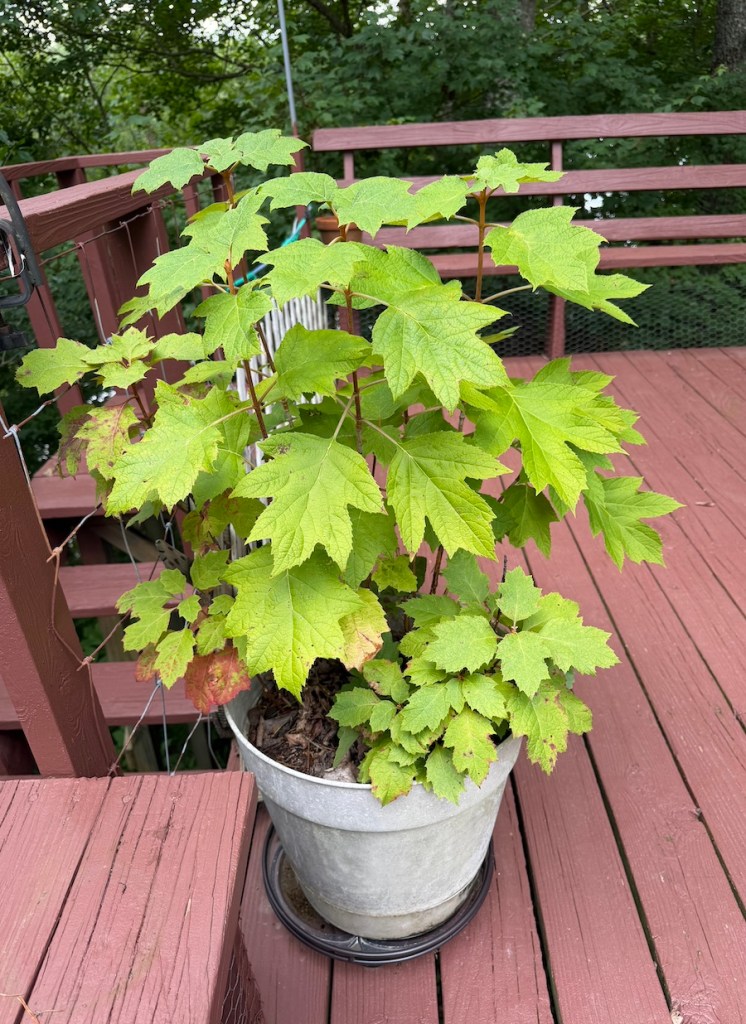
4. Oakleaf Hydrangeas (Hydrangea quercifolia), the State Wildflower of Alabama, come in next. On the left below is a healthy gathering of nine tiny plants in tiny pots. All of these were transplanted early spring from odd places around the garden where they popped up as volunteers. I’m fortunate to have many Oakleaf hydrangeas like the one on the right below growing throughout the garden. They are numerous enough in fact, and spread fast enough, that I can frequently pot up a few to give to friends or to sell at the Blount County Master Gardener plant sale in the spring. That sale is in the future of the nine little potted sprouts on the left assuming they make it through the winter. And, I’m confident that they will. Experience promises that they grow fairly quickly and happily in pots for a while. I have at least seven mid-size plants doing quite well in pots as the second group of photos shows.
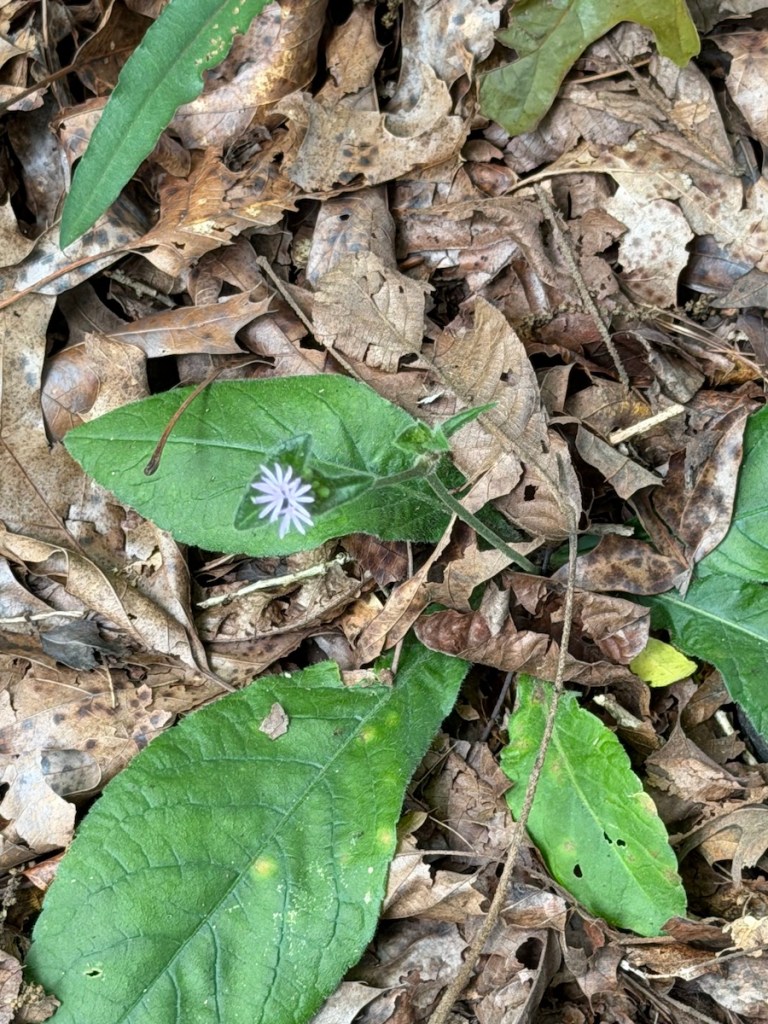
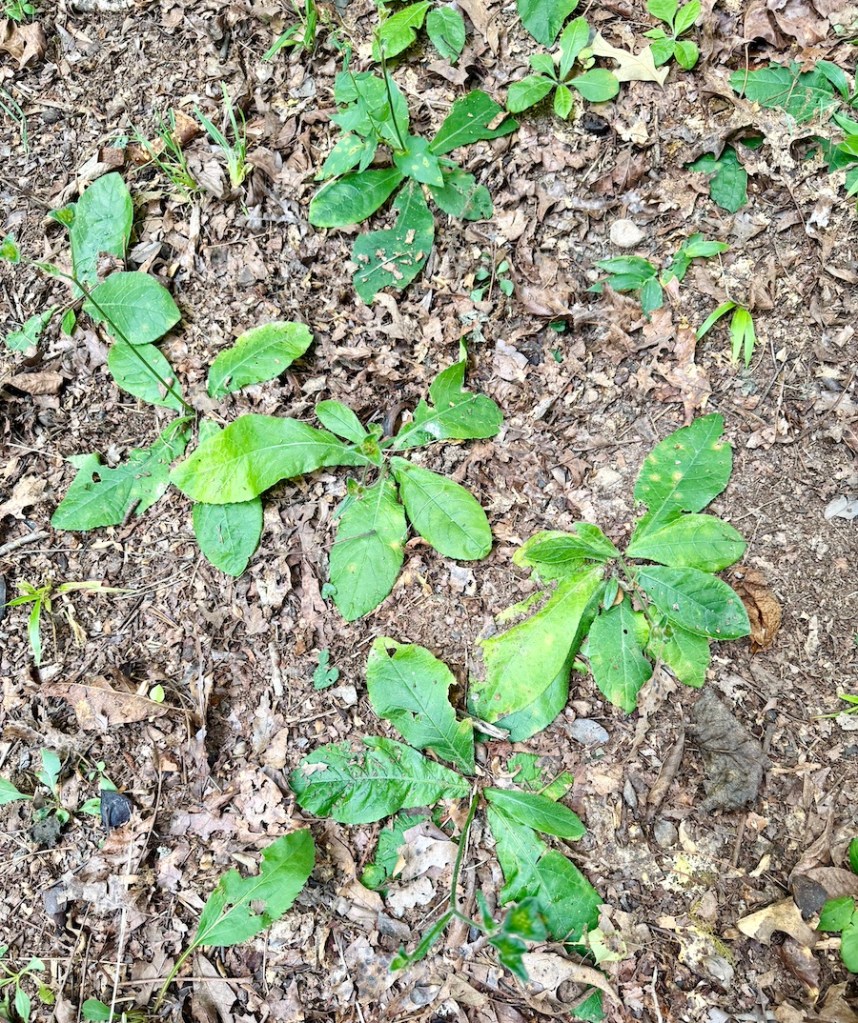
5. Now for the bad: Common Elephant’s Foot. Elephantopus tomentosus, as you might guess, has a large footprint made up of a rosette of flat, large basal leaves. It is a native perennial, herbaceous wildflower that it will suffocate other plants out—and its tiny little flower just doesn’t seem worth waiting for. Unfortunately, the elephants have stampeded throughout the garden this year. I’m working on the roots very deliberately now.
6. And finally the “Oh! how sad.” A few weeks ago this pot held healthy Zinnia seedlings. Then came two rounds of unbelievably hard rain, followed by squirrels and chipmunks. Time to start afresh.

If you’d like to join in this weekly sharing of garden haps and mishaps, visit Jim Stephens’ Garden Ruminations for guidelines. You’ll also find a great post there from Jim and links to gardens around the globe in the comments. In the meantime, beware of squirrels, chipmunks, and elephants’ feet.


The Gray Hairstreak is tiny but that orange spot catches your eye. Good job on the oakleaf hydrangeas. I have had mixed success transplanting them in my yard. My intruder is chamber bitter or gripe weed.
LikeLiked by 1 person
Chamber bitter is my nemesis in Trussville! It is even worse than elephant’s foot.
LikeLiked by 1 person
Really nice, Susan! I love hearing from you and the garden! And you got buttonbush to produce! Mine never did 😦
My Mountain Mint is doing well, too! And the yellow sweetshrub you gave me is doing so well that I plan to transplant its many babies this winter!
The elephant’s foot that I have is Carolina Elephant’s Foot or Leafy Elephantfoot/Elephantopus carolinianus and it makes a nice companion to many of the plants around here. It volunteers of course. I’m not familiar with the one you mention here; i.e., Elephantopus tomentosus!
I’m of your dogs’ opinion of this weather myself! Stay cool! Love you. Deb
LikeLike
Button bush bloom looks like a Covid virus. How did elephant’s foot get its name?
LikeLike
Supposedly the flat rosette of basal leaves look like an elephant’s footprint. I don’t see it, but….
LikeLiked by 1 person
It looks like an elephant stepped on it.
LikeLiked by 1 person