
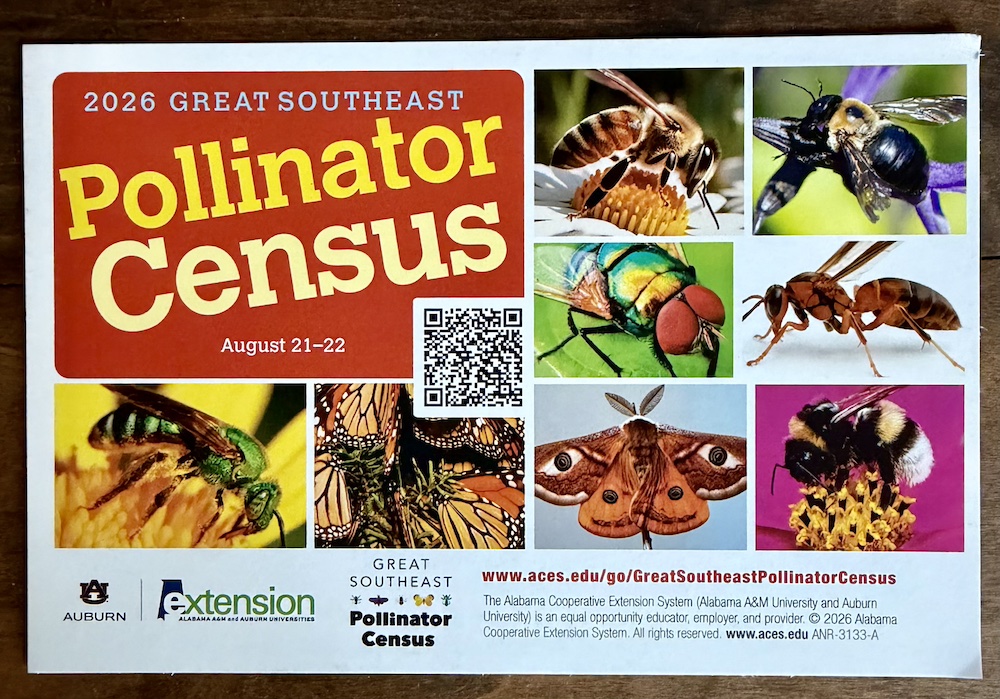
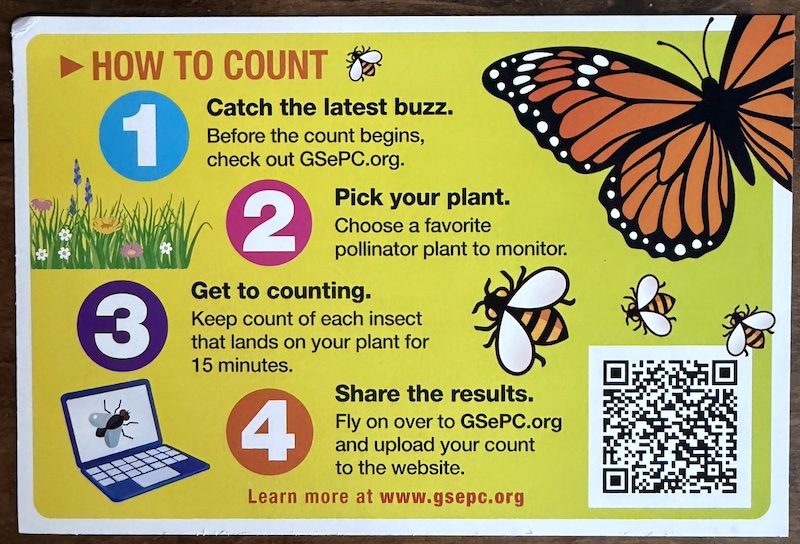
Today’s six come from photo practice for the 2026 Great Southeastern Pollinator Census, a citizen-science project, scheduled for 21-22 August, 2026. Taking part in the census doesn’t require photography, in fact, taking part is really quite easy and doesn’t require much time. It is as simple as the four steps below—and will provide valuable information for gardeners and benefit our understanding of pollinators. Excellent training is available through Extension and conservation programs in all of the Southeastern States. Just check the census home site linked above.
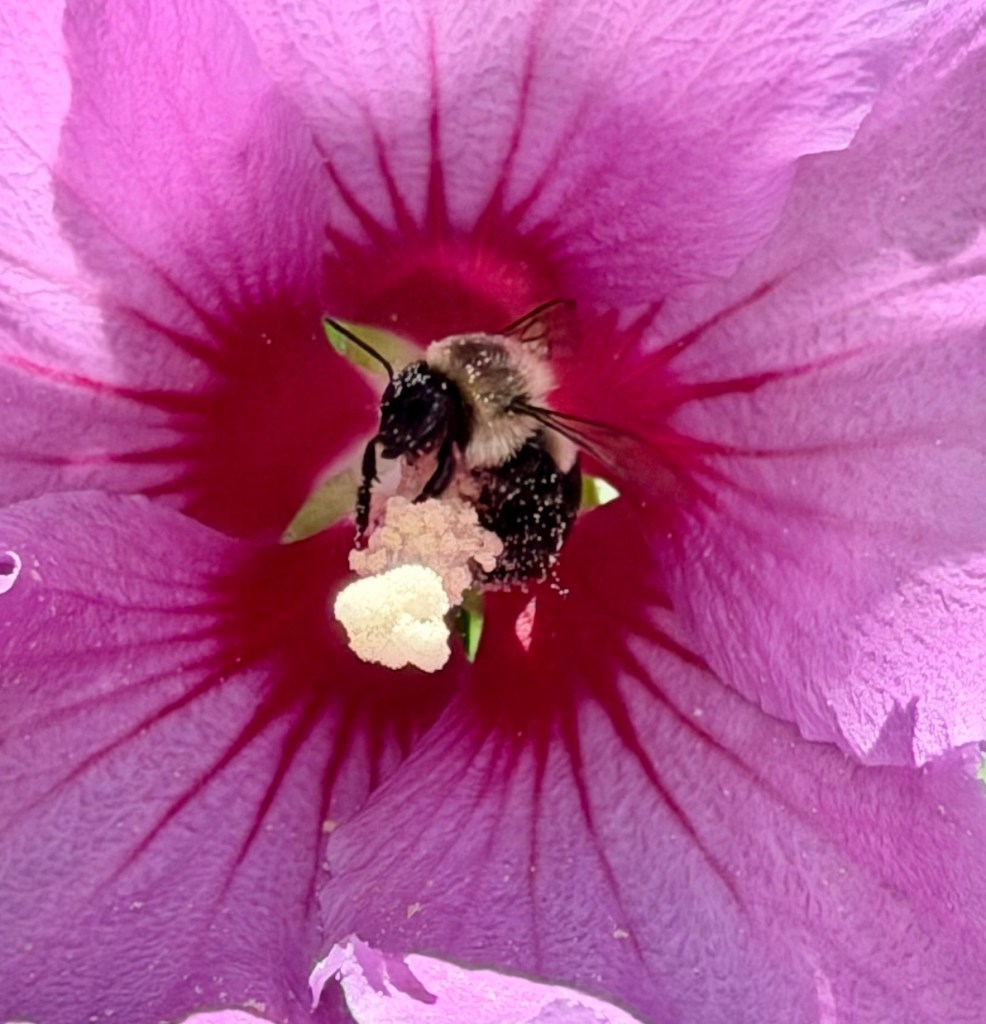
Not all of the photos that follow are of pollinators, but they are all “bugs” of interest to gardeners. I’ll begin with the one I enjoy photographing most, the Bumble Bee. The bloom is Althea, or Rose of Sharon (Hibiscus syriacus).
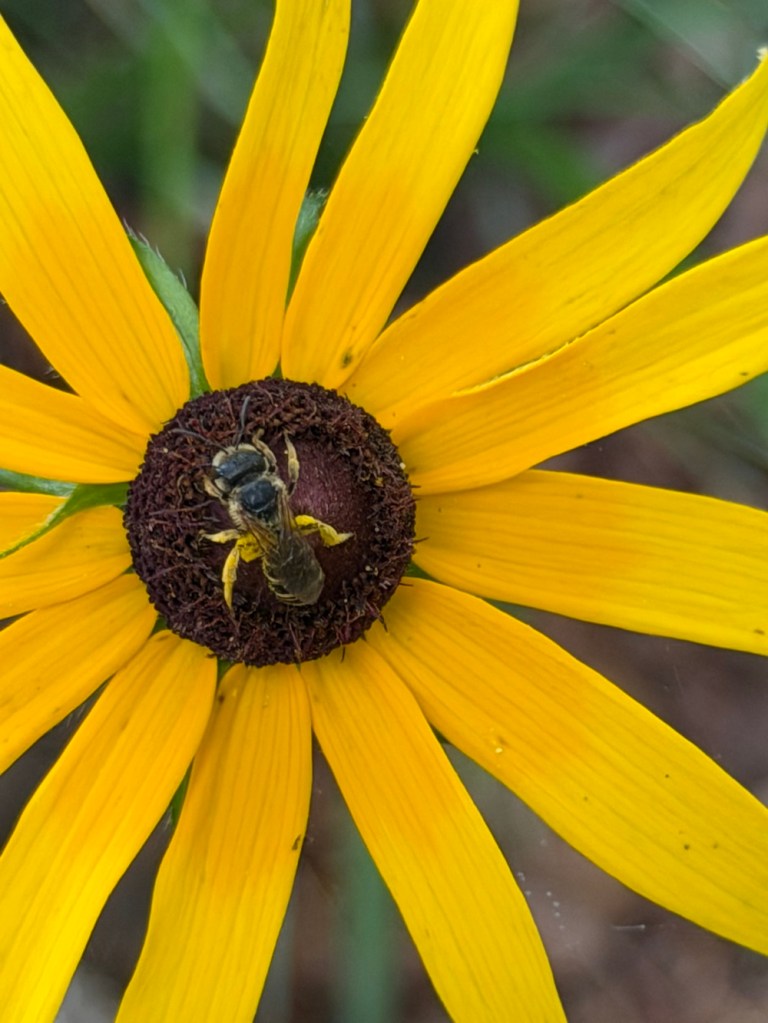
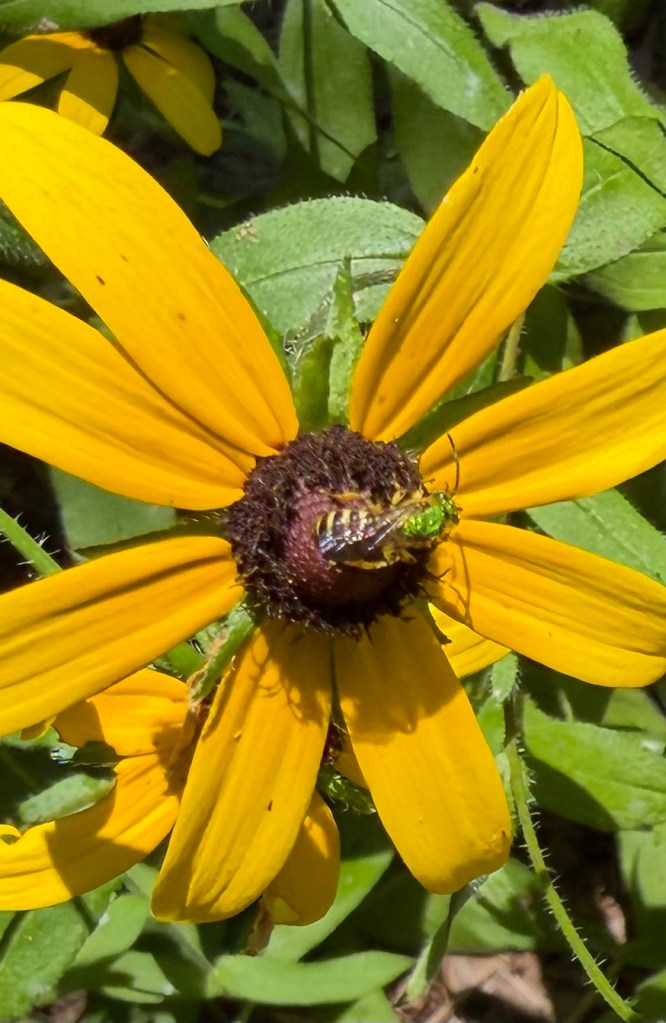
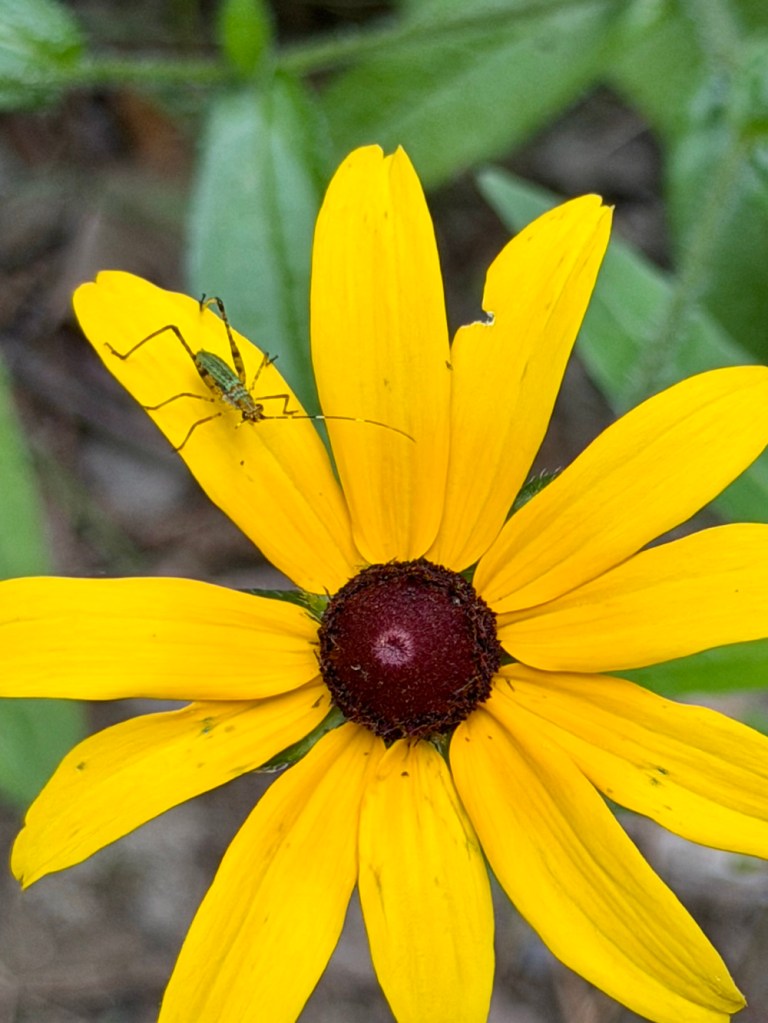
Black-eyed Susans or Rudbeckia hirta were a host to several other flying insects. They are the sweat bee, Halictus ligatus, the metallic green bee, Agapostemon virescens, and possibly a katydid nymph, Scudderia furcate.
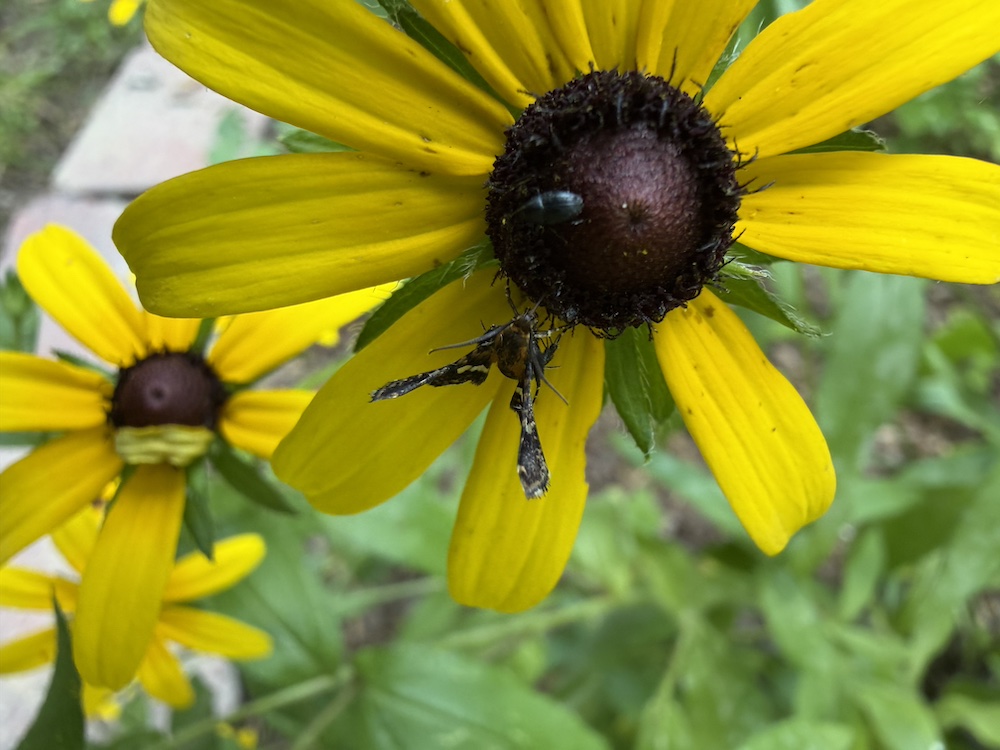
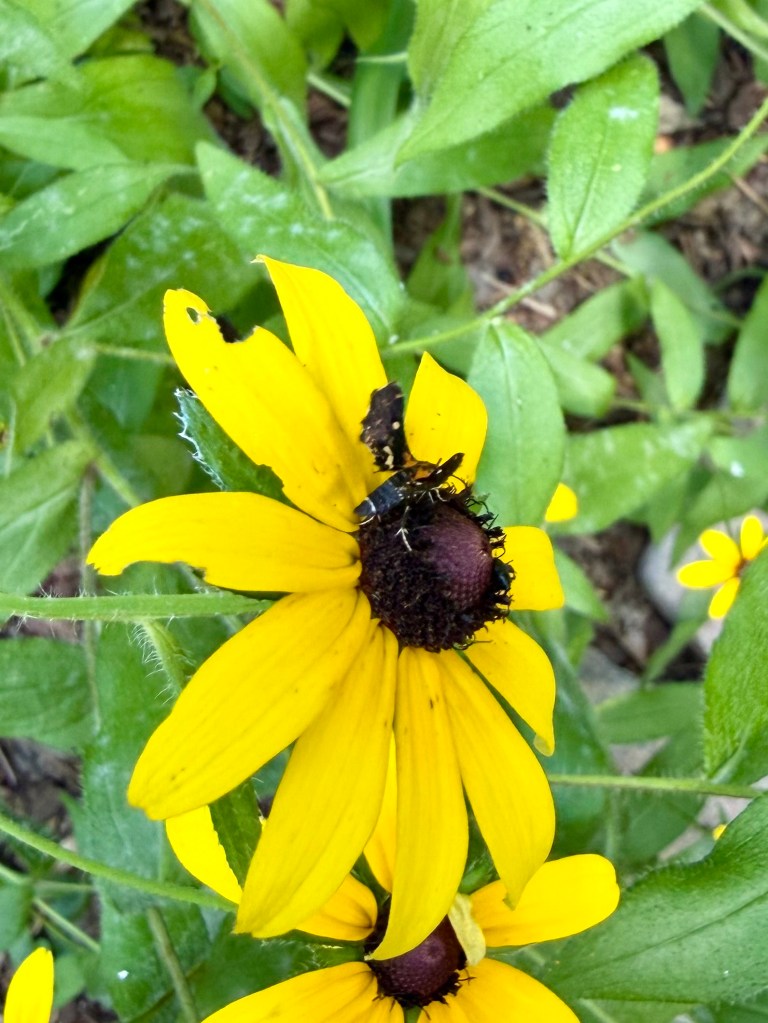
The final black-eyed Susan visitor was Thyris maculata, a moth.
The final insect, a Delta Flower Scarab, Trigonopeltastes delta, was found on a purple coneflower, Echinacea purpurea.

This closes out my six for today. Readers can find guidelines for posting six of their own happenings in the garden at Jim Stephens’ Garden Ruminations. If you are a reader in the US Southeast (Alabama, Georgia, South Carolina, North Carolina, Florida, and Mississippi) you might also want to visit the 2026 Great Southeastern Pollinator Census site as well and join the census.


Insects are not easy to get such good pictures of. They are always moving about fast.
LikeLiked by 1 person
Right! I have 5 photos for every 1 used. Just keep snapping!
LikeLiked by 1 person
Thanks, Susan, so much for posting this. I have been enrolled for a while, now and looking forward!
BTW, the yellow Sweet shrub you gave me loves it here! I’ve started a new colony from its original planting! Take good care!
LikeLiked by 1 person