
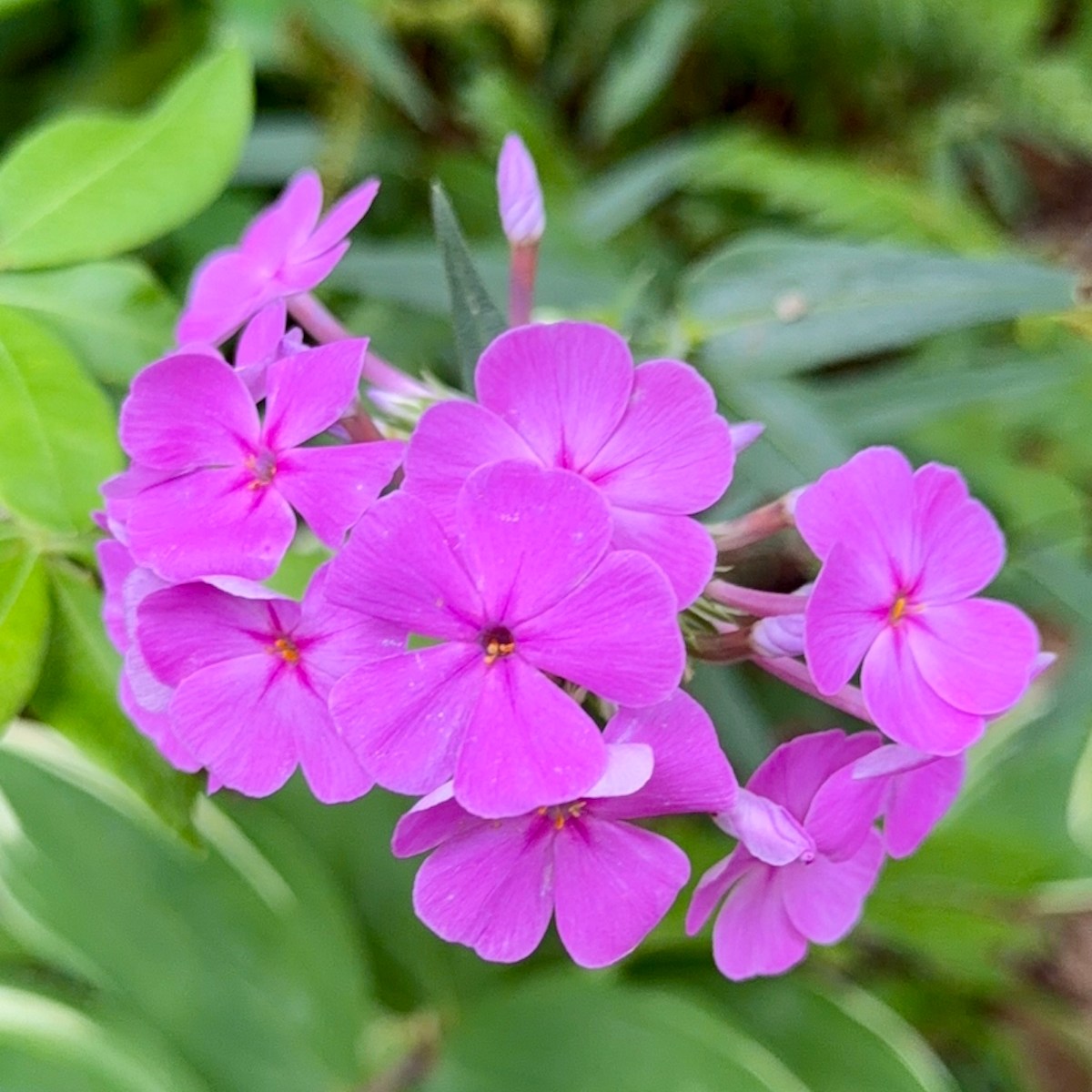
This Saturday I essentially have six plants illustrated without narrative. A few hours ago I returned from a three-day Alabama Master Gardeners Association conference and cannot responsibly manage much more at this time. But the conference was great, covering topics from Doug Tallamy’s Home Grown National Park initiative to growing plants on the International Space Station—after all, we were meeting in Huntsville, AL in the shadow of NASA. Anyone seeking more conversation with the photos would do well to visit Jim Stephens’ Garden Ruminations. You’ll also find guidelines there for joining in on this Saturday sharing of things going on in gardens in many world locations.
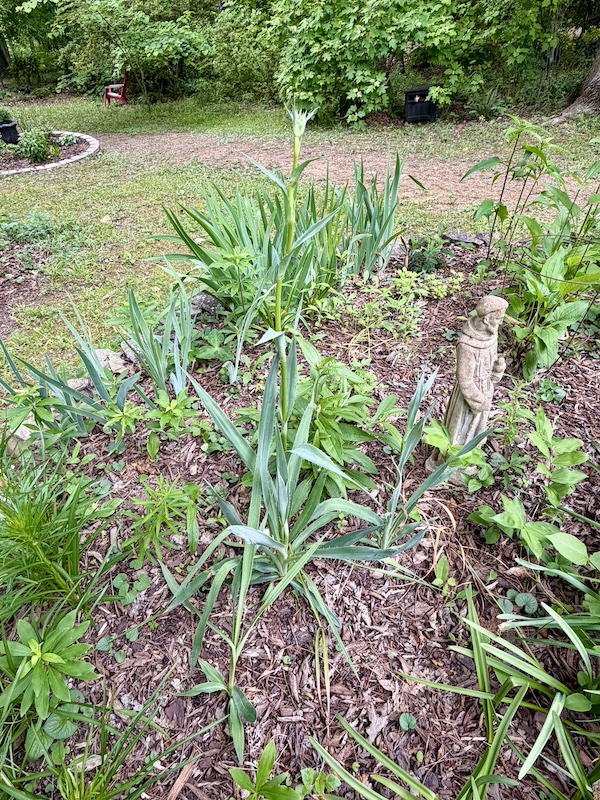
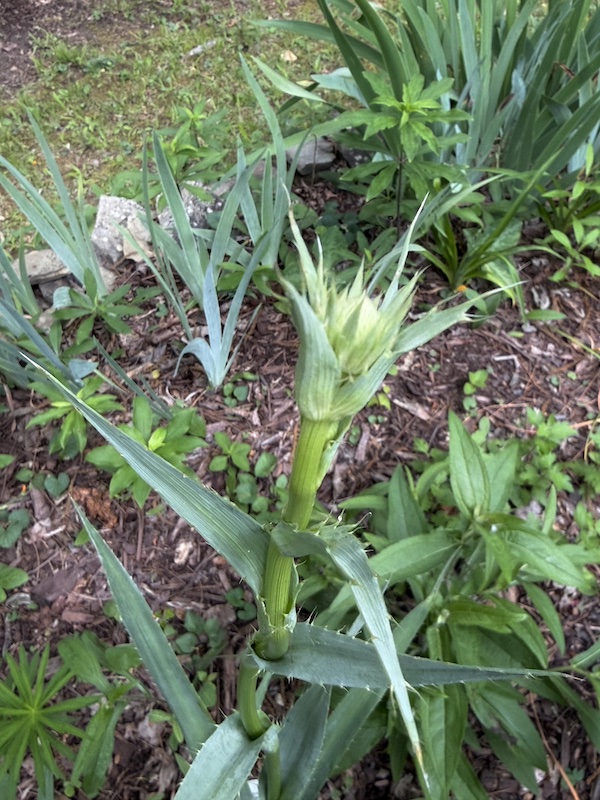
In spite of fatigue, I’m compelled to post this week because my rattlesnake master, the North American perennial native eryngium (Eryngium yuccifolium) is going to bloom! I know that the final product will not look like the fascinating plant I met in the UK, but it will have its own distinctive character. There are three of these plants in the center of the first photo below. Bloomer in the middle is in its third year; the others were planted last spring. They grown amid irises, blazing star, Carolina lilies, and black-eyed Susans.
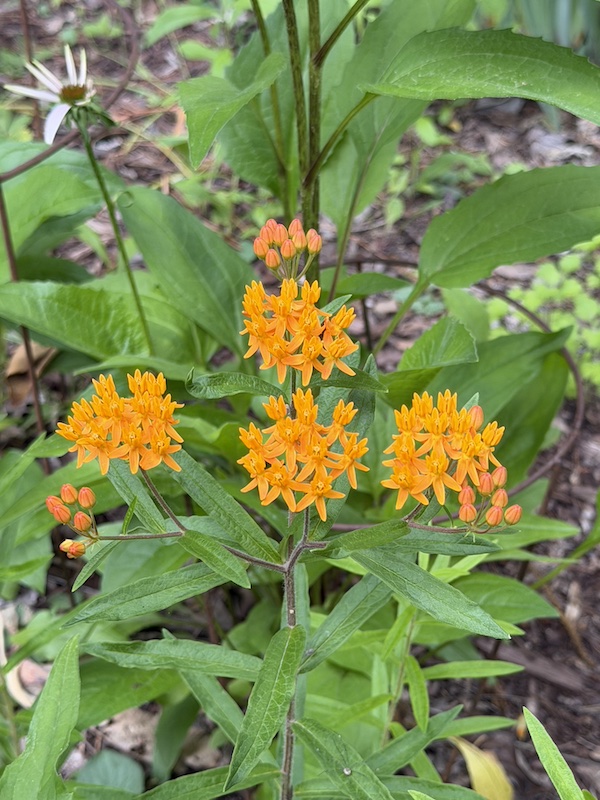
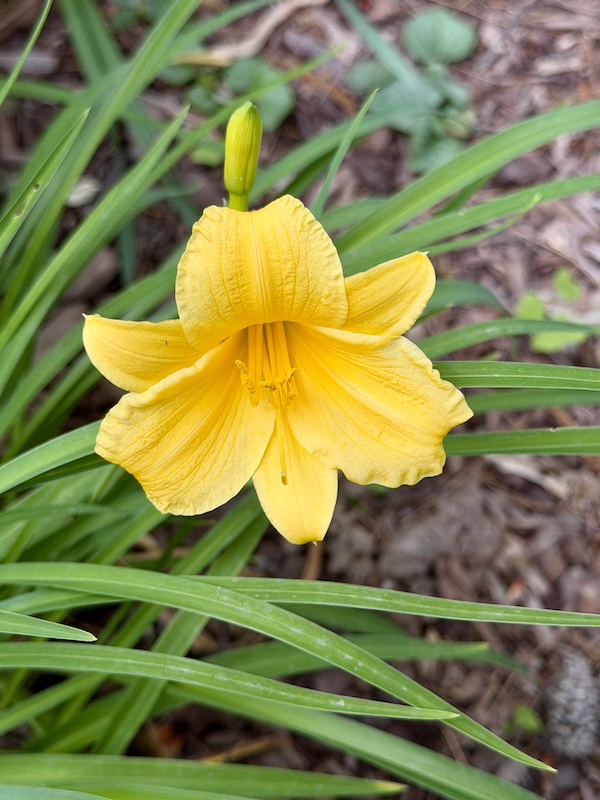
Butterfly weed (Asclepias tuberosa) and Stella D’Oro daylilies are growing in the same bed. Echinacea purpurea is growing there as well, but to date with only a frail flower in the upper left corner of the butterfly weed photo, it did not make the photo cut this week.
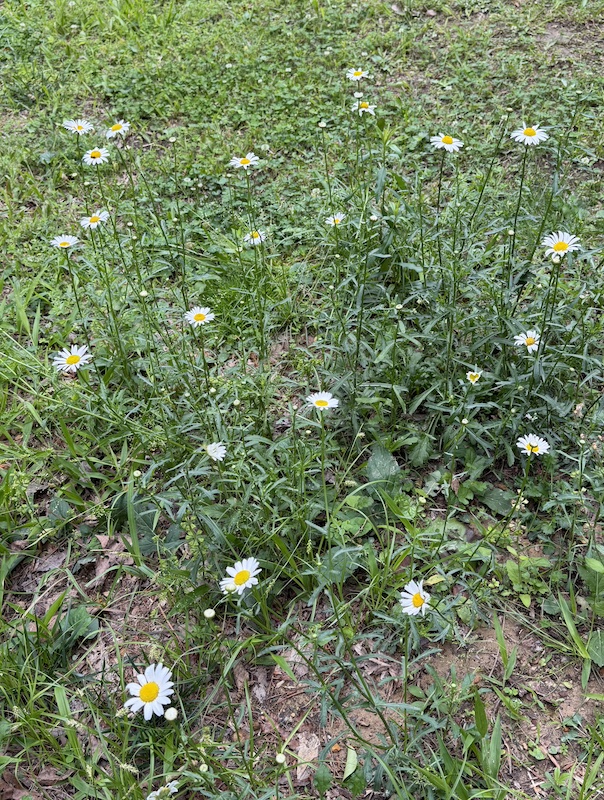
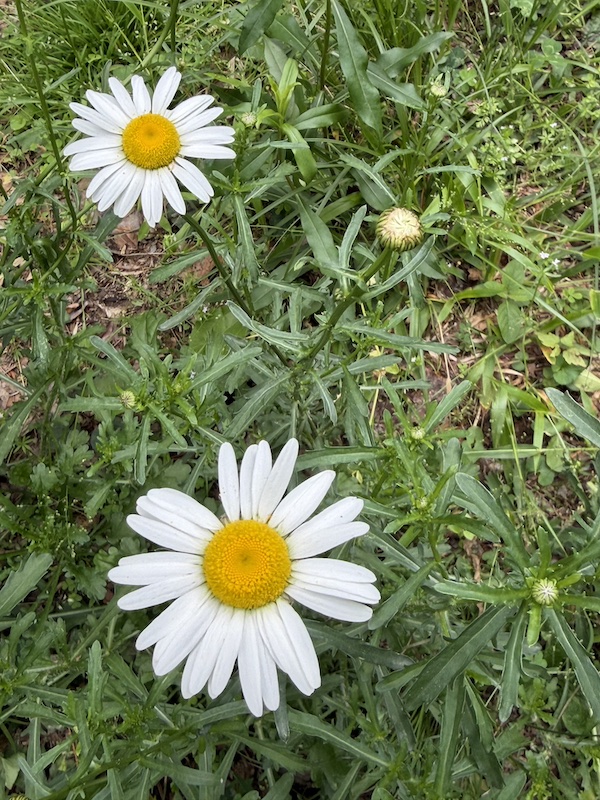
There are a few straggly patches of ox-eye daises still growing where they will. I don’t mow this area that passes for lawn until they, and the scattering of black-eyed Susans that follow, have bloomed themselves out.
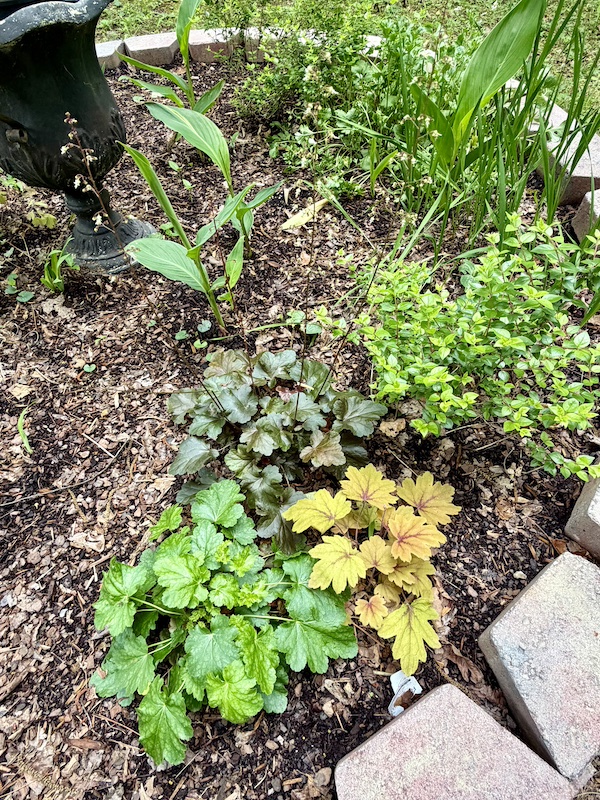
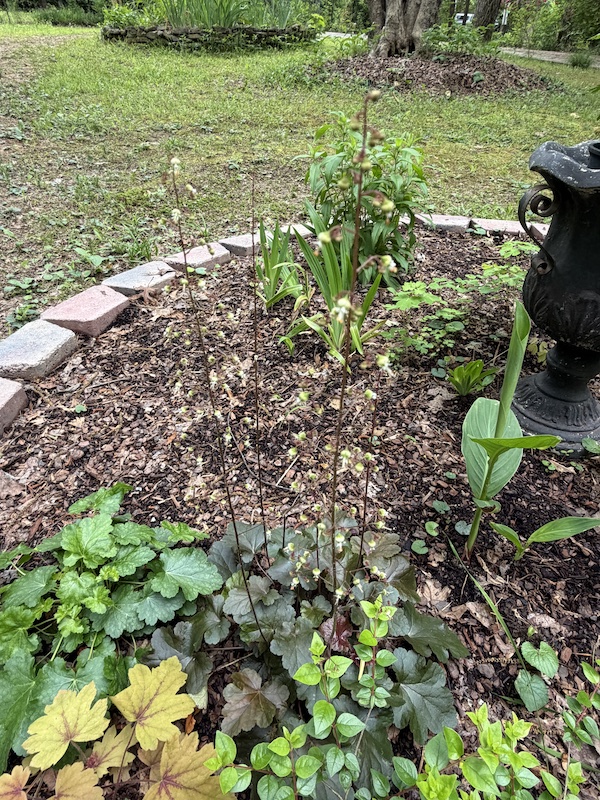
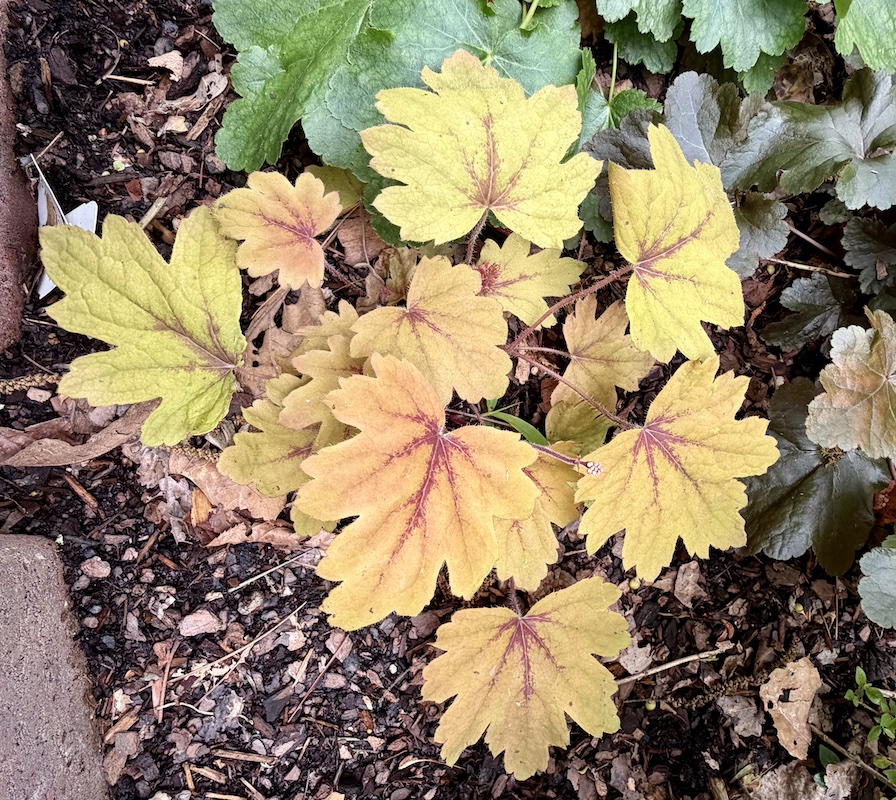
In the round garden I started earlier this year, the transplanted native heucheras , or coral bells, are looking surprisingly vibrant. The names of the two green leafed plants were lost some time ago, but I do know the yellow-orange one is ‘Sweet Tea.’ The darker of the three has put up some impressive flower stalks with “bells” that are fairly easily seen in the middle image below.
A woodland phlox rounds out my six for this Saturday. It also serves as today’s featured image. In the wooded part of the garden it is its own boss, coming up wherever it pleases. For me, it is an entirely native wildflower. I never planted or sowed seeds for any of the plants. I did plant the hostas growing in the middle of it along the dry creek bed seen in the first photo below. The ferns, too though, are native and natural.
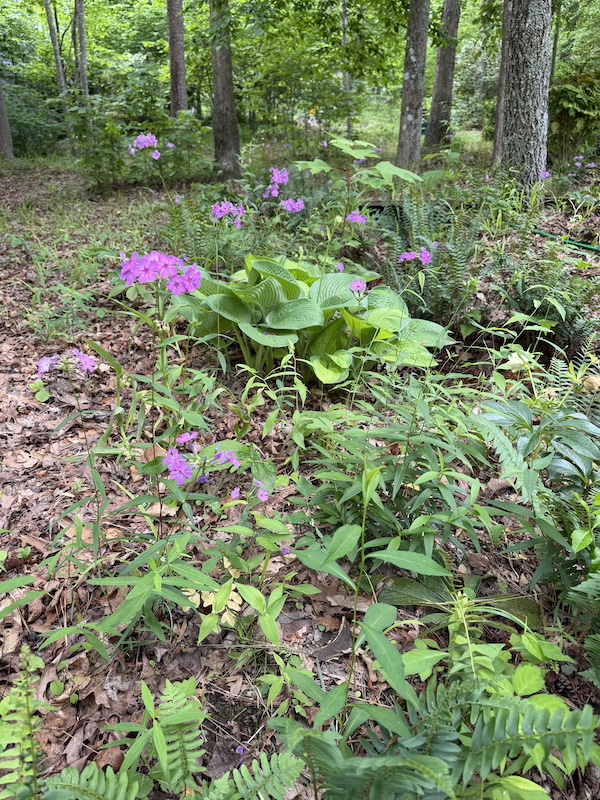
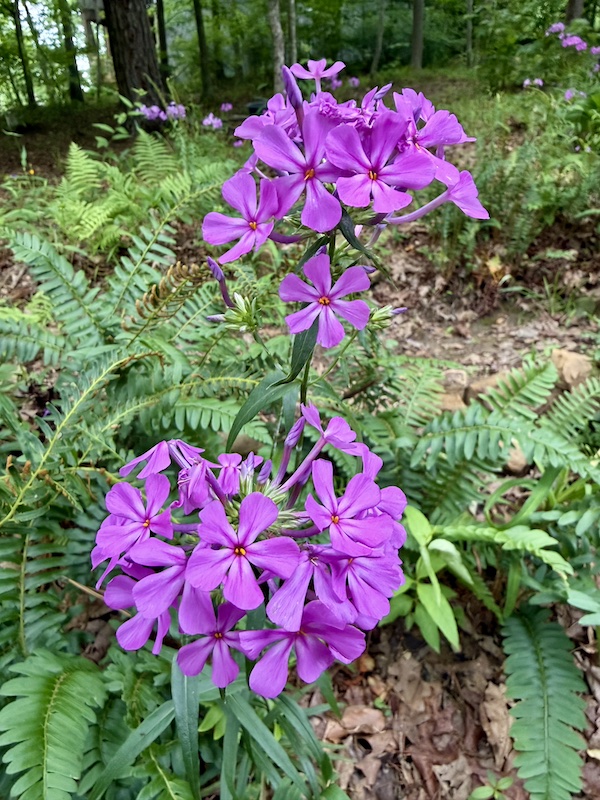
I would like to give accurate identification for this phlox, but I’m not sure whether it is thickleaf phlox, Phlox carolina, or Phlox pulchra, which is endemic to Alabama, but imperiled. The description of Alabama phlox seems to suit these plants better than the details of thichleaf phlox. Blount, though, is not one of the counties in which it has historically been found. Obviously, I should submit it to iNaturalist. Maybe tomorrow.


Oxeye daisy caused a raised eyebrow here, it’s a plant I wont have in the garden because it is too aggressive and would try to take over. For you it is I believe alien and I’m surprised, firstly that you grow it at all and secondly, that it is less happy there than here. All too often the aliens thrive uncontrollably once they’ve left behind all the things that feed on them.
LikeLiked by 1 person
It is somewhat like a “meadow” plant for me. Let it provide some early color and when it’s done, mow it. It is not disciplined, but really not invasive here. Regardless, I appreciate it for the Fibonacci sequence of its center.
LikeLike
I have Shasta daisies which look so much like Ox Eyes you featured here. They do spread but in a responsible manner. My purple coneflowers appeared early and were progressing beautifully until deer found them. They manage to eat the blooms and the top leaves. Curses.
I also attended the Conference and was fascinated by the information about growing plants on the moon. Huntsville, Alabama is a fascinating city.
LikeLiked by 1 person
That was plenty of narrative. According to the guidelines of Six on Saturday, we should keep such narrative brief anyway. That phlox would be a nice native to have around.
LikeLiked by 1 person
Oh my goodness, your Butterflyweed is so far along! It’s delightful! I imagine you’ve had monarchs in your area already? They’ve been reported in the area here, but I haven’t seen one yet. We were just discussing Rattlesnake Master this afternoon, since we saw some along our hiking route. It’s not forming buds yet, but of course the foliage is unique and nifty, too. Happy “six”!
LikeLiked by 1 person