
My last Six on Saturday post, which was at the close of May, complained of rain, mud, and mosquitoes. This one complains of a recent lack of rain, brick-hard soil, and mosquitoes—and heat and humidity. This past week the air temperature has been easily int the 90s Fahrenheit, with heat indexes above 100 degrees. The flowering plants and shrubs have suffered greatly, but those invading vines I referred to in May have prospered, especially in the Iris bed. But, more about those in a minute. First for those of you who wish to join in on SoS, or who want to see more dutifully cared for gardens, please visit Jim Stephens’ Garden Ruminations for Jim’s wonderfully detailed reports, guidelines for taking part, and links to others’ updates in the comments.
1. Now, for the first of my six. Eastern milk-pea (Galactia volubilis) has been winning the summer battle in the Iris bed for years. During the past few weeks, this drought tolerant Southeastern native has captured much more territory. It has a thin wire-like stems that vigorously twine up the stems of other plants and the thick leaves of Irises binding foliage together in a tight net. The tiny bloom, though, is bright and attractive; moreover the vine is host to about a half dozen butterflies. Still, its tendrils can run three feet or more up, around, and along other plants—and its deep carrot-like root resists extraction.
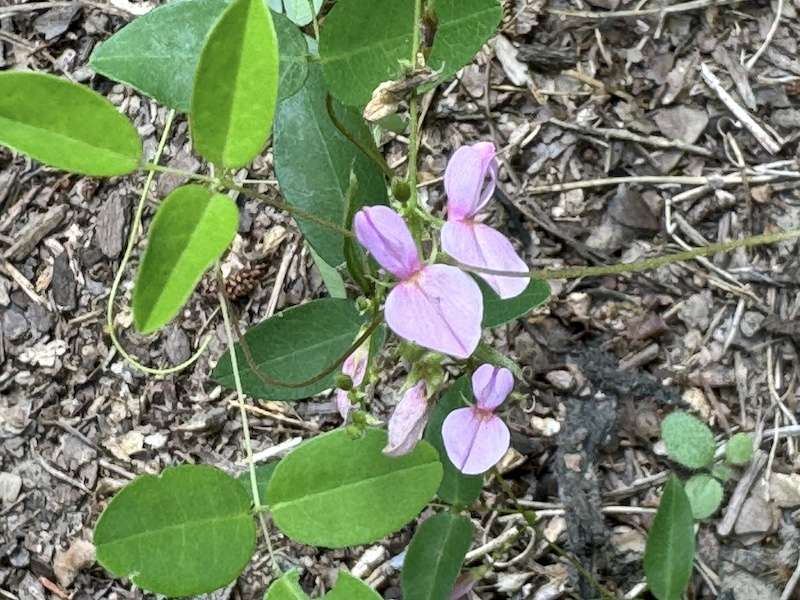
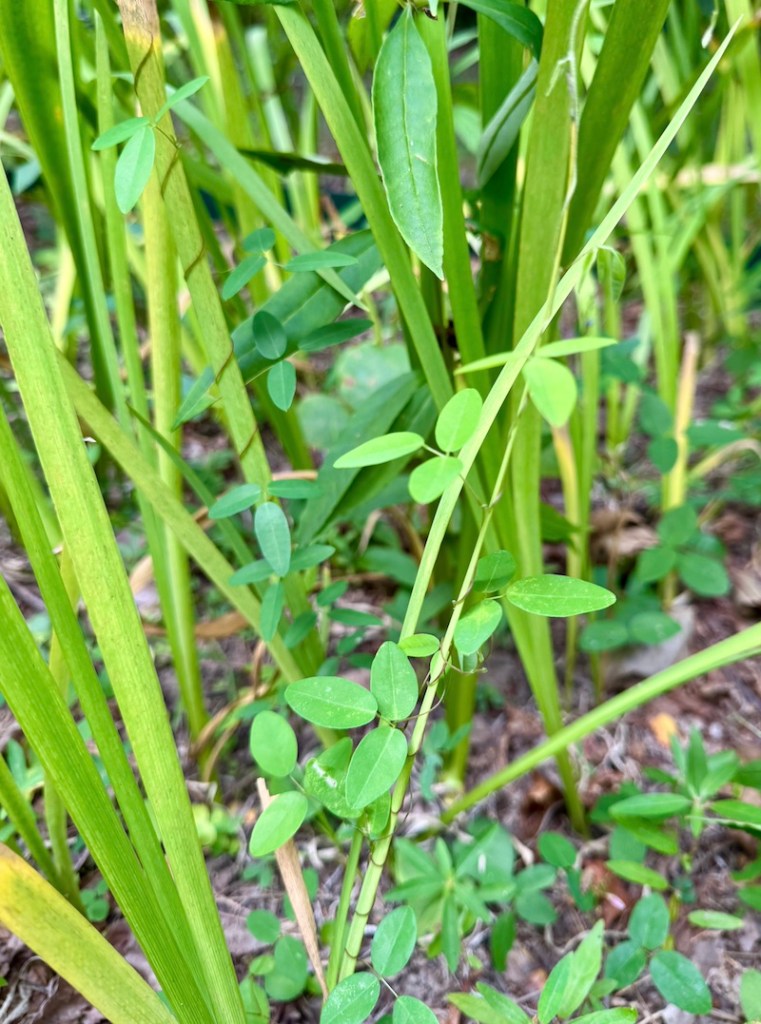
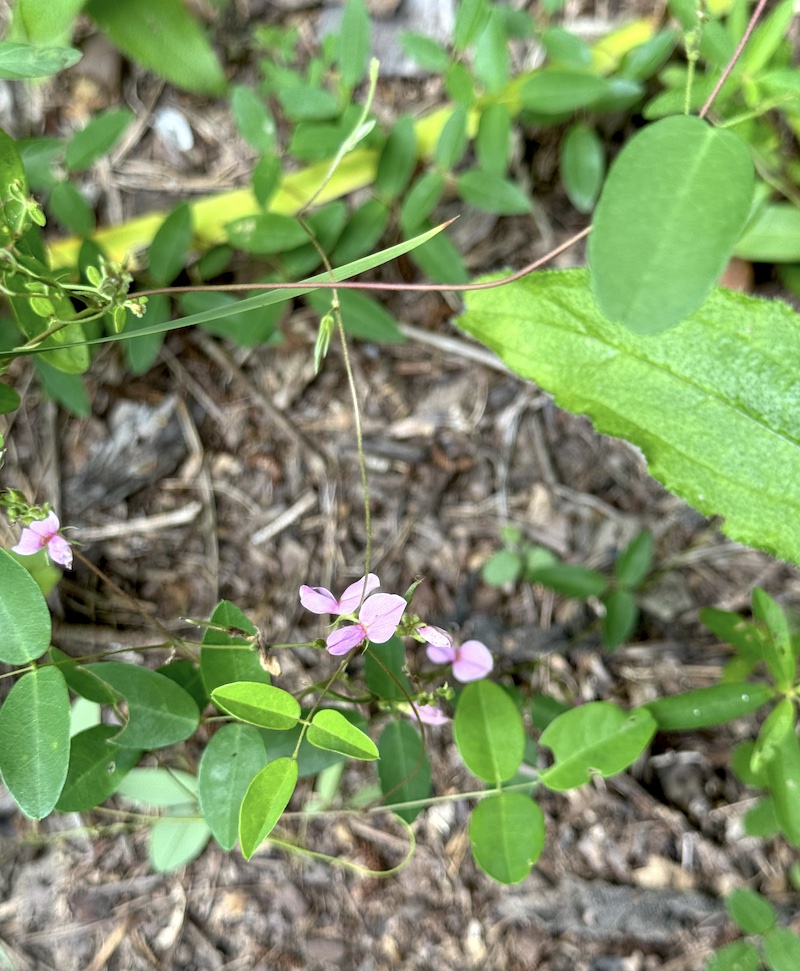
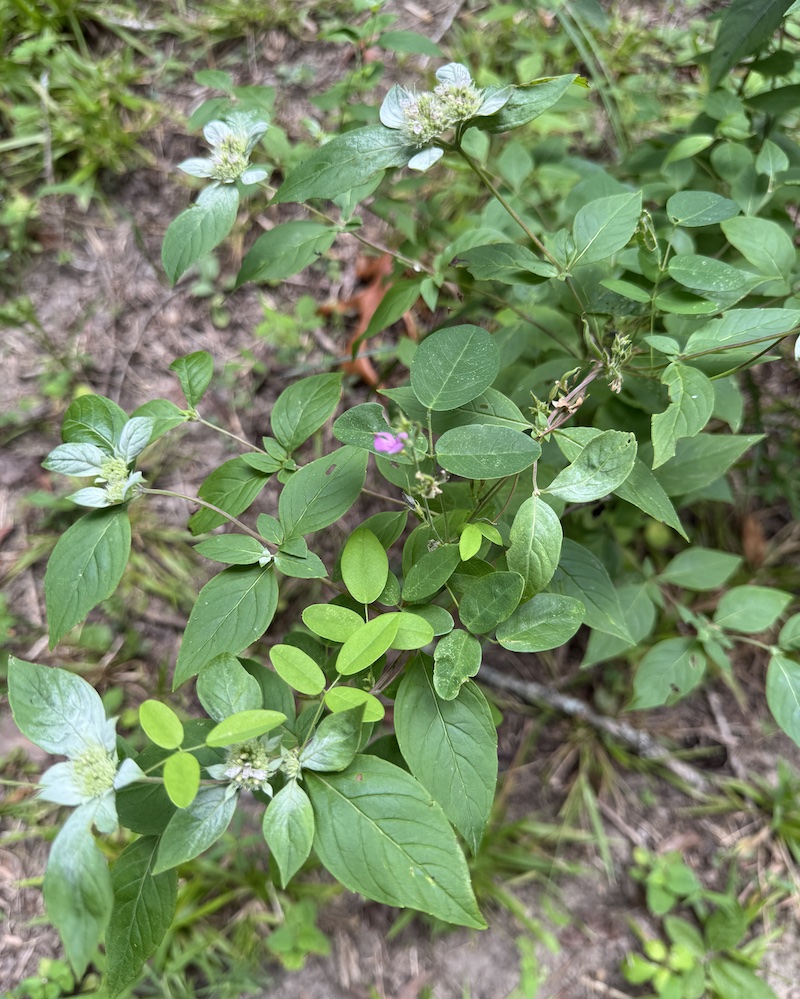
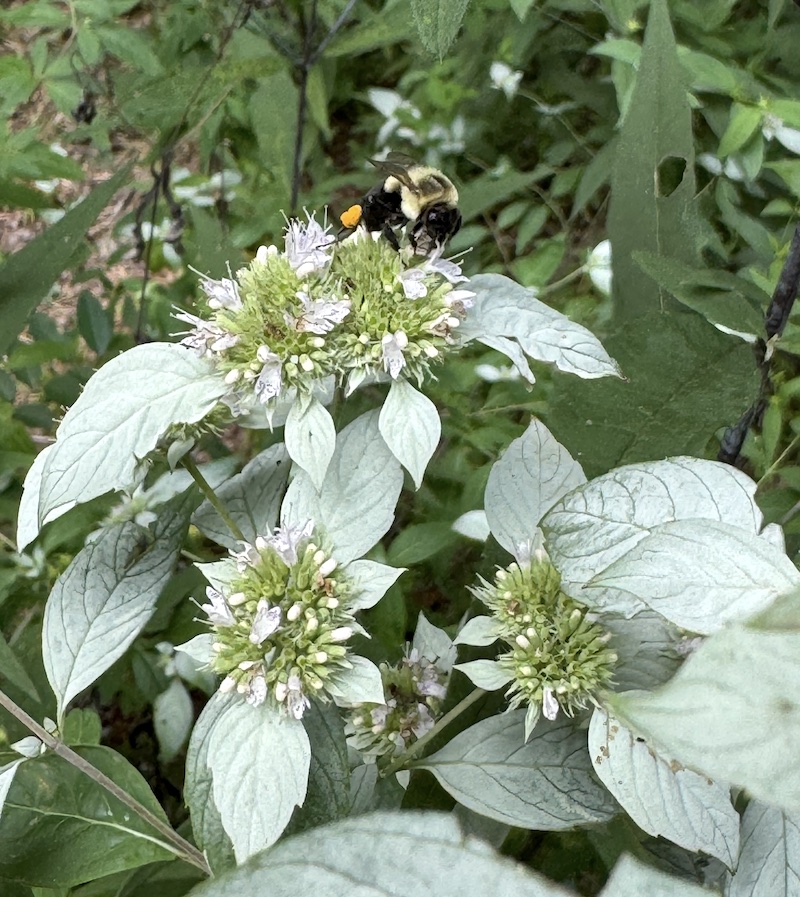
2. Eastern milk-pea figures in my second entry, too. In the first photo below it winds its way up White-leaf Mountain mint (Pycnanthemum albescens). It is easy to see how it binds a plant up. The second photo better shows the Mountain mint. The third photo shows one of the two main things I like about this plant. It is a great pollinator. The second thing is that it has a very pleasant aroma.

3-4. A few solitary Black-eyed Susan wildflowers remain scattered throughout the wooded part of the garden.


In the second photo above, the yellow blooms stand out against some native ferns, which prospered in several areas during the rainy weeks. The ones that are not in full shade are beginning to die back on the tips in the recent heat, though. Most of them are Christmas ferns. Some are Autumn ferns.


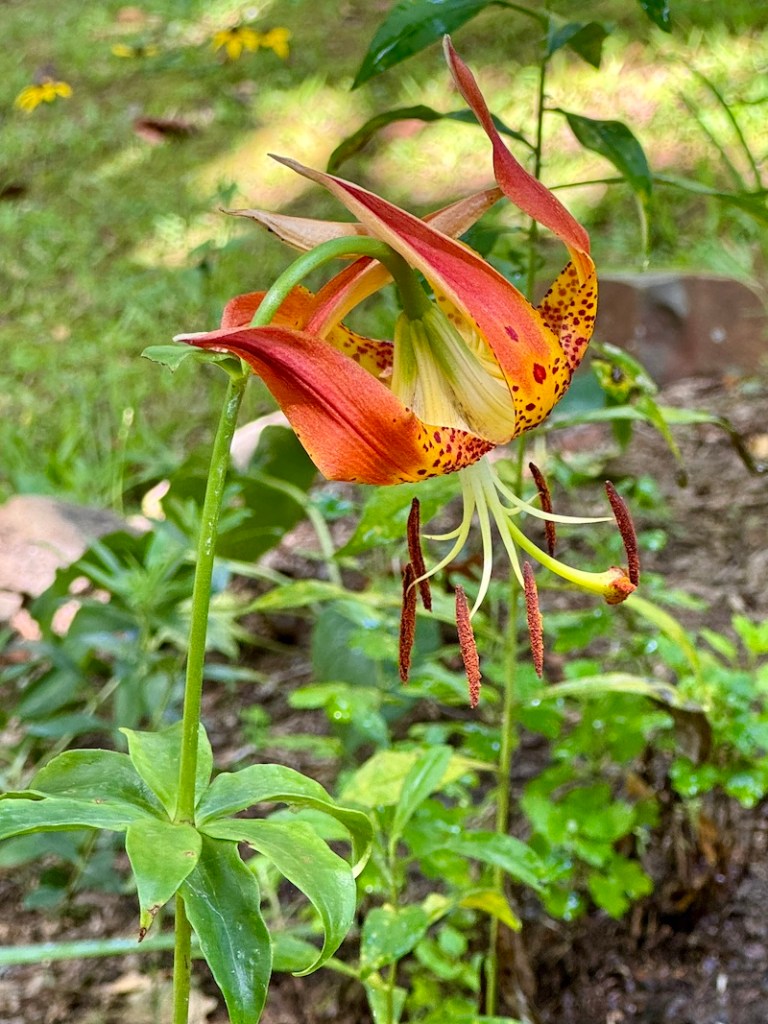
5. Carolina lilies (Lilium michauxii) are the bright spots in one of the garden beds. Sometime these wildflowers are confused with Turk’s cap lilies. The flowers of both lilies are very similar, but Turk’s cap has multiple blooms along or at the terminal stem of the plant. The Carolina lily has a singular bloom. In the raised bed below, they came up on their own in true wildflower fashion. In the center photo the Carolin lilies are among Blazing star (Liatris) plants that have failed to blaze or even sparkle due to the heat. On the right side of that photo two struggling Rattlesnake Masters (Eryngium yuccifolium) can be seen. They were just planted this spring, though. Maybe next year will be more impressive. I became enamored with Eryngium in Oxford University Gardens decades ago; unfortunately the US native Rattlesnake Master has a rather simple globe-like bloom missing the spiky profile of the Eryngium or Sea Holly that first attracted me. Returning to the Carolina lily, in the third photo below the delicate, almost shy buds of several lilies that appeared outside the raised bed can be seen before beginning to open. This really is a wonderfully graceful plant!


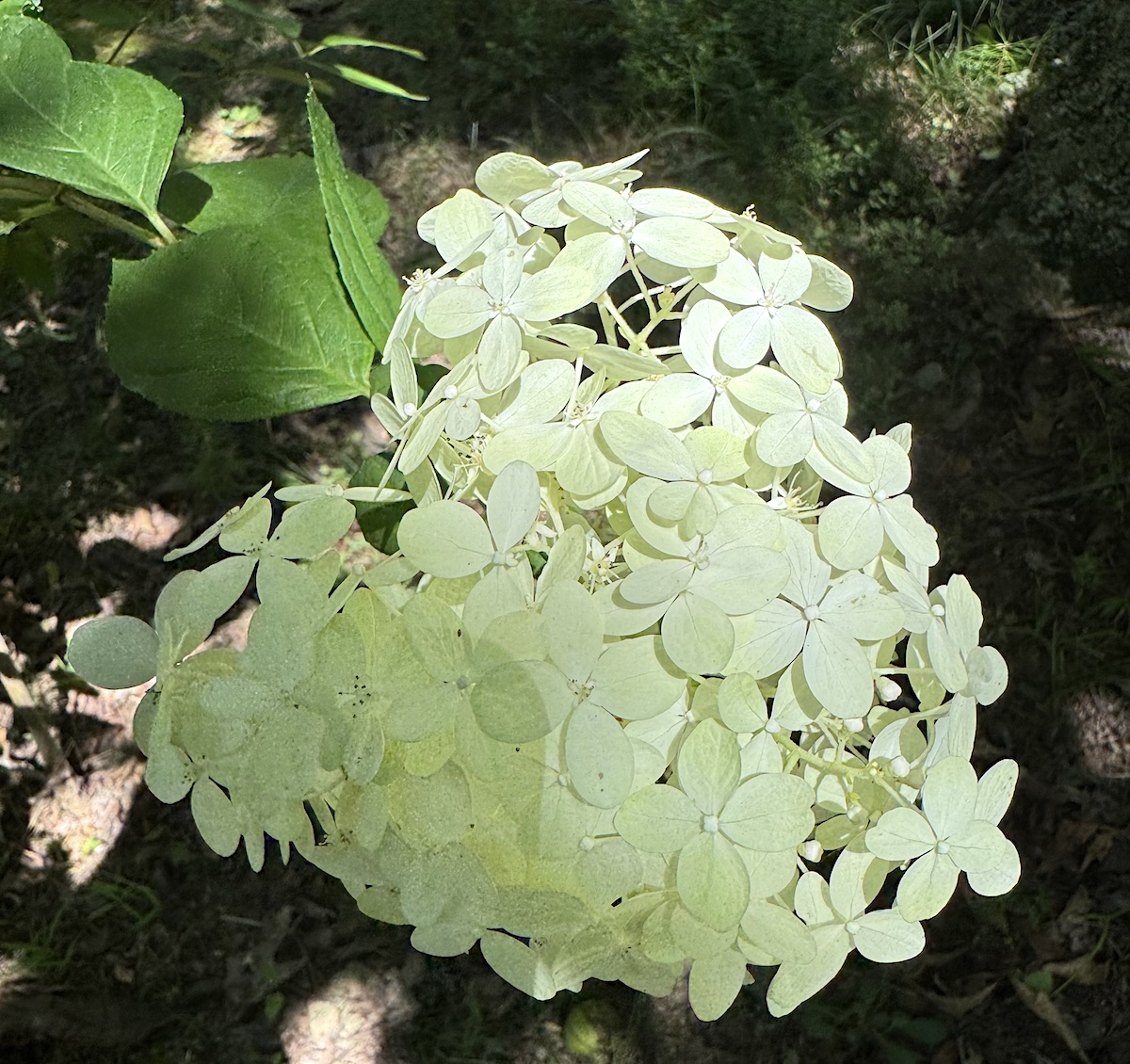
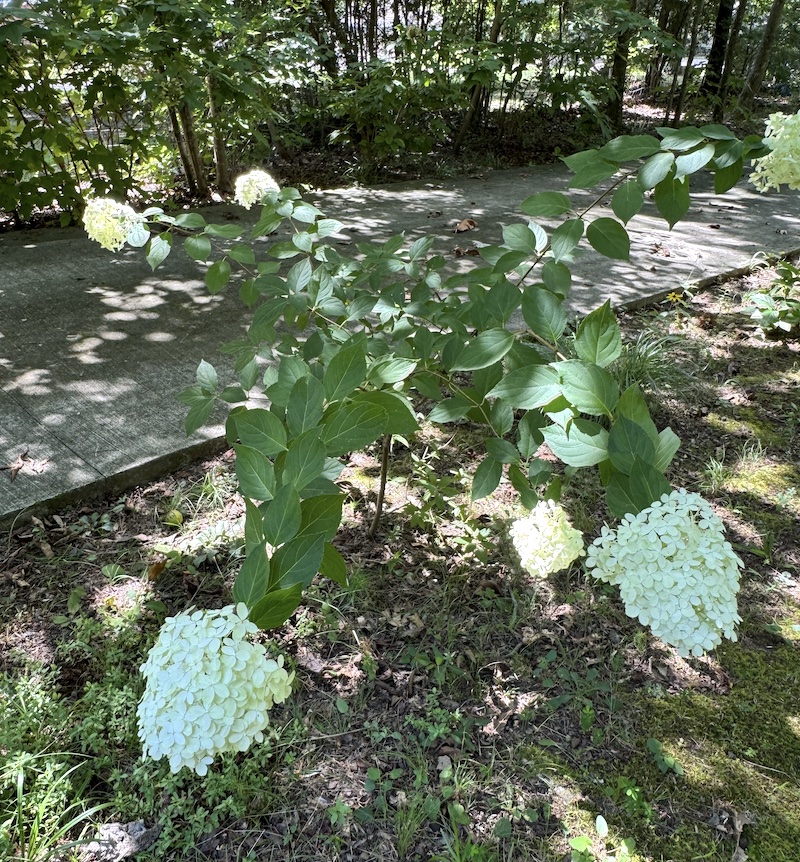
6. Finally, is a Limelight hydrangea I propagated from a cutting. Last year it put out a few tentative blooms, but this year, even though the shrub is still a lanky juvenile in need of artful pruning, the flowers are full and heavy. The featured image, which I’ll repeat below, captures that fullness well.

It is 7:30 Friday evening and the temperature is 83 degrees F. The heat index is 92 with no promise of rain for several days. Tomorrow will be a hose and sprinkling can day. I hope everyone else has a more congenial gardening weekend.
 After Eden
What a fantastic Hydrangea, such large flower heads!
LikeLiked by 1 person
I watch the satellite imagery on my weather app to see if the yellow and red blobs will make it to my house. Pop up is a good word for the phenomenon of summer rain. It is random and fleeting. It rained here yesterday, so no watering for me today.
LikeLiked by 1 person
No rain here at Highland Lake after the heavy downpours of weeks ago. I suppose this pattern will continue for the next several months. Your garden still looks good, though. Kudos!
LikeLike
Great six! I’m a huge fan of the Susans, but all your plants are amazing, and the photos are, too. You can have some of our rain (from here in the Midwest). I haven’t had to water the garden much, and the “weeds” are growing like crazy. Wouldn’t it be nice if we all had “just enough” rain for our climates and the types of plants we grow?
LikeLiked by 1 person
Mountain mint looks like it should be related to poinsettia. Of course, it is not. (I had to look it up.) Is Eastern milk pea similar to perennial pea? Perennial pea is a weed here, but it is too pretty to justify immediate removal. We let it bloom, and then remove its dead foliage, but in most situations, leave the roots to grow another year.
LikeLiked by 2 people