
This post really is just six on Saturday. In the past month, storms have left behind over nine inches of rain. That rain, mud, and now our summer mascot mosquitos, have kept me out of the garden and allowed vines, flowers, and shrubs to grow like Topsy. For those looking for more context and better gardening stories should visit Jim Stephens’ Garden Ruminations for his always informative posts and links to more great SoS posts in the comments. Guidelines for joining in this Six on Saturday sharing can be found there as well.
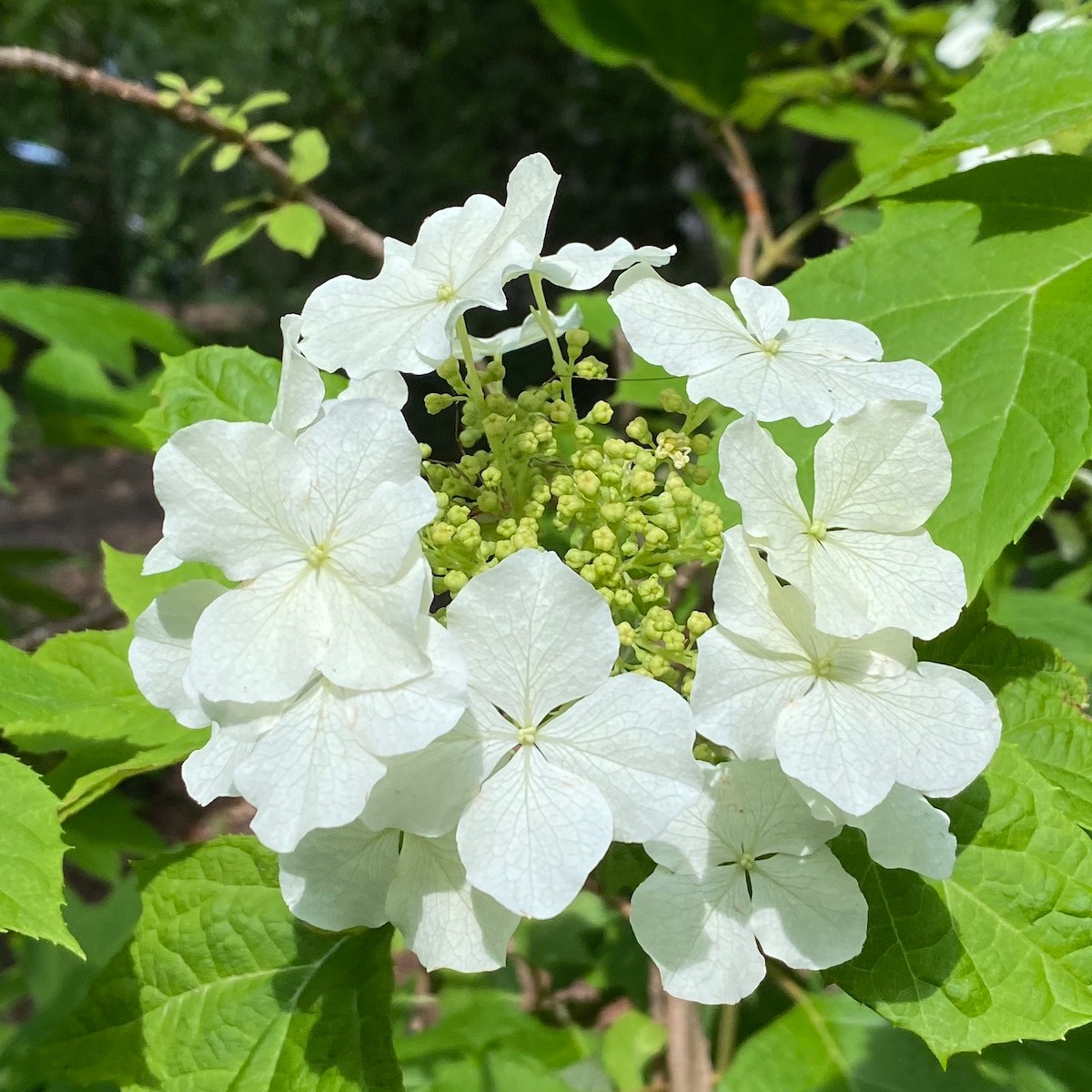
1. But on to my six to close out the month of May. First is a native, Oakleaf hydrangea, which I am fortunate to have growing naturally throughout the garden.
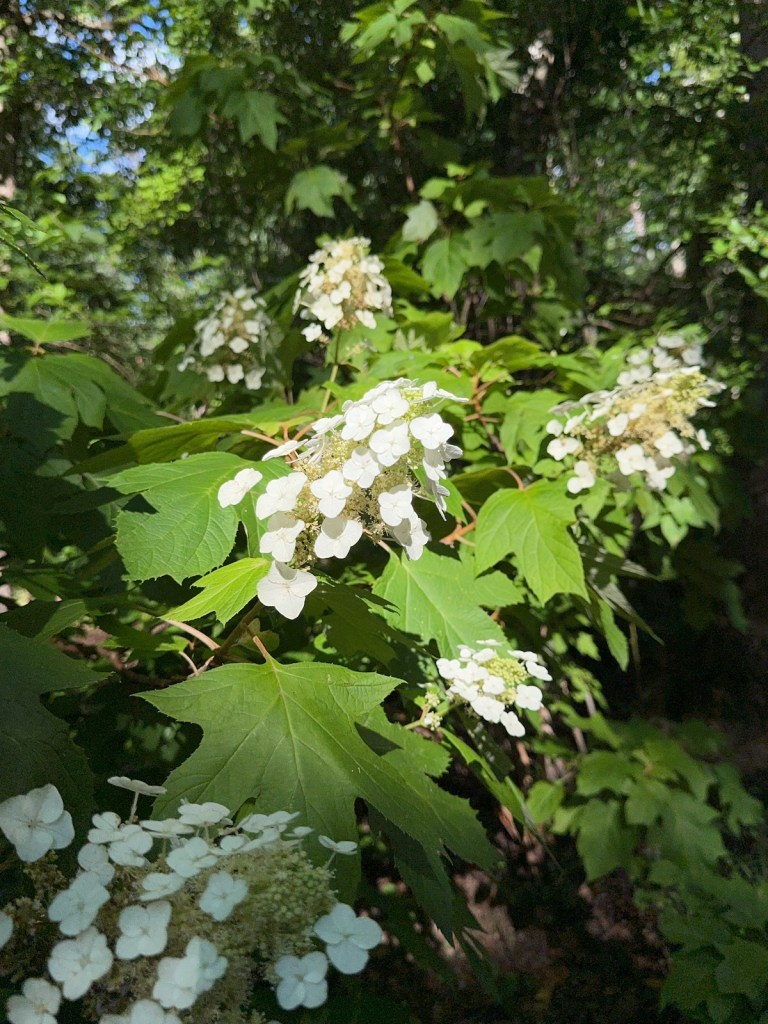
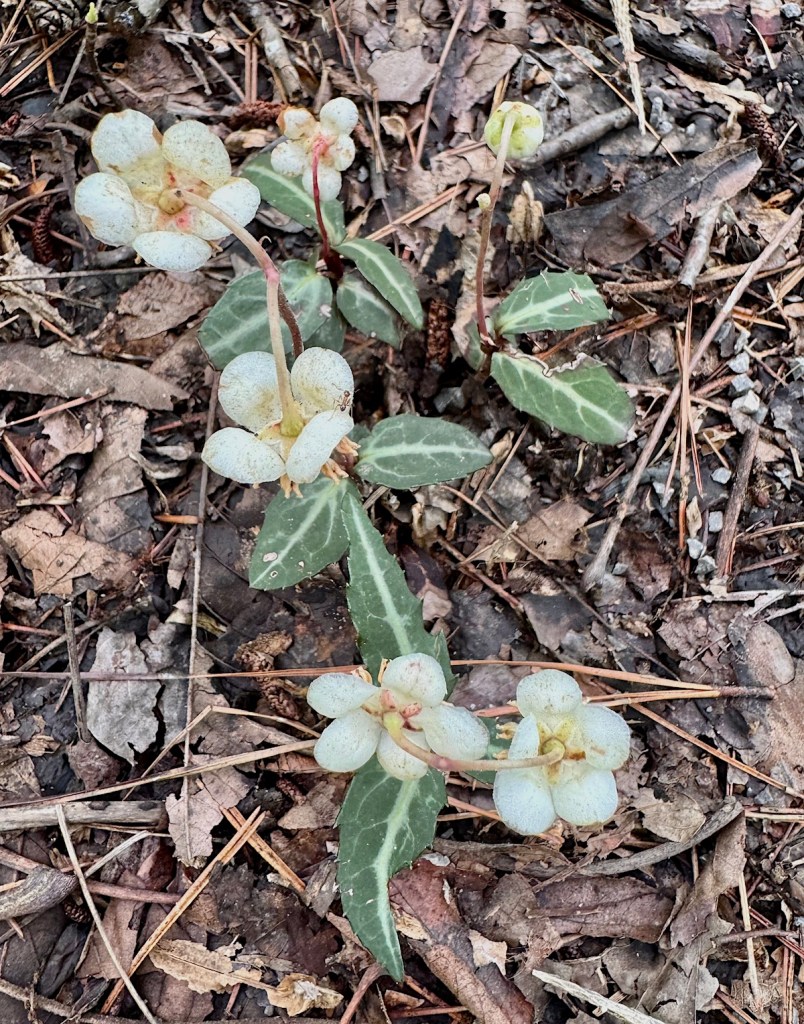
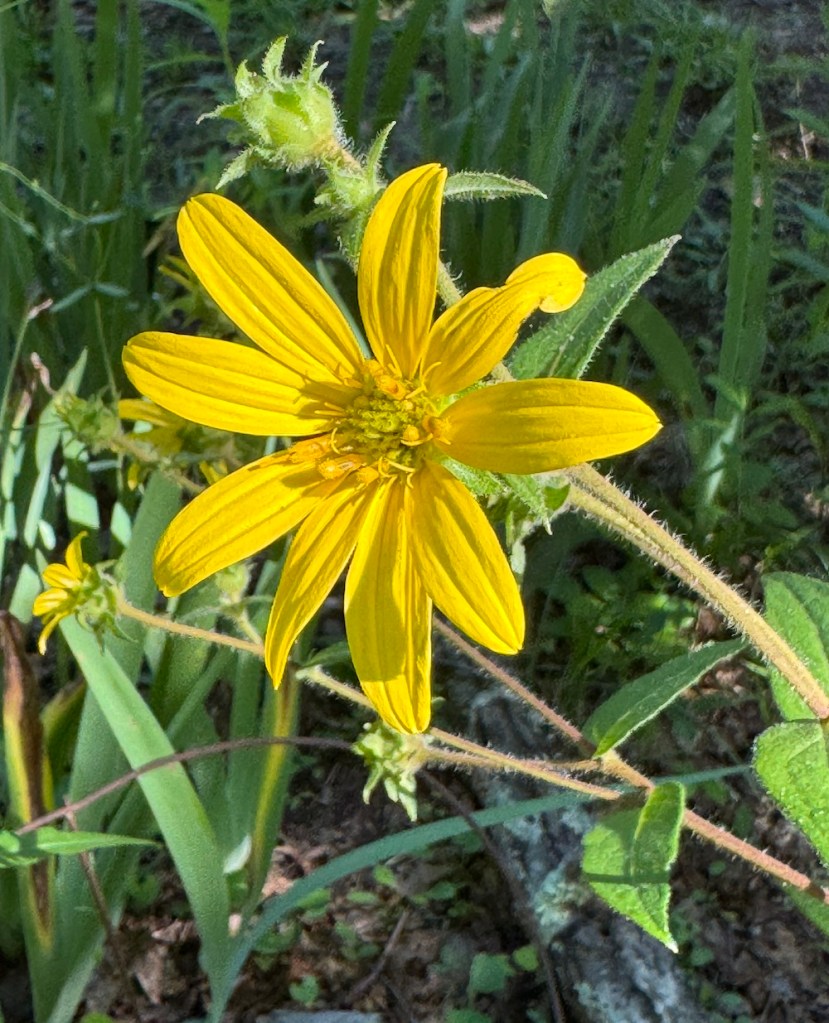
2 and 3. Two other native wildflowers come in next. On the left is Striped Wintergreen (Chimaphila maculata), a perennial evergreen, and on the right is Starry Rosinweed (Silphium asteriscus), an herbaceous perennial. The first grows close to the ground and easily missed. The second grows typically to four feet or more and is impossible to miss!
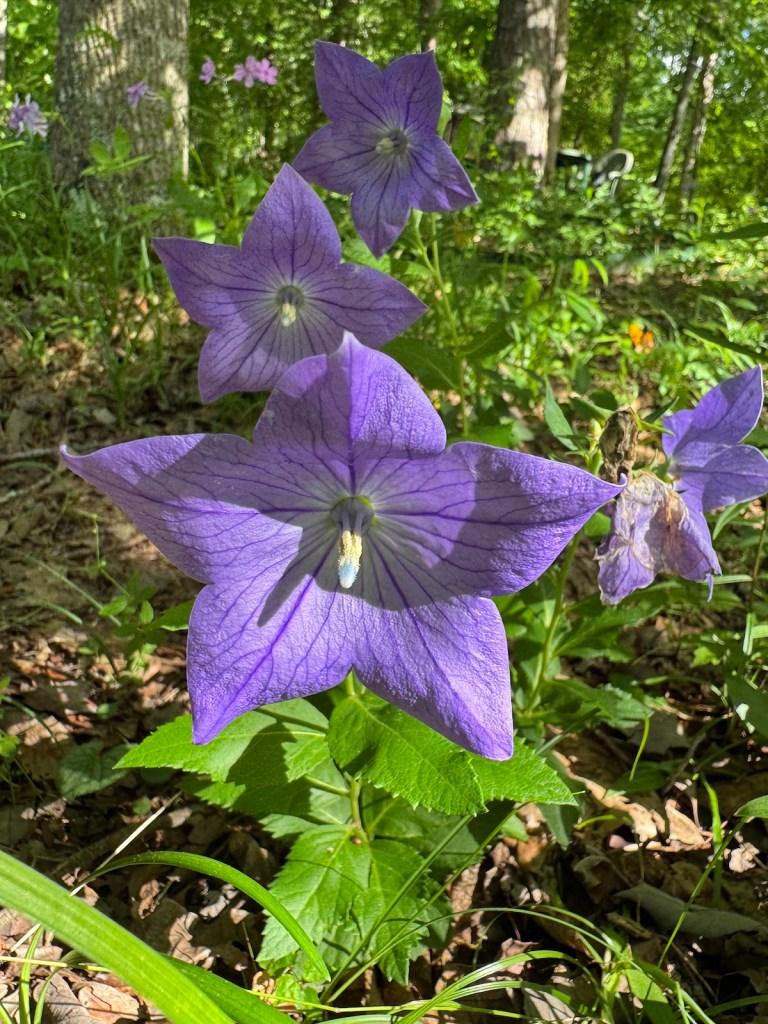
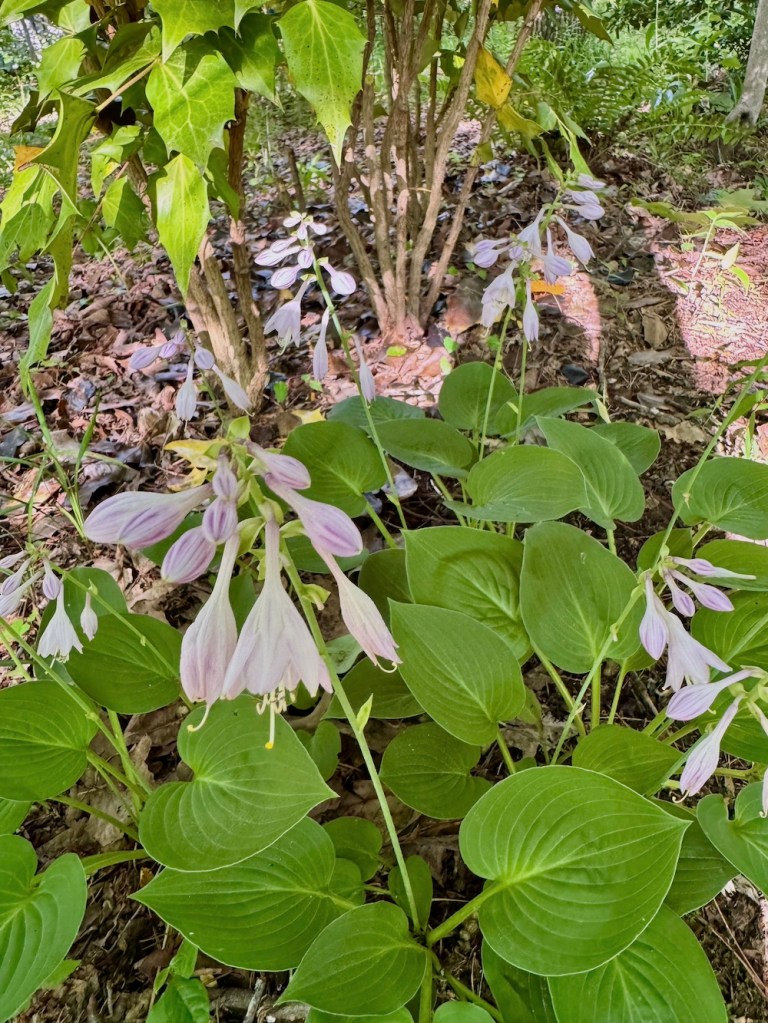
4 and 5 are not native, but nonetheless familiar to Southern gardens. The balloon flower (Platycodon grandiflorus) is an herbaceous perennial native to East Asia. While they are coming to the end of their bloom time here, the hosta are just beginning. Hosta are so present in Southeast gardens, that they are often assumed to be native; they are, though, native to Northeast Asia. But their thousands of registered varieties are not invasive and do not threaten the ecosystem. I find it difficult to imagine a garden without them. However, the Leatherleaf mahonia (Berberis bealei) that can be seen behind the hosta is an invasive non-native from China that has escaped cultivation. It is enjoying what will likely be its last year in my garden.
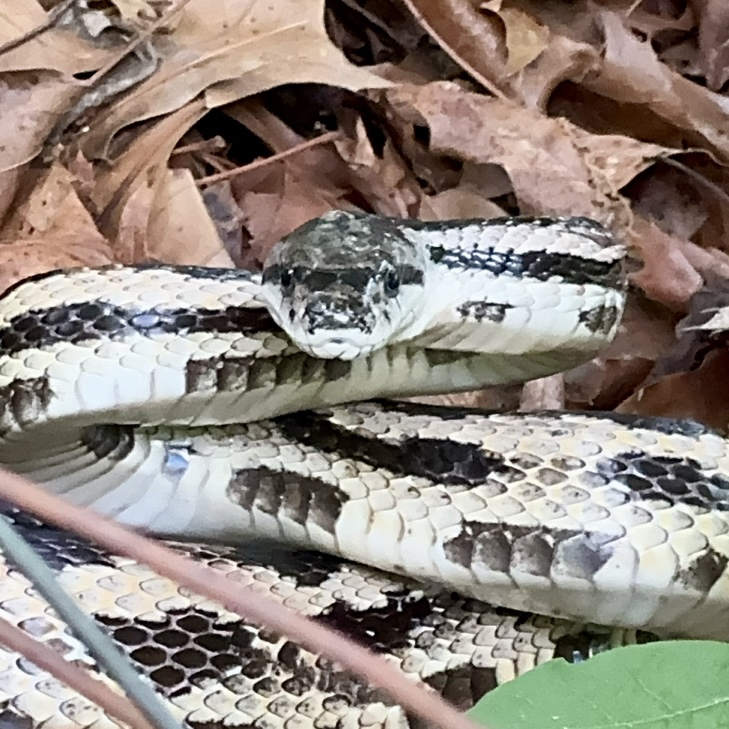
6. My final entry is not a plant, but he (or she) is native. The gray ratsnake is nonvenomous, but can rattle his tale to make predators believe he is a venomous rattlesnake. He is also one of the longest snakes in Alabama. This one was at least six feet long; others can grow to eight feet in length. I bagged him and relocated him outside the garden twice. When he showed up a few days later for the third time, I figured that we would have to share some space for a while. So far, no problem—and no additional sightings.
Wishing everyone a climate calm June.
 After Eden
Brave you tackling the snake, but as you say, I think it’s here to share the garden.
LikeLike
Striped wintergreen is not what I thought it was. (I had to look it up.) Apparently, it is only known as wintergreen because it is evergreen through winter. It is pretty anyway.
LikeLiked by 1 person
I have a resident rat snake and a resident king snake. My mantra is that I won’t trouble them if they won’t trouble me. They keep the chipmunks and the copperheads out of my yard.
LikeLiked by 2 people
A chipmunk monitor would be greatly appreciated!
LikeLike