
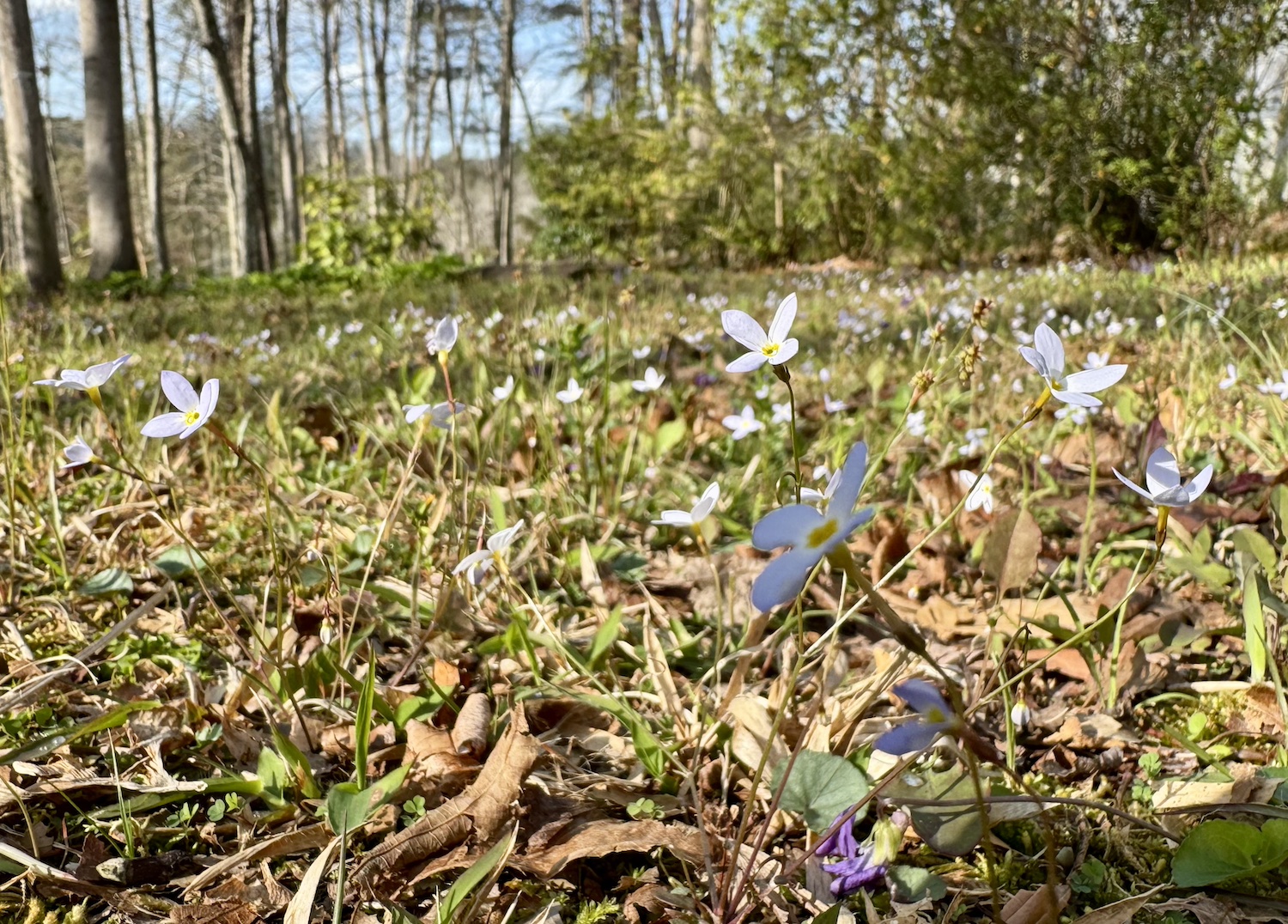
A couple of weeks ago I posted some photos of wildflowers blooming in the garden and noted that others were on their way. Today’s short post contains some of those others. For participation guidelines for joining this Saturday sharing of six things going on in our gardens, see Jim Stephens’ Garden Ruminations, the gathering point of our posts.
1. Bluets (Houstonia caerulea), or by their other common name Quaker Ladies, dot the lawn—or what serves as a lawn—as the featured image shows. These, tiny, delicate flowers are a subtle purplish-blue. Also called azure bluets, they are native perennials throughout eastern North America, Canada to the US Southeast.

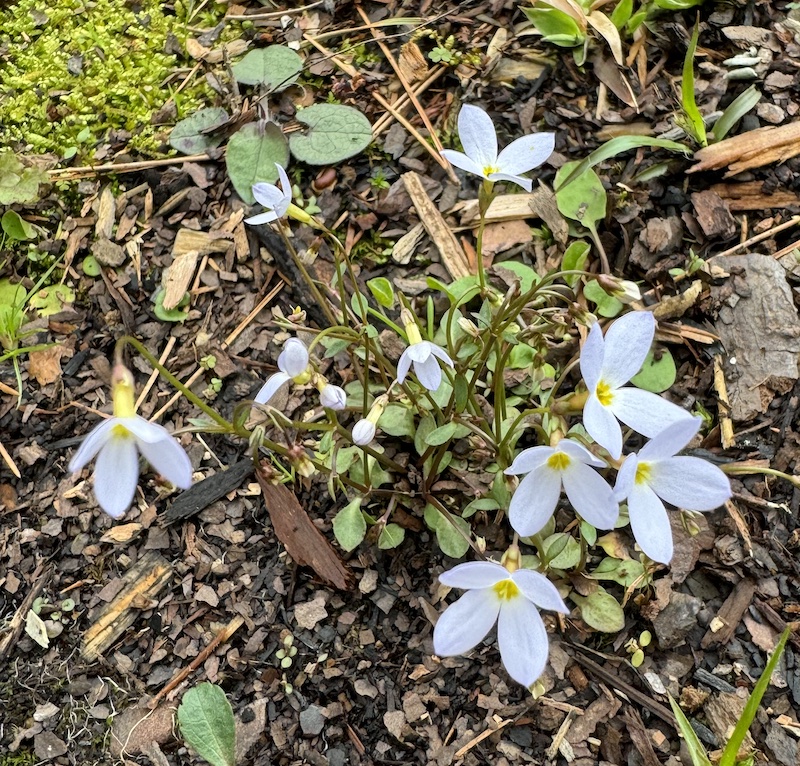
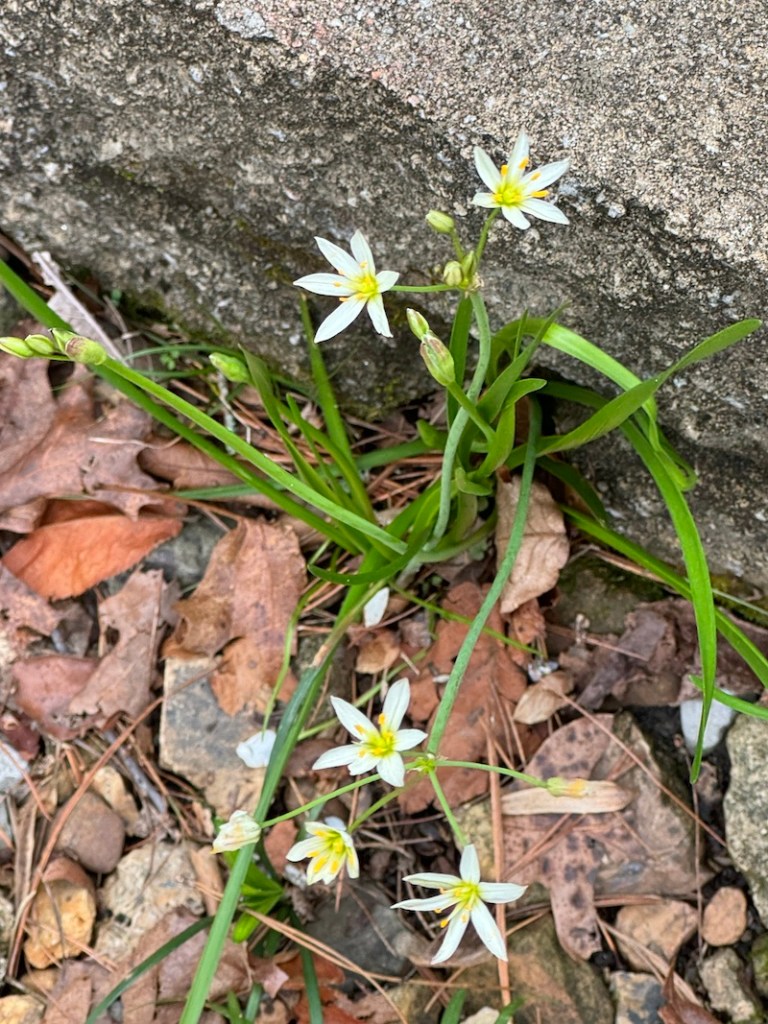
2. Nothoscordum bivalve, false garlic, or crow poison, dots the open spaces in the non-wooded area of the garden as well. While all parts of the plant are reportedly poisonous, I could find no specific record of it killing crows, although I did find references to Native Americans planting it in corn fields to ward off crows. Regardless, wisdom dictates that this bright, little white petaled, yellow centered plant should be eaten by neither crows nor humans. It is a native herbaceous perennial.

3. A safer plant to eat is cut-leaved toothwort (Cardamine concatenata ), another native perennial. Its reported spicy flavor gives it another common name of pepper root.

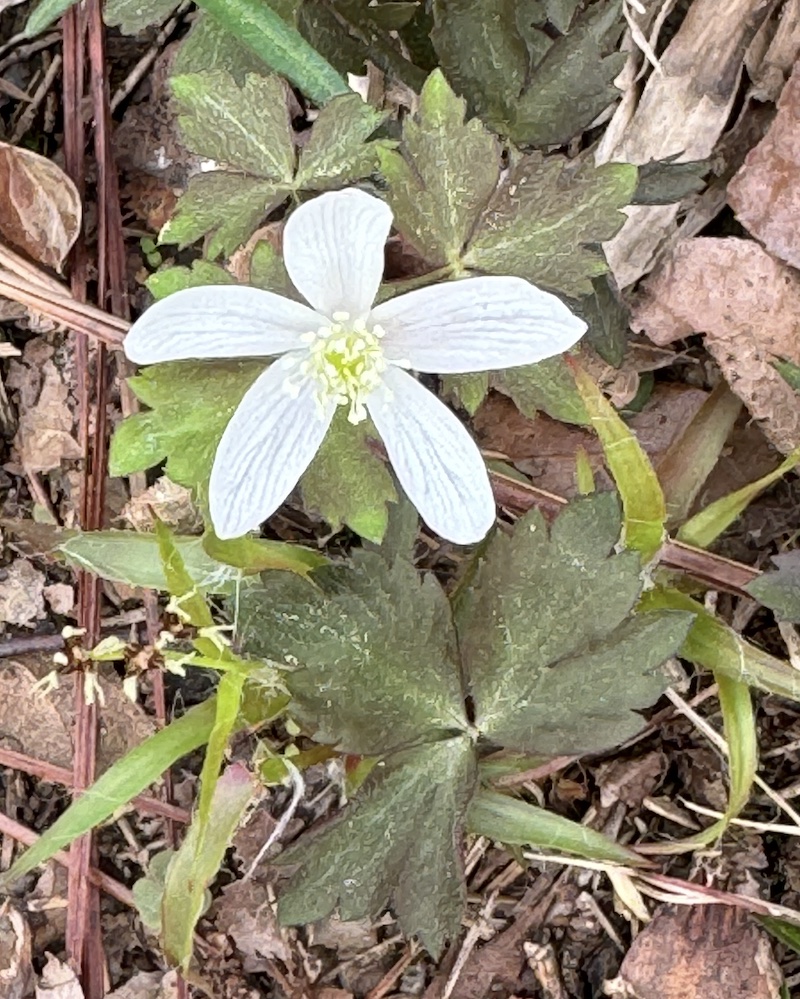
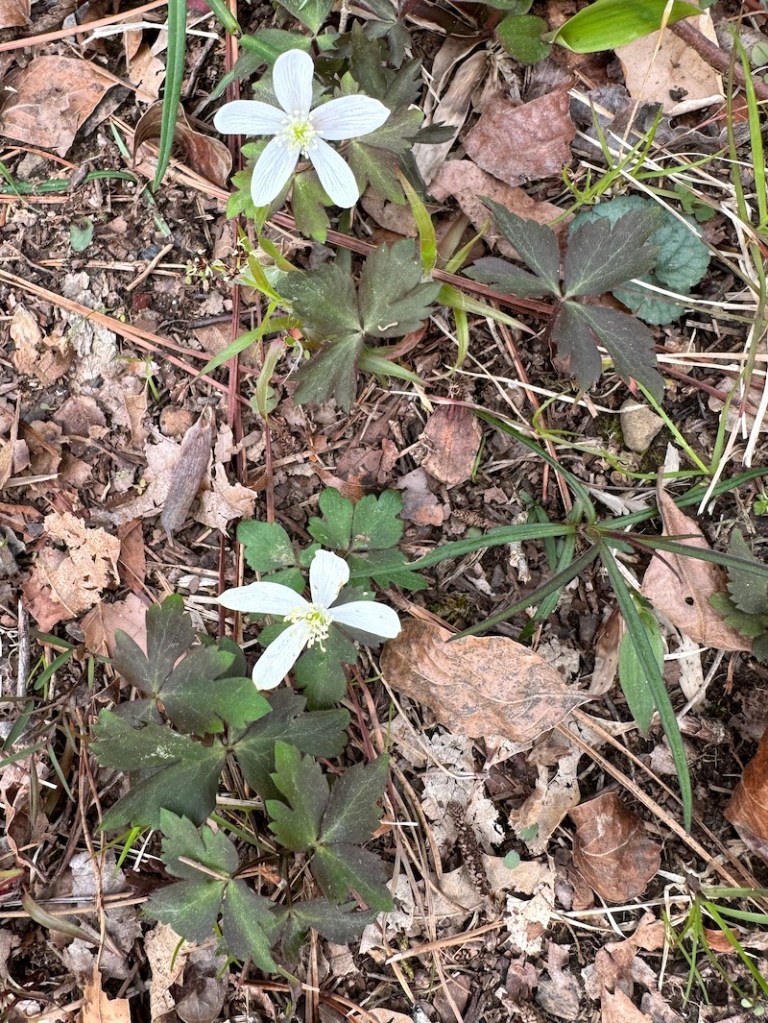
4. The previous wildflower post included rue anemone. Now the somewhat larger wood anemone (Anemone quinquefolia) is in bloom. When fresh, all parts of this perennial are toxic, and can be downright poisonous if eaten in large quantities according to the Lady Bird Johnson Wildflower Center. I think we are safe, though. Gathering a large quantity of wood anemone would likely take enough time that the first gathered would no longer be fresh.
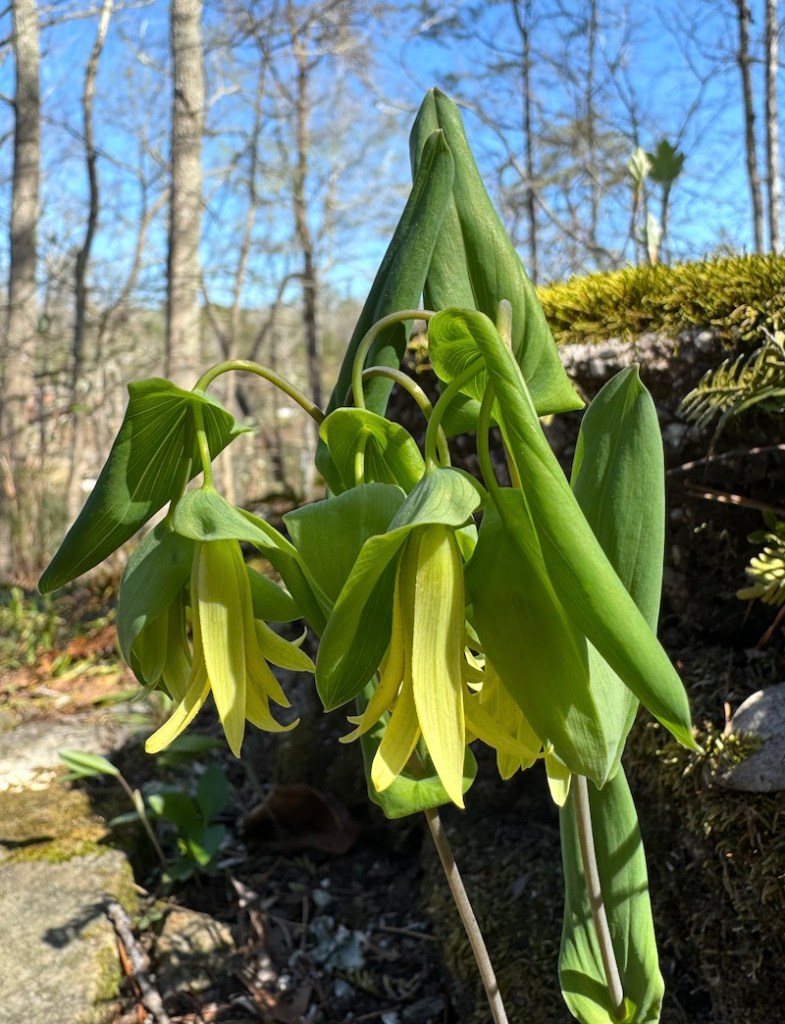
5. Bellwort, Uvularia grandiflora, is blooming, but difficult to photograph. Also called merry bells, this rather low growing perennial hangs its head almost straight down. The blooms are very reminiscent of hanging bells.

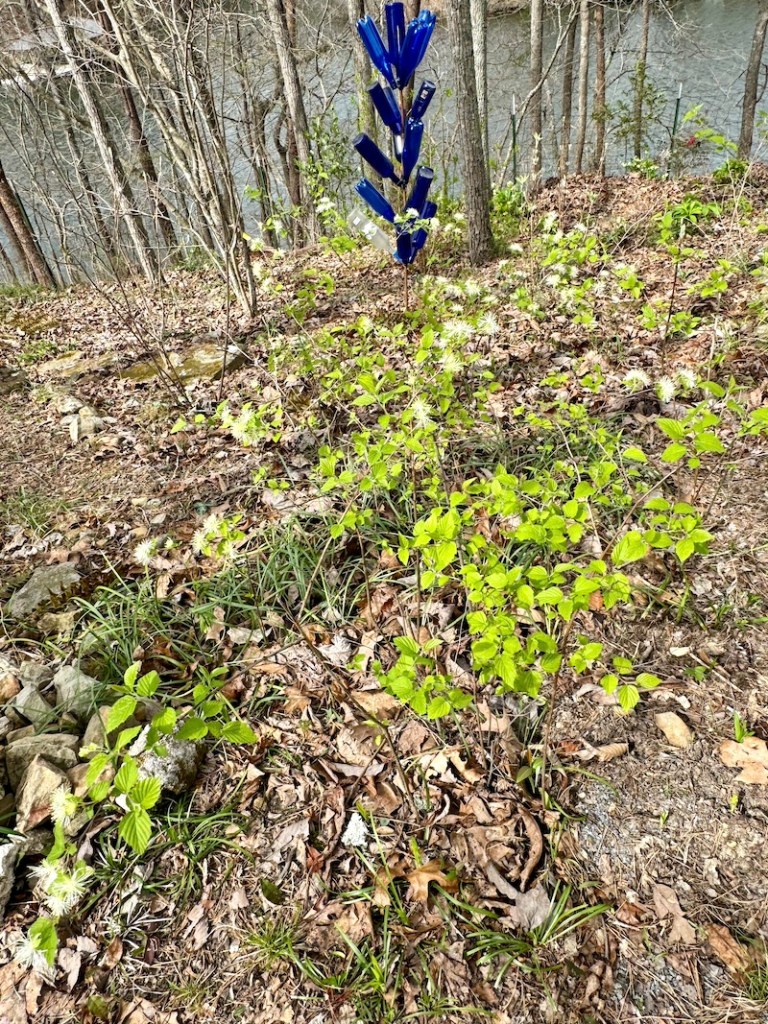
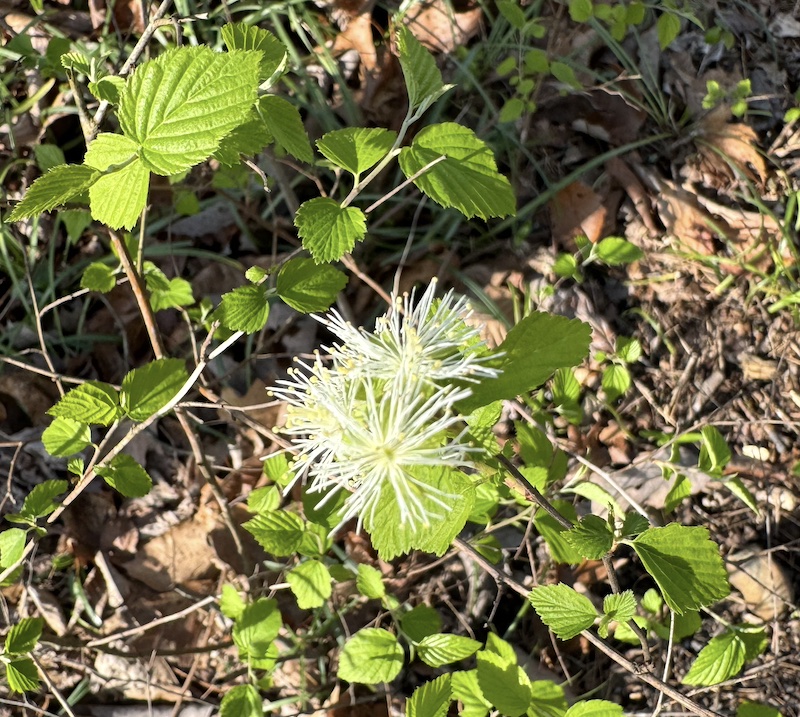
6. Last is one of my favorite early blooming native shrubs (apart, of course, from the native Alabama azaleas), Neviusia alabamensis, or Alabama snow-wreath. It will grow in part shade. Unfortunately, I have it in essentially all shade, so its colonizing, spreading habit is thin. But its blooms are just as eye-catching and starburst-like.
Another attempt at bellwort before I close.
 After Eden
The Alabama Spring wildflowers are beautiful. I still have some bloodroot and golden Alexander blooming.
LikeLiked by 1 person
The bellwort is just coming in to full form. Same thing for the toothwort. I was back in Trussville for a few days for church services, and while away the dwarf irises put on a private show.
LikeLiked by 1 person
Wildflowers do not get enough attention. Does Bluebonnet grow wild there?
LikeLiked by 1 person
I trust it will grow here, but I’ve never seen it growing wild.
LikeLiked by 1 person
I have tried to grow it from seed, expecting it to be as happy here as native species, but it does not survive long enough after germination to bloom. I can not figure it out.
LikeLiked by 1 person
Wild flowers are so beautiful and yet many people pass them by or trample underfoot without a second thought.
LikeLiked by 1 person
That is true! Especially for the tiny ephemerals like rue anemone. Crane-fly orchids suffer the same.
LikeLiked by 1 person