
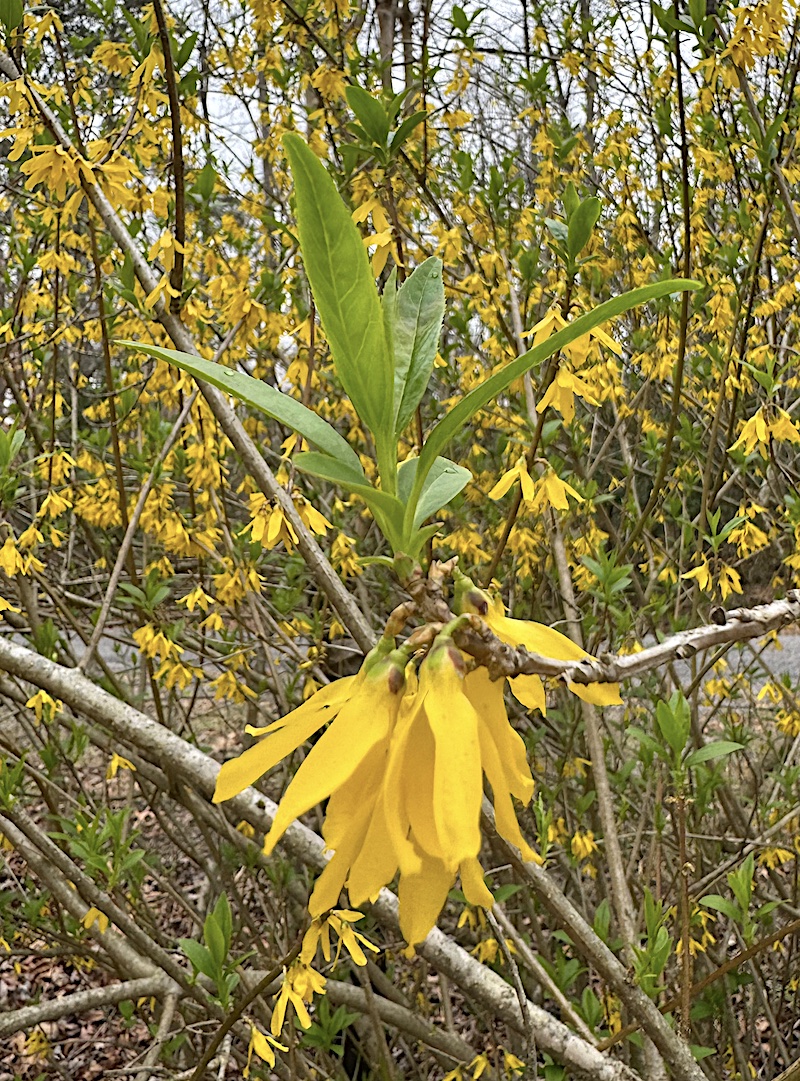
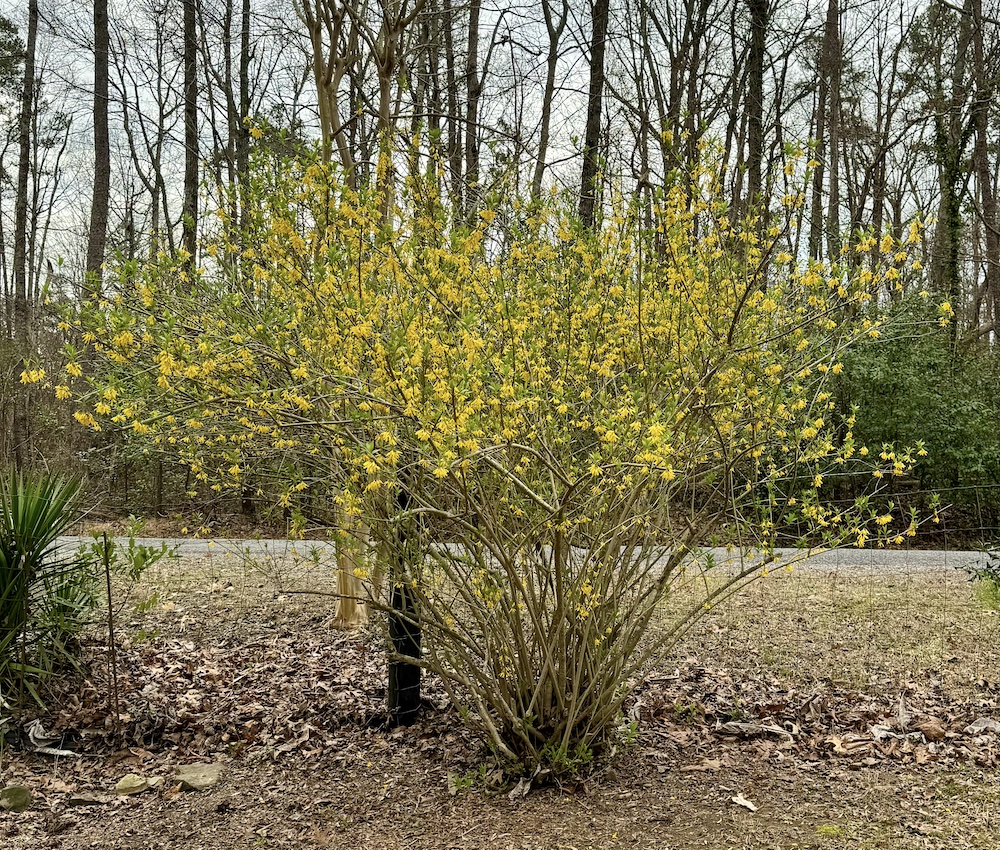
1. I’ll begin this week’s six, which is mostly images, with one of those shrubs that typically announces the beginning of spring: forsythia. There are several forsythia bushes throughout the garden, but none of them blooming quite so vigorously as they have in the past.

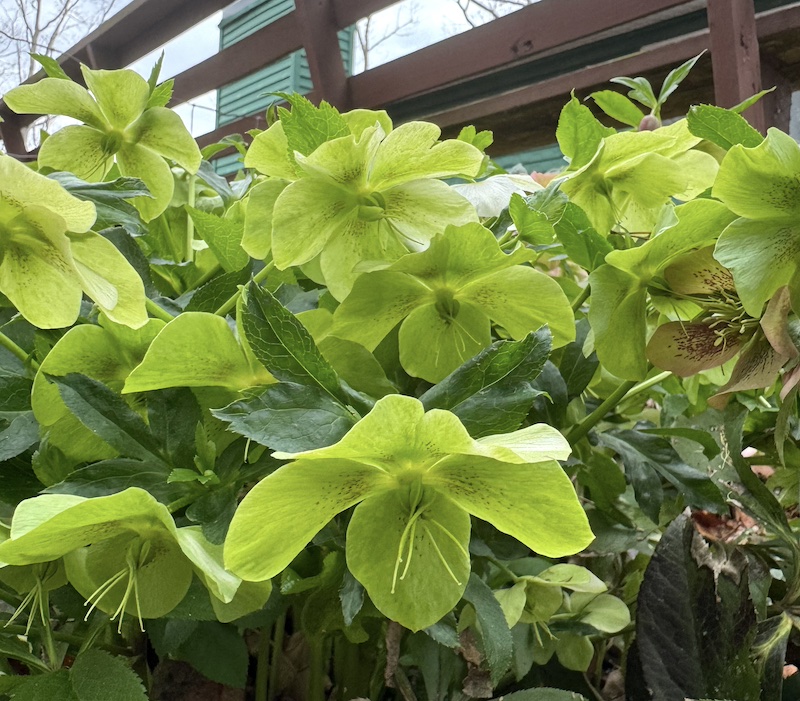
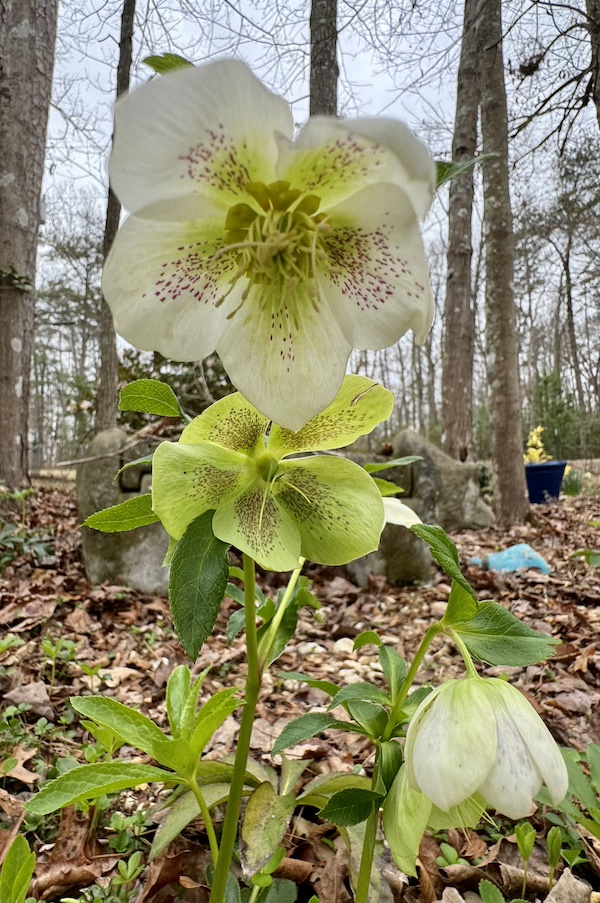
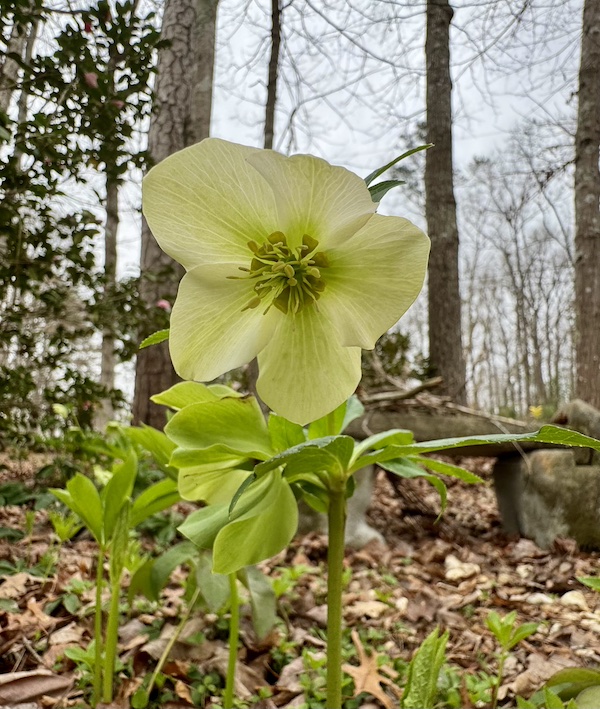
2. The Lenten Roses or hellebores (Helleborus spp.), too, are thinner in areas than they have been in past years. Although, there are as many tiny sprouts as might be expected from last winter’s flowering. Lots of intentional thinning needed to be done on that front. While the mature plants are fewer than expected, the flower colors are just about as varied as in the past, ranging from a lime to pink to creamy white. Unhappily, however, there are none of the former darker maroon flowers this year. All of the plants below are pass-along or self-seeded plants. Other than to note that hellebores are native to Europe and Asia, I can offer nothing about the linage of any of them.


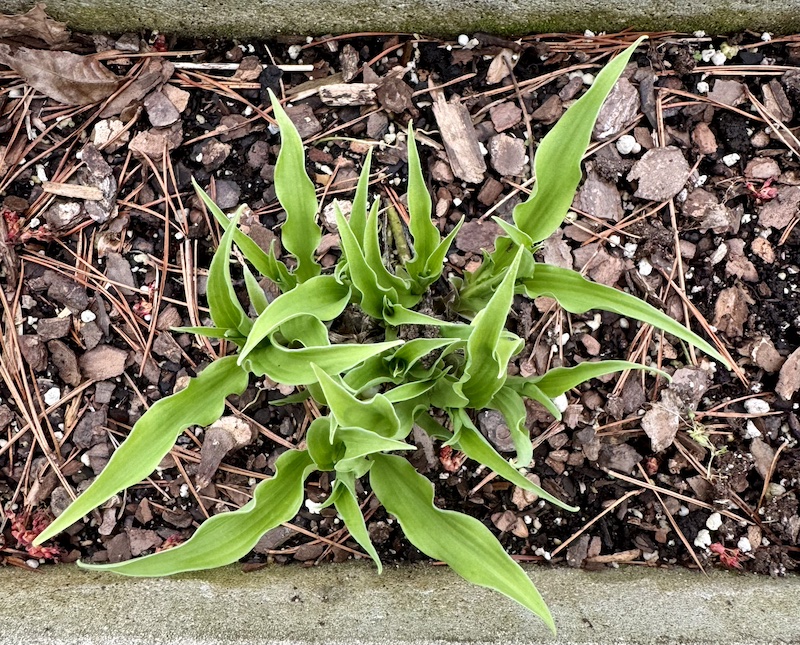
3. Also native to Asia, hostas of both known and unknown varieties are breaking ground. The first three pictured below are ‘Curly Fries,’ ‘Wiggles and Squiggles,’ and ‘Fire Island.’ The next three could be derivatives of any number of blue and variegated varieties. Many more of large leaf to small leaf varieties remain just below the soil’s surface. Plantain lilies, a common name for hostas, is one that I did not hear until I moved to the US South. By whatever name or of whatever leave shape or color, they are the only plant I’ve know deer to jump my fence to eat.


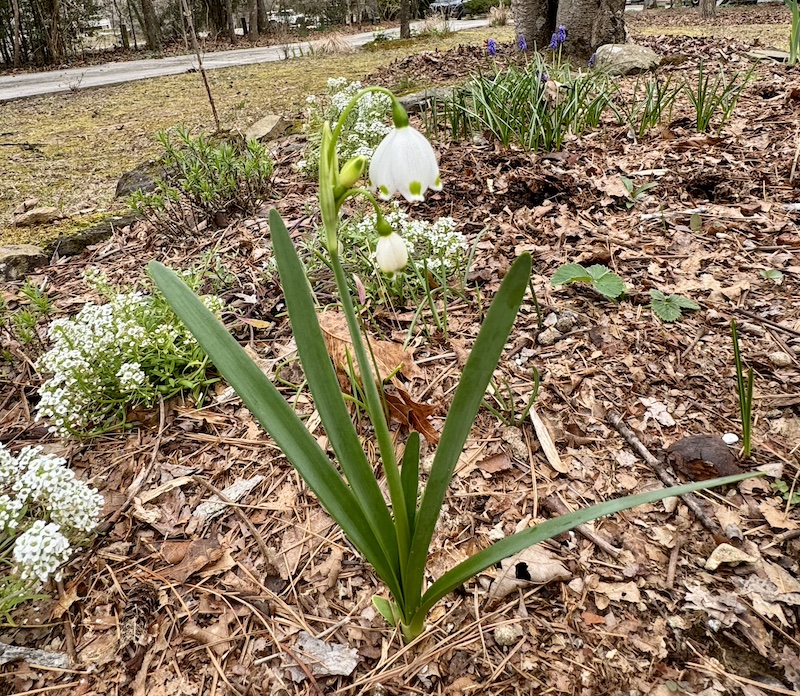
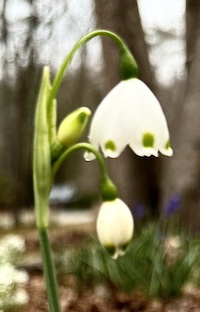
4. Moving from the many to the one, a small patch of Leucojum aestivum, or summer snowflakes is beginning to bloom. For me, these take the place of snowdrops, which come up begrudgingly and sickly in even the best bed in the garden. The non-native, perennial, with the lovely little bell-like flower pictured below is growing by sweet alyssum with muscari , or grape hyacinths, in the background.
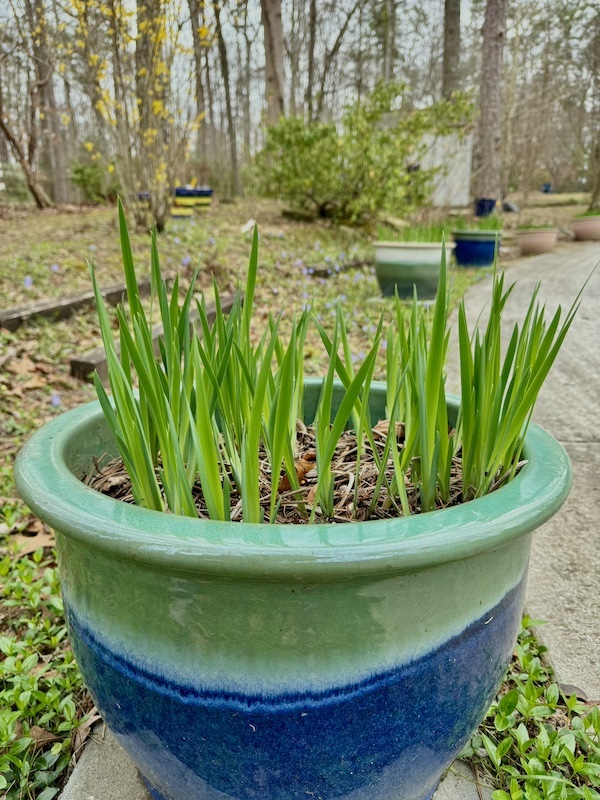
5 and 6. I’m putting these two together because one is sitting in the other: a swath of periwinkle and pots of Siberian irises. Common periwinkle (Vinca minor) is considered dwarf kudzu by some of my local Master Gardener friends, but it is an excellent ground cover if one works to keep it in check. In the photo on the left below, periwinkle is at its best—lush, dark green leaves, and purplish-blue flowers.
The Siberian irises will be just about the same color as the bottom of the pot in the second photo. Five pots line the driveway. Too bad the yellow forsythia will not still be in bloom when the irises are. As a final comment, I confess to being somewhat addicted to yellow and cobalt blue. In fact, I generally plant yellow gerbera daises in the middle of the irises.

Anyone interested in other six-item garden tours should visit Jim Stephens’ Garden Ruminations, the hub of our Six on Saturday sharing. Guidelines for joining in and a selection of links to other gardens can be found there.
 After Eden
Love the Forsythia, yellow is so cheering at this time of year.
LikeLike
Beautiful collection of photos. Forsythia and daffodils are reliable yellow beacons of spring in my area.
LikeLiked by 1 person
Your Forsythia is beautiful and the bright yellow is always a welcome sight at this time of the year. I do believe mine has forgotten this is the start of spring, but it was sickly looking last year – I should check its condition.
The hellebores are the gems of winter and early spring, regardless of colour or lineage – they’re all beautiful. I don’t have a problem with deer eating my hostas but a few hungry snails can turn them into lacework in no time at all. Are you perhaps able to add some wire cloches to protect them from deer?
LikeLiked by 1 person
Fortunately the deer snack mainly when late summer drought conditions have reduced their other food. At least by then the hostas have bloomed!
LikeLiked by 1 person
i love that first Forsythia photo! wonderful and it is nice to see spring.
LikeLiked by 1 person
Thank you!
LikeLike
Those photos of the Forsythia were a welcome sight on a grey and damp day. A lovely selection of Hellebores too.
LikeLike
You are just a bit ahead of me–my Hellebores are about to open, the Hostas are just popping out of the ground, and the Forsythias are beginning to have puffy buds. Spring is happening early for us this year…it was a very mild winter in the Midwest. Your Hellebore collection is lovely. Enjoy!
LikeLike