

There is not a lot of color, much less flash, in today’s six. But there is a lot of hope because the focus is on flourishing of plants that suffered badly in the uncharacteristically cold and unusually sustained Alabama temperatures last December and March.
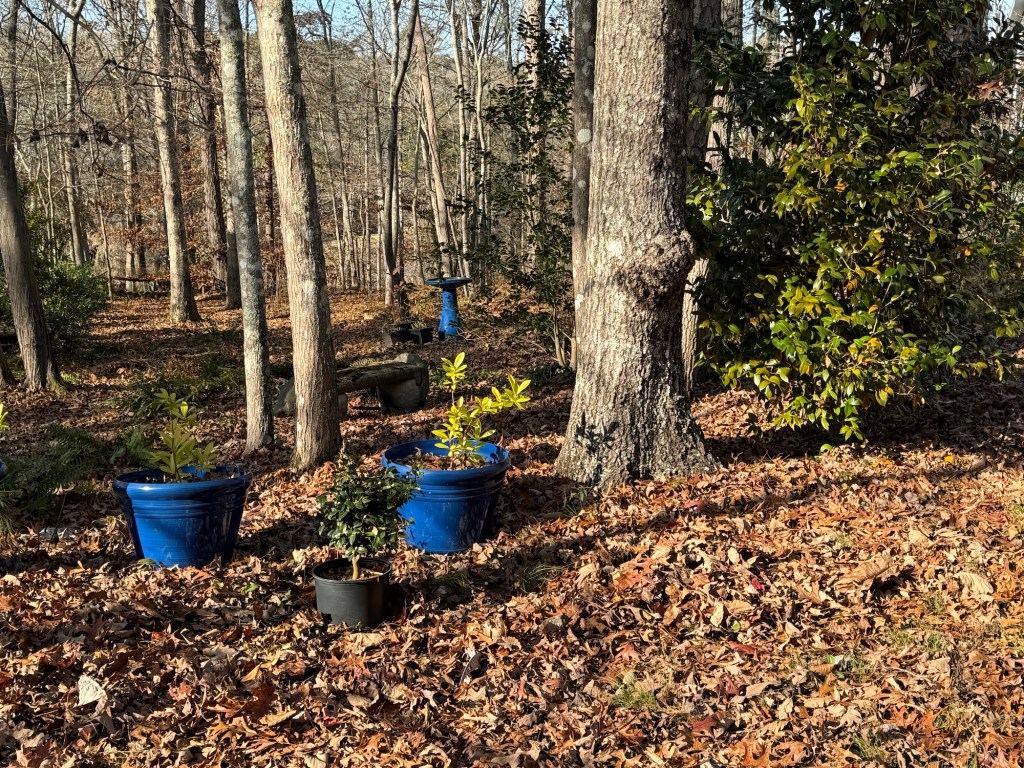
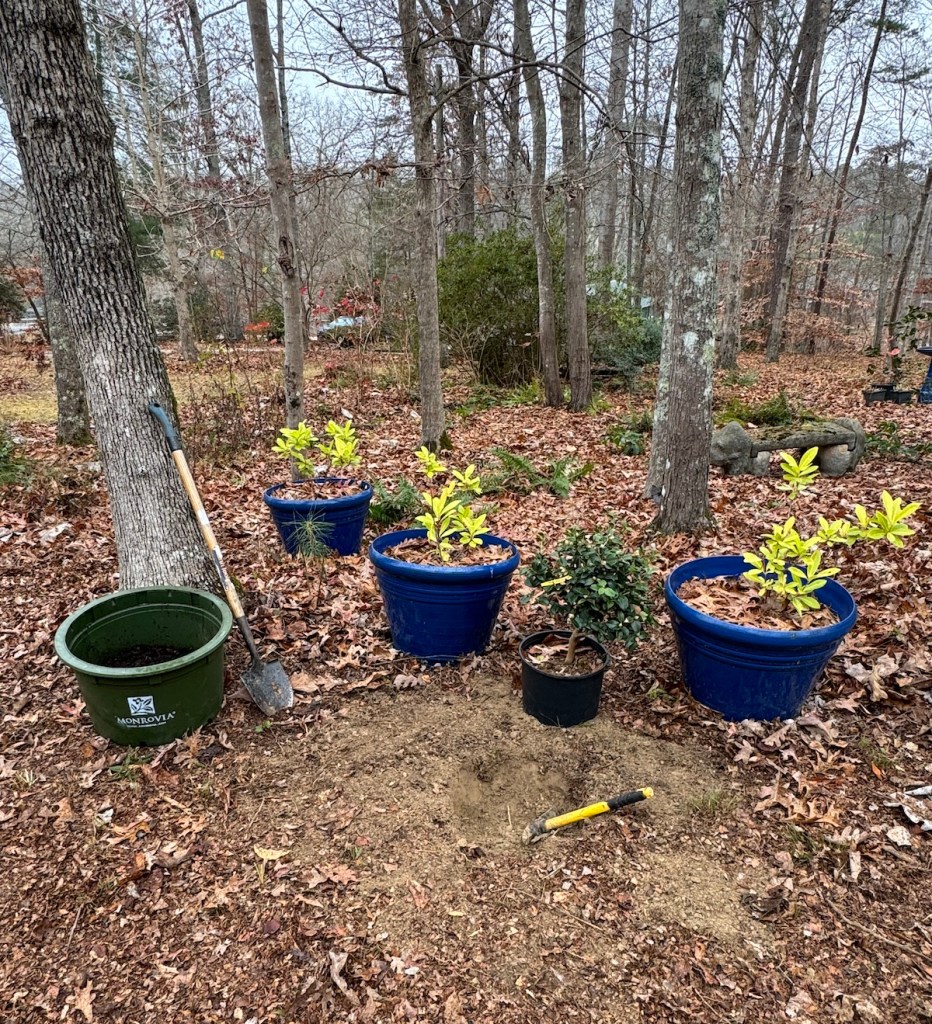
1. First comes three small native anise plants (Illicium Parviflorum) that started out as very small shoots picked up at the Birmingham Botanical Gardens plant sale a few years ago. Last year this time I had just planted them in large blue pots to brighten up the brown wooded area with the contrast between their chartreuse green and the pots’ cobalt blue. They did not fare well in the cold that followed. But they have regained some height and leaves during this summer and fall in spite of recent drought conditions.


2. This fall I planted a compact camellia, ‘Winter’s Cupid,’ in front of the pots in order to make a semi-circle with two other camellias. It was already heavy with buds when I purchased it from Petals from the Past (a nursery well-known to gardeners—especially Extension Master Gardeners—in Alabama) ; unfortunately, almost all of the buds have fallen victim to continued erratic Blount County weather. There is every reason to be hopeful for next year, though. The shrub itself looks healthy and is settling in well.

3. As for those other two camellias, they are equally heavy with buds. The first below, ‘Grace Albritton’ had a respectable showing last year, albeit many of the flowers were sadly cold burned along the edges. The second, ‘Lady Vansittart Sport’ had less than a handful of blooms. Both are full of very promising, healthy looking buds now, though.


4 & 5. While looking around for other likely SoS items, I noticed a patch of cranefly orchids poking its new green leaves through the desiccated brown leaves on the ground. This is a reliable patch that returns every year, but it is much larger than it has been in the past. These crinkled leaves will grow through the winter, then just about disappear until August when the plant will send up a nearly transparent coffee-colored stalk with multiple tiny orchid flowers on it. The bumps on the leaves that have a maroon underside are identifying characteristics of the plant, Tipularia discolor, or crippled cranefly. It is a common forest floor perennial in the Southeast US, but it requires a sharp eye both at this point in its growth cycle and at the point of blooming several months from now. While clearing some leaf debris for a good photo, I was fortunate enough to spot this small salamander, which counts as the 5th thing for this week. I can’t give an identification other than to say it is in the Plethodontidae family and endemic to the US. He, or she, was only 3 inches head to tail. I carefully replaced the leaf debris over orchid and salamander.


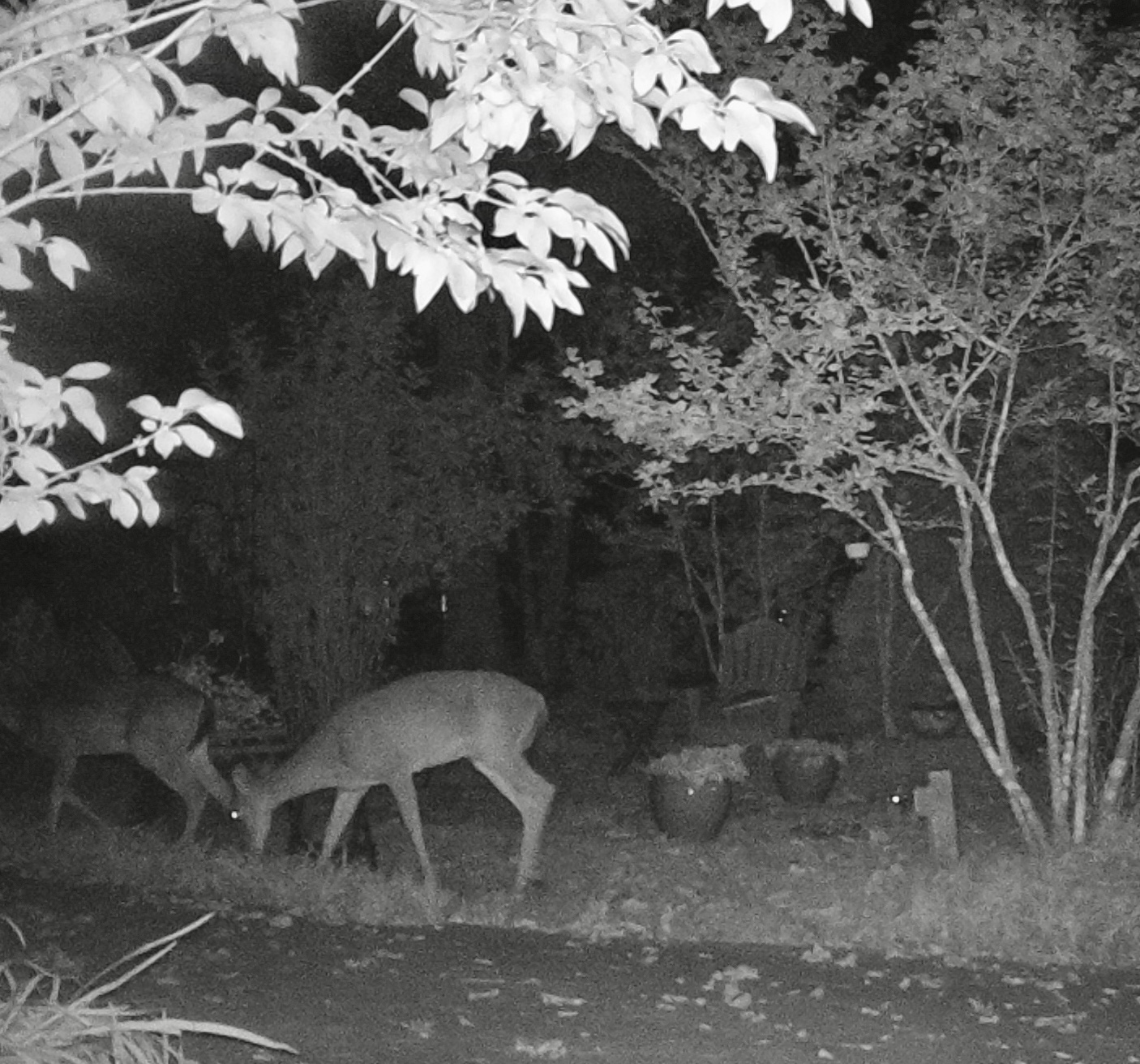
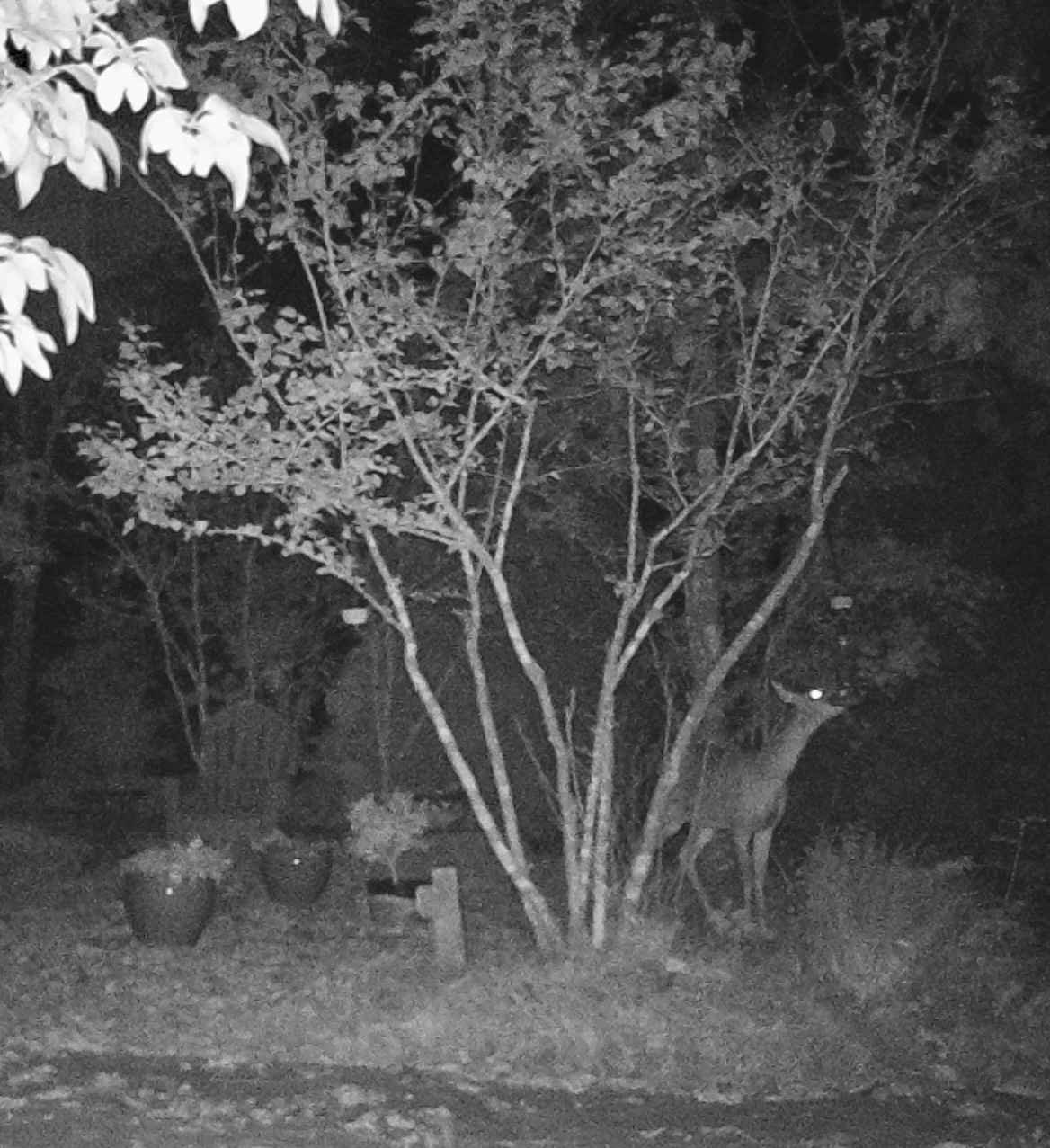
6. The final entry comes from the critter cam, which I had not looked at for two months. I had noticed that my hosta were, as one often hears in the American South, “looking poorly.” The night camera caught just why. While I was in northern Italy on a food and wine tour, local deer were in my garden on a hosta and hummingbird feeder tour.



I trust that there are others out there with interesting critters in the garden. By visiting Jim Stephens’ Garden Ruminations page they will find a link to guidelines for joining in this weekly sharing. They will also find engaging commentary from Jim and links to gardens around the globe. I’ll close with one final photo that I posted on Wordless Wednesday this week. This time though I’ll include the words: Instead of a partridge in a pear tree we have an opossum in a Rose of Sharon shrub.

 After Eden
I share your gardener’s sense that next year there will be better weather. Very interesting grouping of plants and animals. Primum non nocere (first, do no harm). Searching for photos led you to find the little salamander.
LikeLiked by 1 person
Right! Admire all living creatures, but do no harm! Cover again what you have uncovered. Actually, I frequently uncover salamanders, ones like this little fellow and the larger yellow spotted black ones.
LikeLike
Lovely! I do not see deer where I am too often, but they are around. Never seen a salamander in my area – fun! We all know how I love garden critters! You are in for a great camellia season it looks like!
LikeLiked by 1 person
Merry Christmas Susan.
LikeLike
Gosh – there’s lots of interesting wildlife over there. I love the gold ornaments hanging from the tree.
LikeLike
Hostas seem to be the meal of choice for deer.
LikeLiked by 1 person
I looked up ‘Winter’s Cupid’ and found that it has the same parentage as ‘Winter’s Joy’, which has had a very good year in the Camellia collection I have dealings with, such that it is now high up on my list of winter flowering camellias. Pollen and seed parents are the other way round, but ‘Joy’ is pink and ‘Cupid’ white. If ‘Cupid’ does as well for you it will be a cracker. I’m also curious to know what ‘Lady Vansittart Sport’ will come out like, it being a variety I know well.
LikeLiked by 1 person
I’ve had lots of variation in ‘Lady Vansittart Sport’ in the past. I’ve gotten lovely white blooms with sharp red streaks, white flowers with red blotches, and even a red bloom or two, which I assume came from the root stock. But I will post whatever she’ll produce this year.
LikeLike