

It is a little late on Saturday, but it is still Saturday—just enough time to get in some photos of what’s of interest in the the garden today. Before doing that, though, I want to remind folks to visit the hub of our Six on Saturday theme, Jim Stephens’ Garden Ruminations, to find guidelines for joining in and to discover links to, by this time of day, many fine gardeners’ photos, projects, and observations.
1. One of the most dependable fall flowering plants in this area is the North American native obedient plant (Physostegia virginiana). It is in full bloom in one area of the garden that gets lots of sun. In another area more shaded, it will bloom a little later. Whenever it does bloom, though, the bumble bees will visit as the third photo below and the feature photo show.


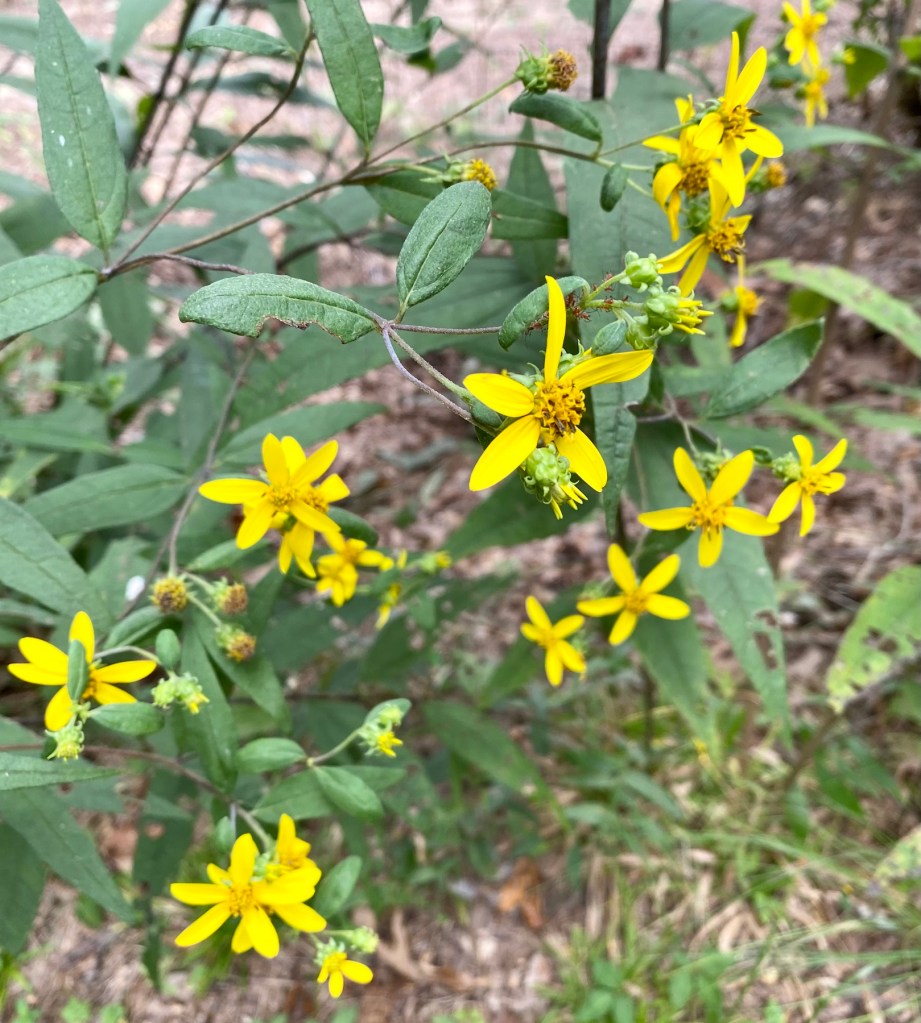
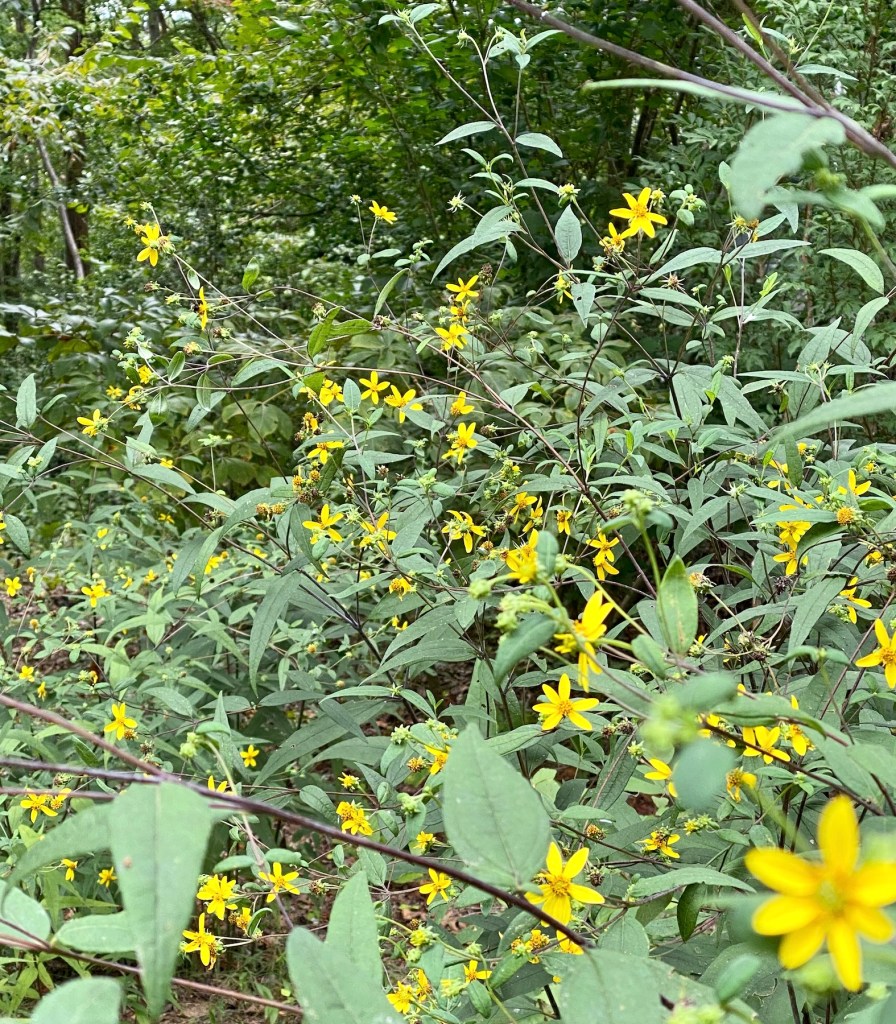
2. Another native blooming now is the woodland sunflower (Helianthus divaricatus). An herbaceous perennial, it is a dependable bloomer as well, but it needs room. In fact, it will demand room and spread in its own undisciplined way.
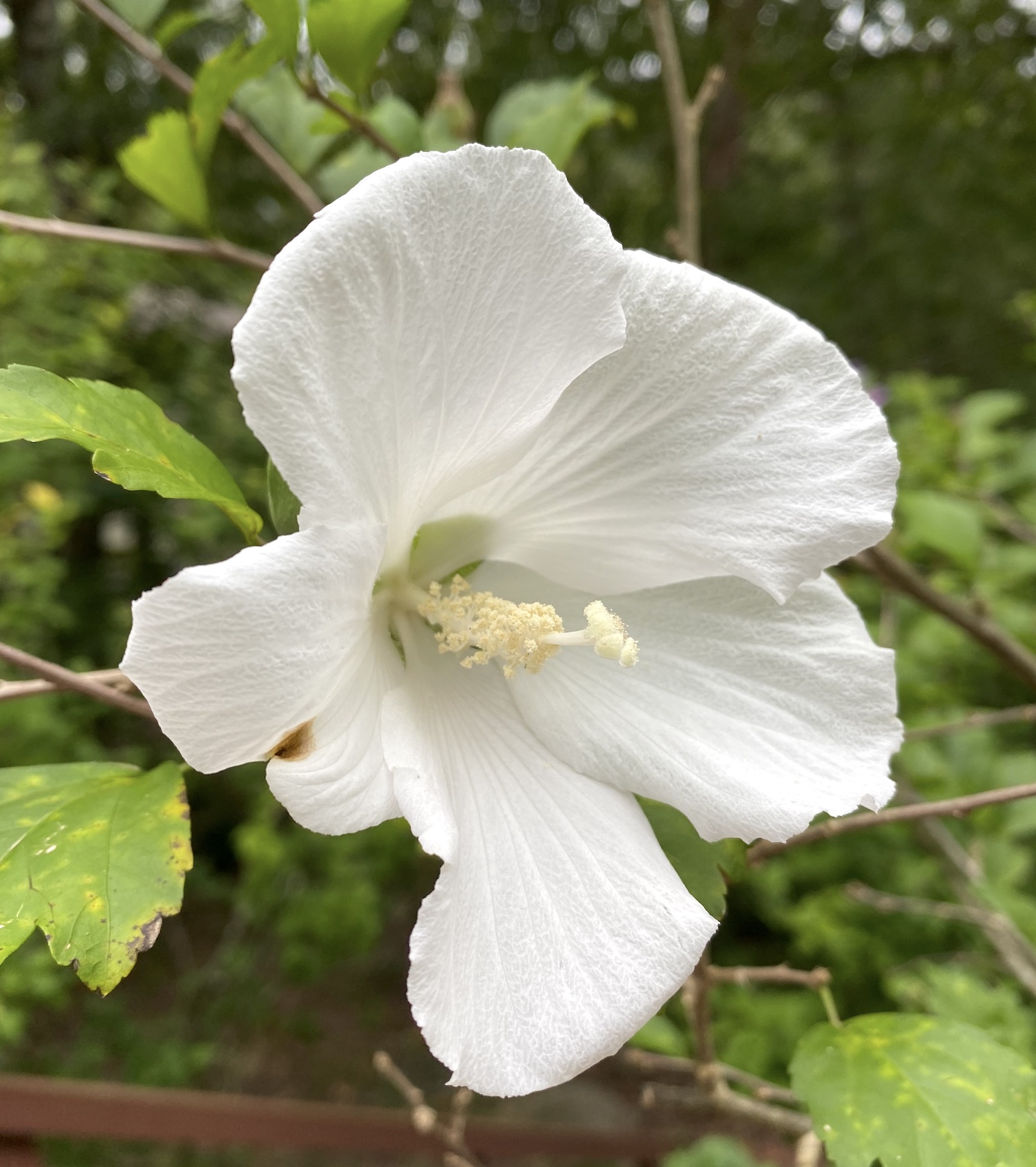
3. Several of the Althea, or Rose of Sharon shrubs (Hibiscus syriacus) are still flowering in a range of colors. It is nice to have such attractive spots of color for such an extended period, but it is frightening to remember that each of those flowers represent the possibility of numerous seedlings next spring.



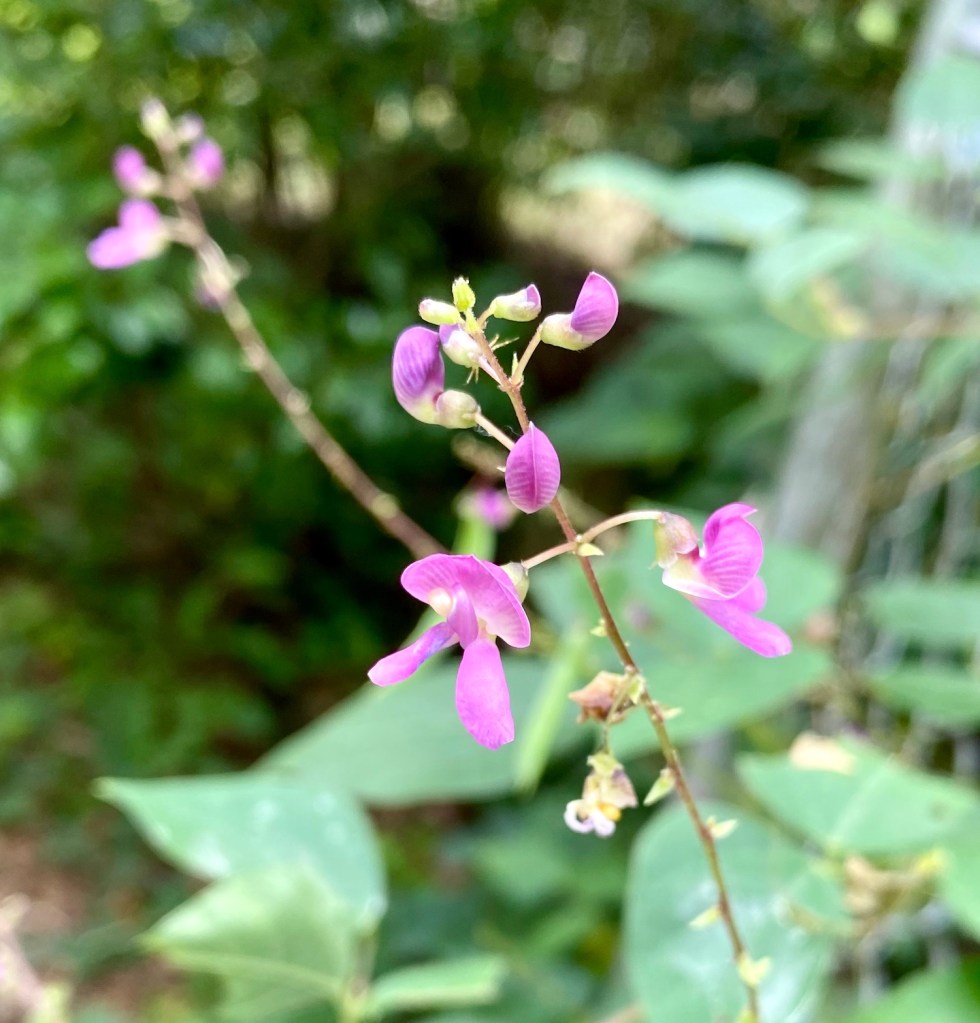
4. Thicket bean (Phaseolus polystachios) is coming to the end of its time. And, in all honesty, it is an annoying and invasive North American native perennial herbaceous vine that I am happy to see go dormant. I welcome some of it to grow along the fence, though, because it is the host plant for the Golden Banded Skipper.

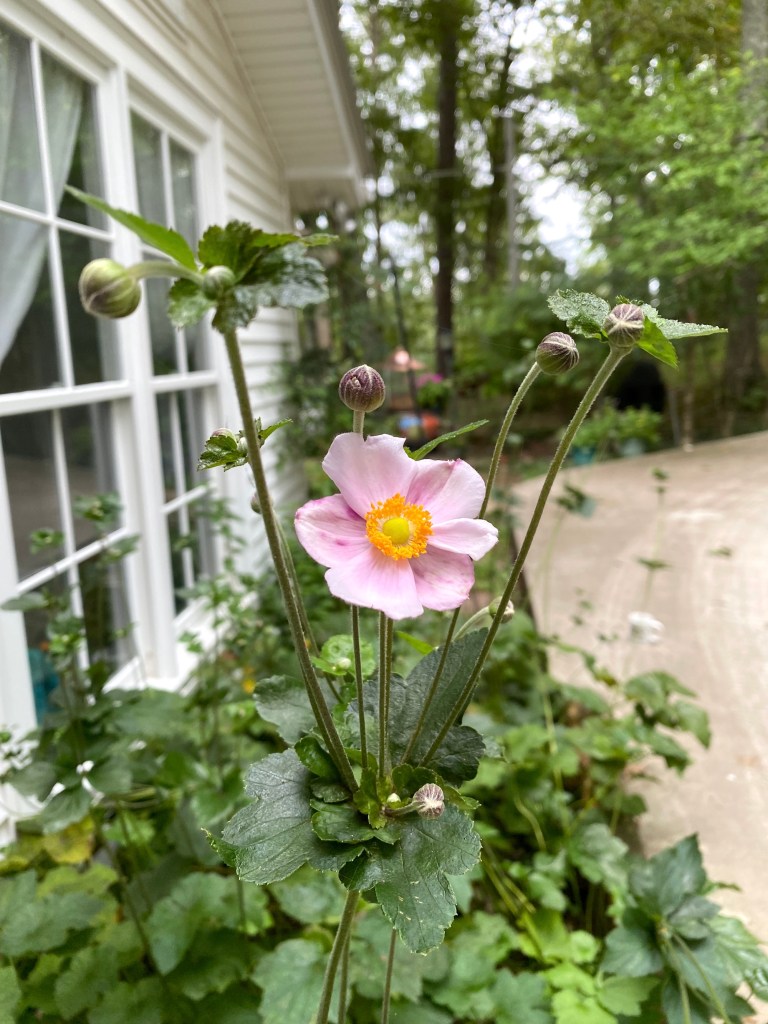
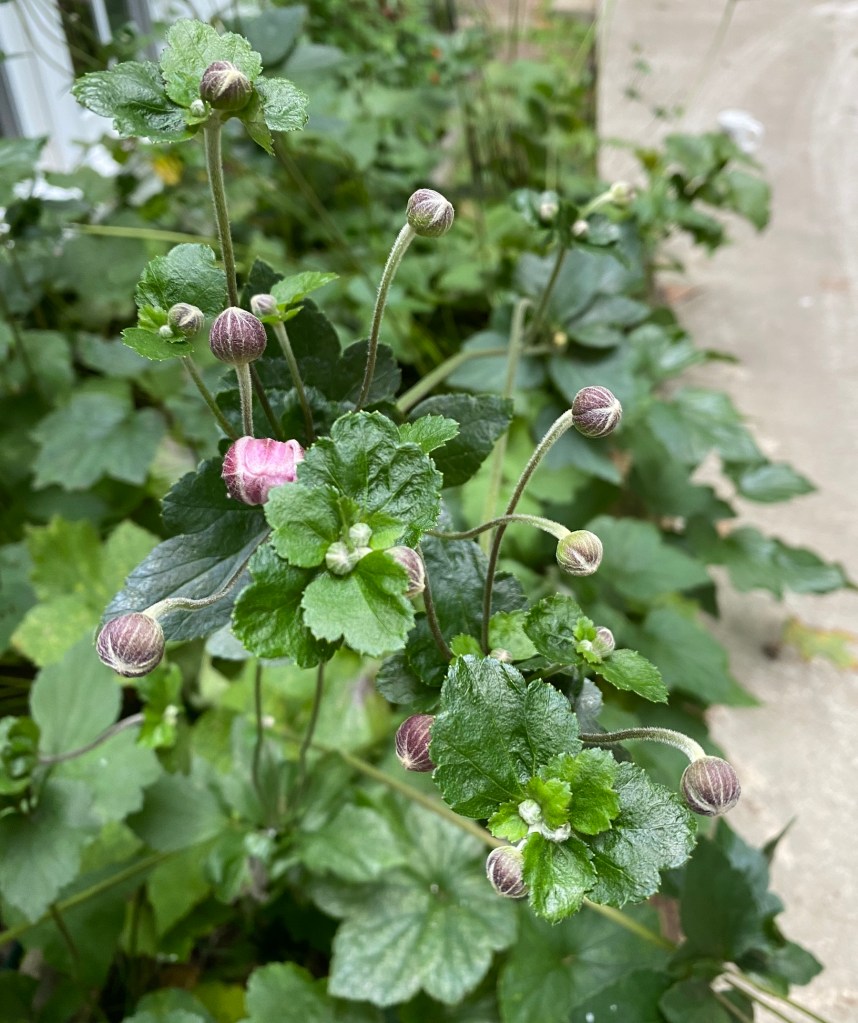
5. Just about to come into bloom is a plant that can border on invasive, but as far as I am concerned, it can spread as much as it wants. Japanese anemone, or windflower, (Anemone hupehensis) if left to itself becomes a little chaotic. Nonetheless, the waving globe-like buds and flowers are worth it.
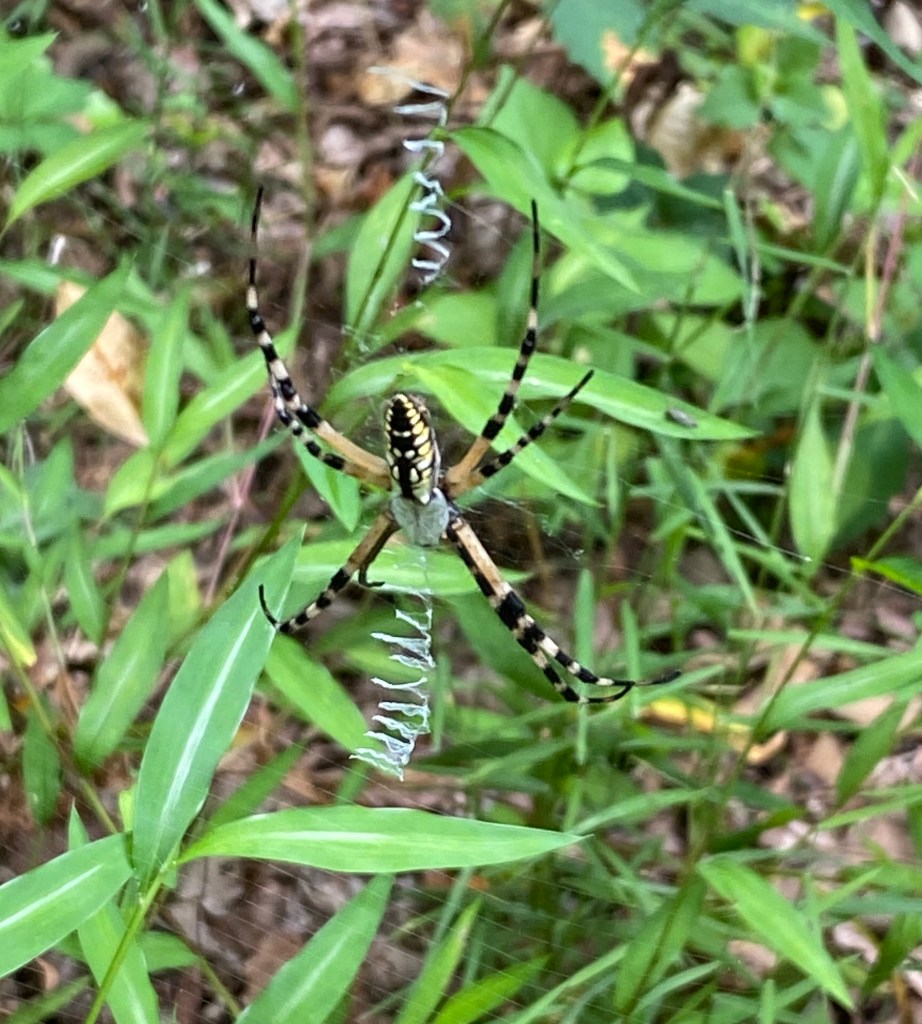
6. The final plant for today is absolutely invasive with no redeeming characteristic. Multiple sources cite Japanese stiltgrass (Microstegium vimineum) making its way to the US as packing material in 1919, hence the alternate common name packing grass. I fight it every summer and thought I had control of it this year. Unfortunately, after a few weeks of frequent rains and steamy sun, it seems to have gone wild among ferns on a hill behind the house. So, I went wild on it this morning, at least until the garden spider below set up a barricade. Please don’t misunderstand, I’m not bothered by the spider; I just did not want to bother the spider. Besides, I had already filled one large leaf and garden bag, and it was getting hot and time to stop anyway.
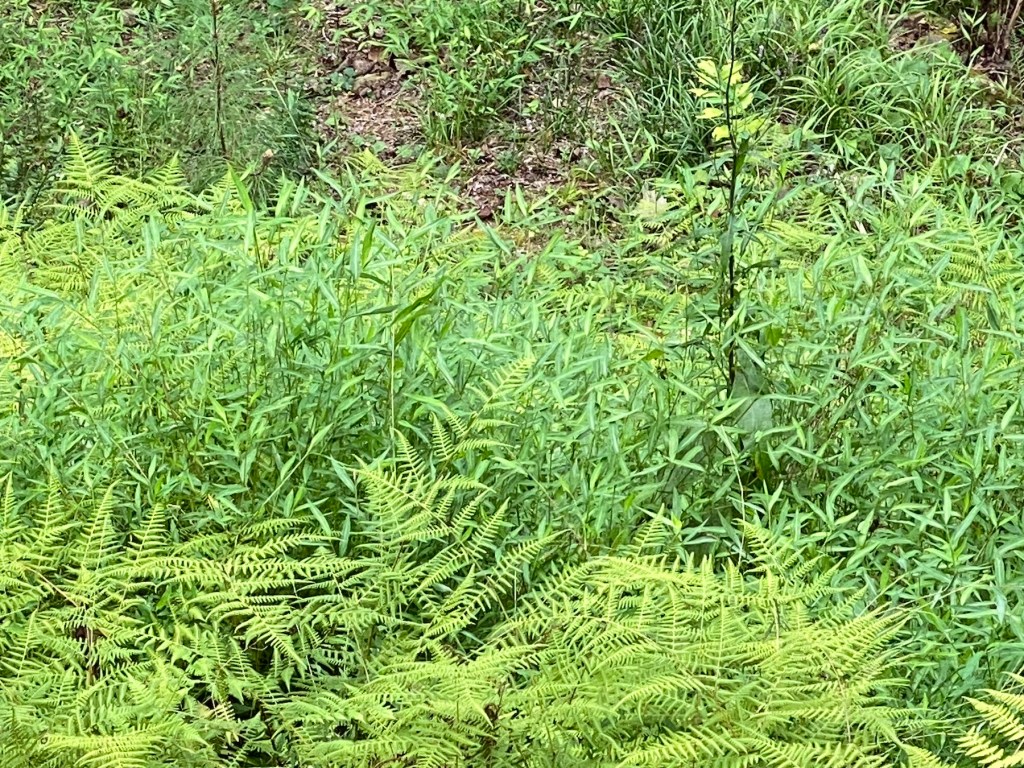
Maybe tomorrow I’ll finish clearing the hill of stiltgrass. It certainly has to be done. This perennial grass is vicious, as just about any Eastern or Southeastern horticultural program or Extension office will attest. Hopefully, it has not invaded other gardens and lawns around the plant loving world.
Wishing good weather and successful weed control to everyone.
 After Eden
That spider is a beaut! Stripey legs and the markings on the abdomen are stunning! I love the color of the Phaseolus polystachios.
LikeLiked by 1 person
Some real beauties there! I love them all particularly the Physostegia virginiana ( I have grown that in my garden!), Rose of Sharon Hibiscus, in all those colours and Helianthus.
LikeLiked by 1 person
This is the second Six on Saturday post to include obedient plant that I noticed today. I just mentioned that it is one of those species that we met in school, but then did not see much of afterward. I remember the white version most. It is not native here.
LikeLiked by 1 person
Your thicket bean reminds me of the perennial sweet pea, I see they are of the same family. I tried to grow some this year to replace the annual sweet peas, but I struggled and I don’t think the two plants that I planted out have thrived. I shall try again next year. Pretty hibiscus and spider.
LikeLiked by 1 person
Nice array, Susan! I, too, have pulled and bagged stiltgrass over two consecutive mornings. And it grows in and around the Southern Shield Fern on a hillside, as well. But alas, there was no writing spider argiope to greet me!
LikeLike