
I know that it is just as hot or hotter in other areas of the country and around the world as it is in Alabama. But successive days with the heat index, sometimes even the air temperature, hitting 100 degrees Fahrenheit is just plan oppressive. It certainly limits one’s time in the garden. One of the things I learned when I moved from the more straight-speaking Middle-Atlantic states to the Deep South was that ladies did not sweat–they glisten. Well, at 9 a.m. this Friday morning, I passed glistening and moved directly on to dripping. Very soon after, my gardening time was over for the day. Because this weekend promises to continue the same weather pattern, maybe greater wisdom lies in doing my gardening vicariously by visiting Jim Stephens’ Garden Ruminations, the hub of our Six on Saturday garden sharing around the globe. Readers can find guidelines there to join in with us.
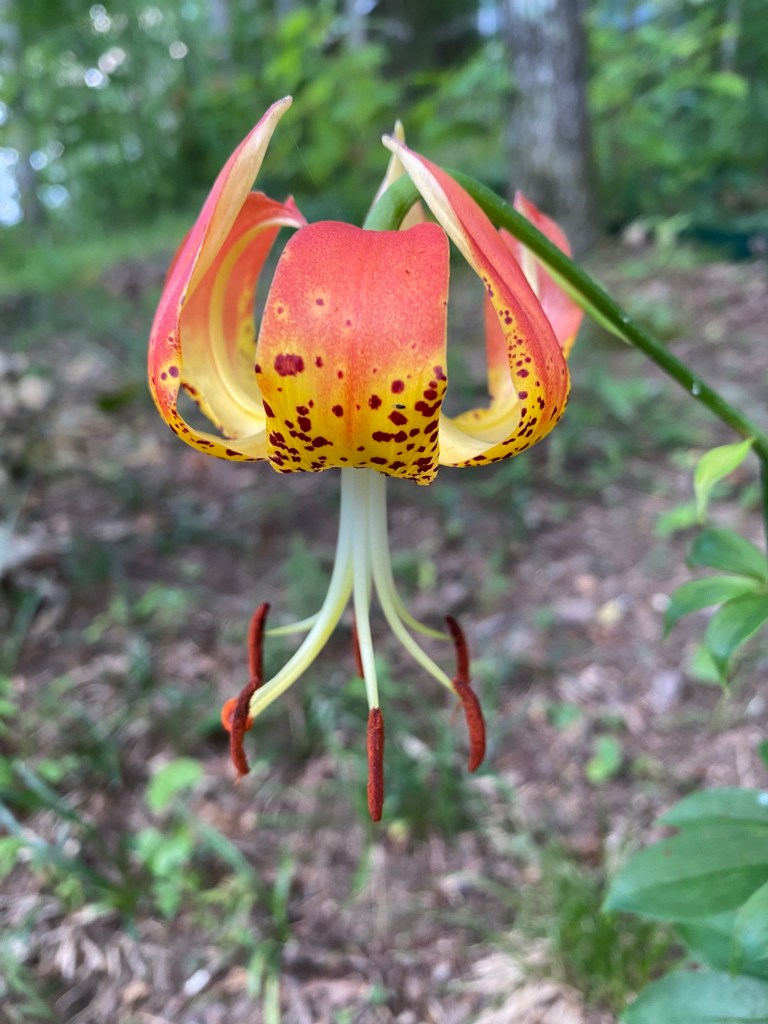
1. There are a few things to celebrate about the garden this week, though. First, one of my favorite wild flowers is in bloom. The Southeastern native Carolina lily (Lilium michauxii) is doing well in various patches. Sometime, the Carolina lily, which has one or occasionally two flowers on a single stem, is mistaken for the Turk’s Cap lily that presents multiple flowers in a chandelier-like structure.


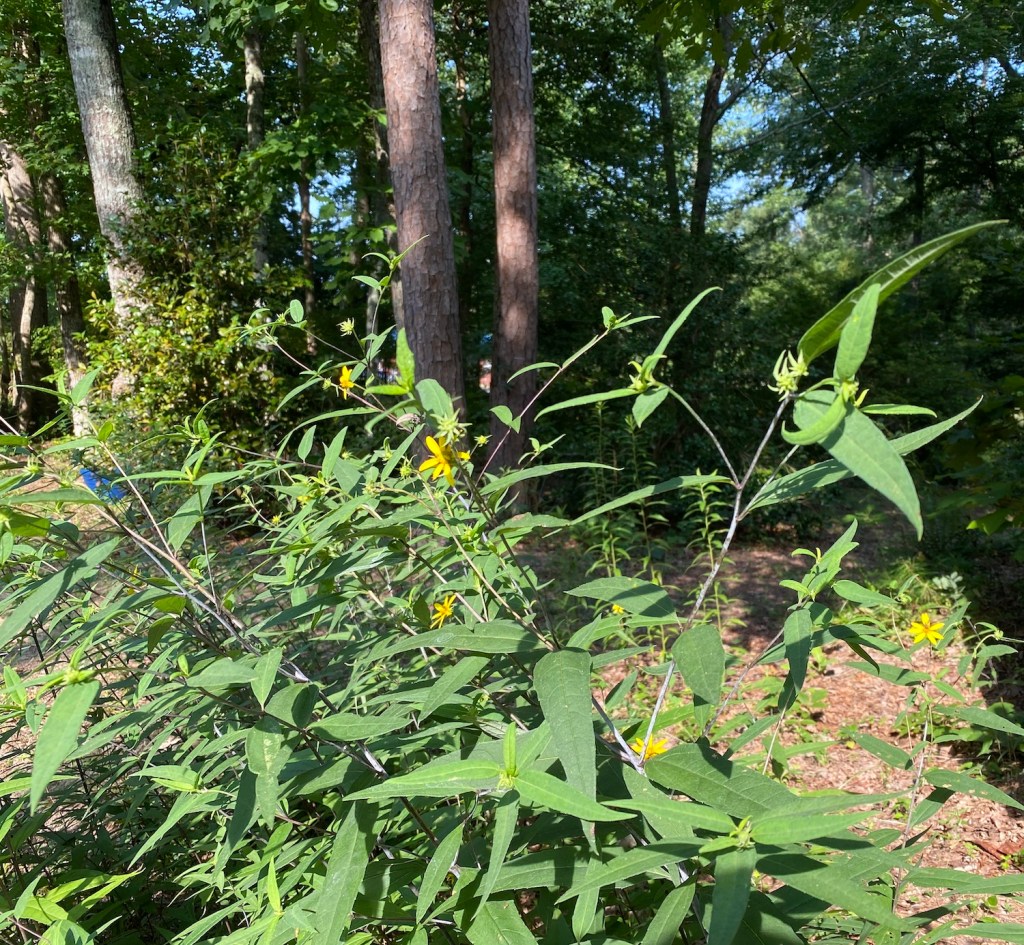
2. Woodland sunflowers (Helianthus divaricatus) are just beginning to bloom as well. Native herbaceous perennials, they are tall and vigorous growers. I know I should create a “plan” for them, but to date I’ve let them grow rather undisciplined in the sunny upper area of the wooded part of the garden. They are really a bit of a chaotic mess; nonetheless, they are a blooming mess.

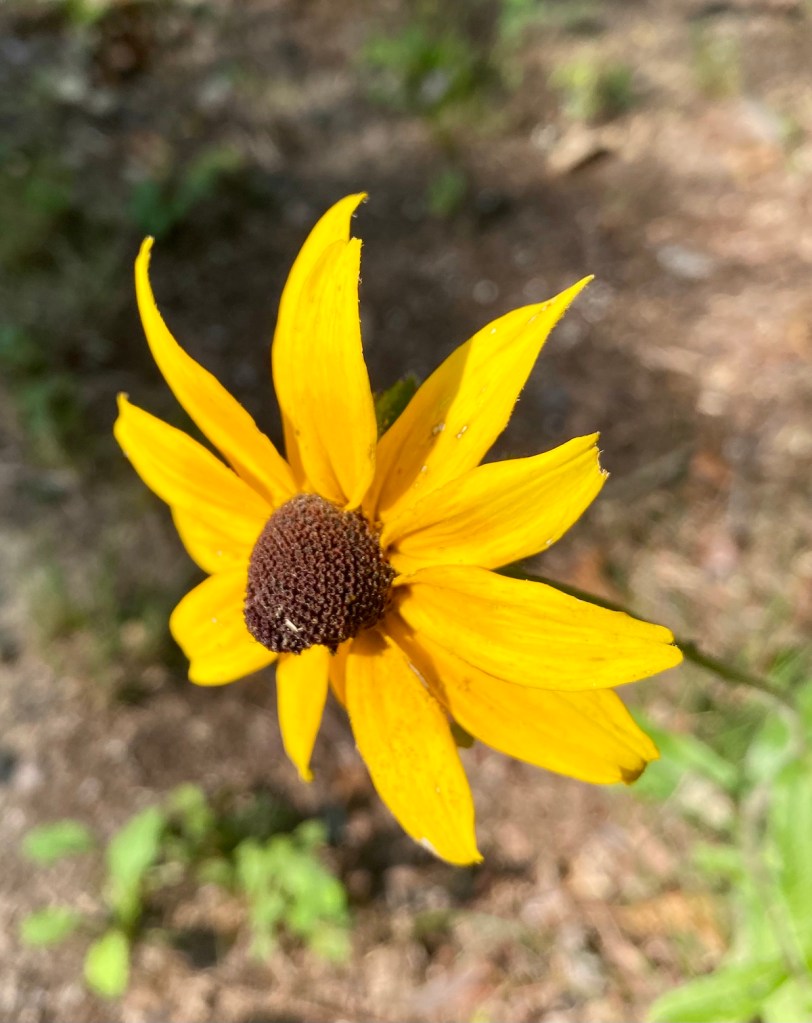
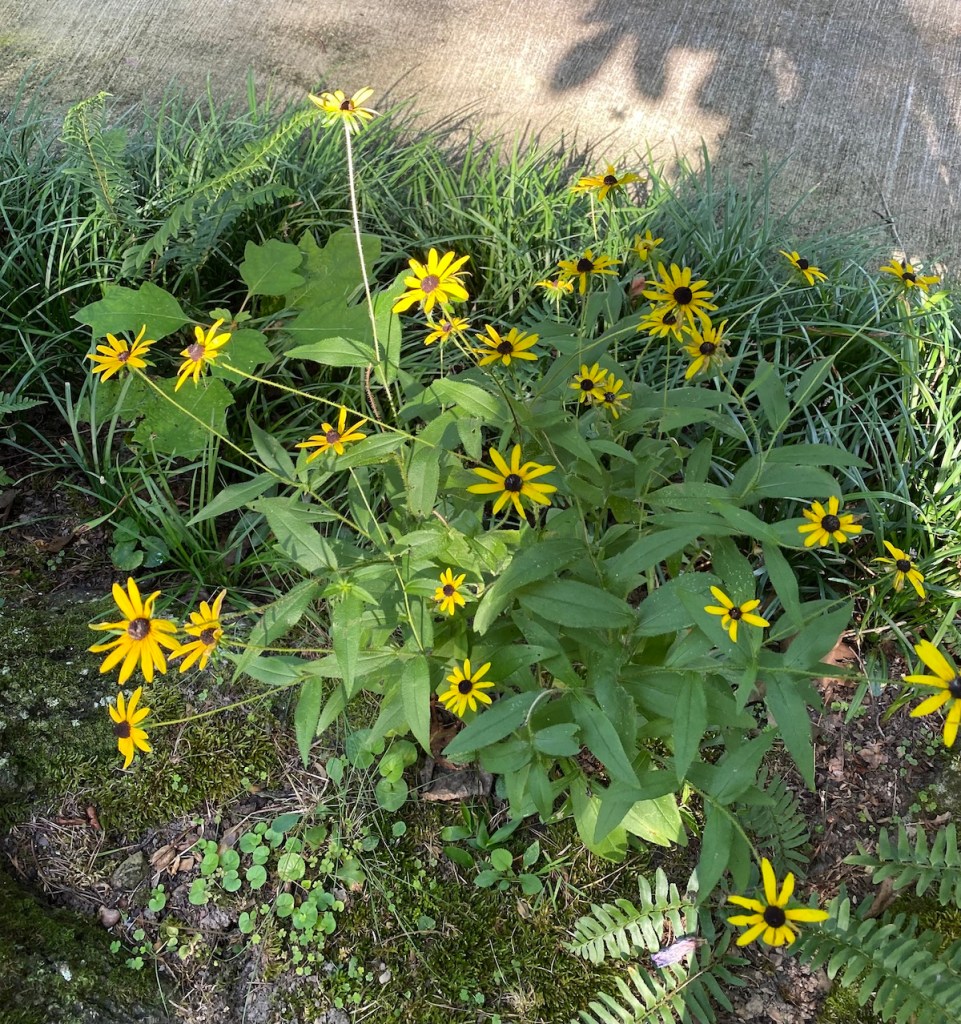
3. A few Black-eyed Susans (Rudbeckia hirta), a third native for today, manage to hold out in this heat, but it is surely the end of their time.

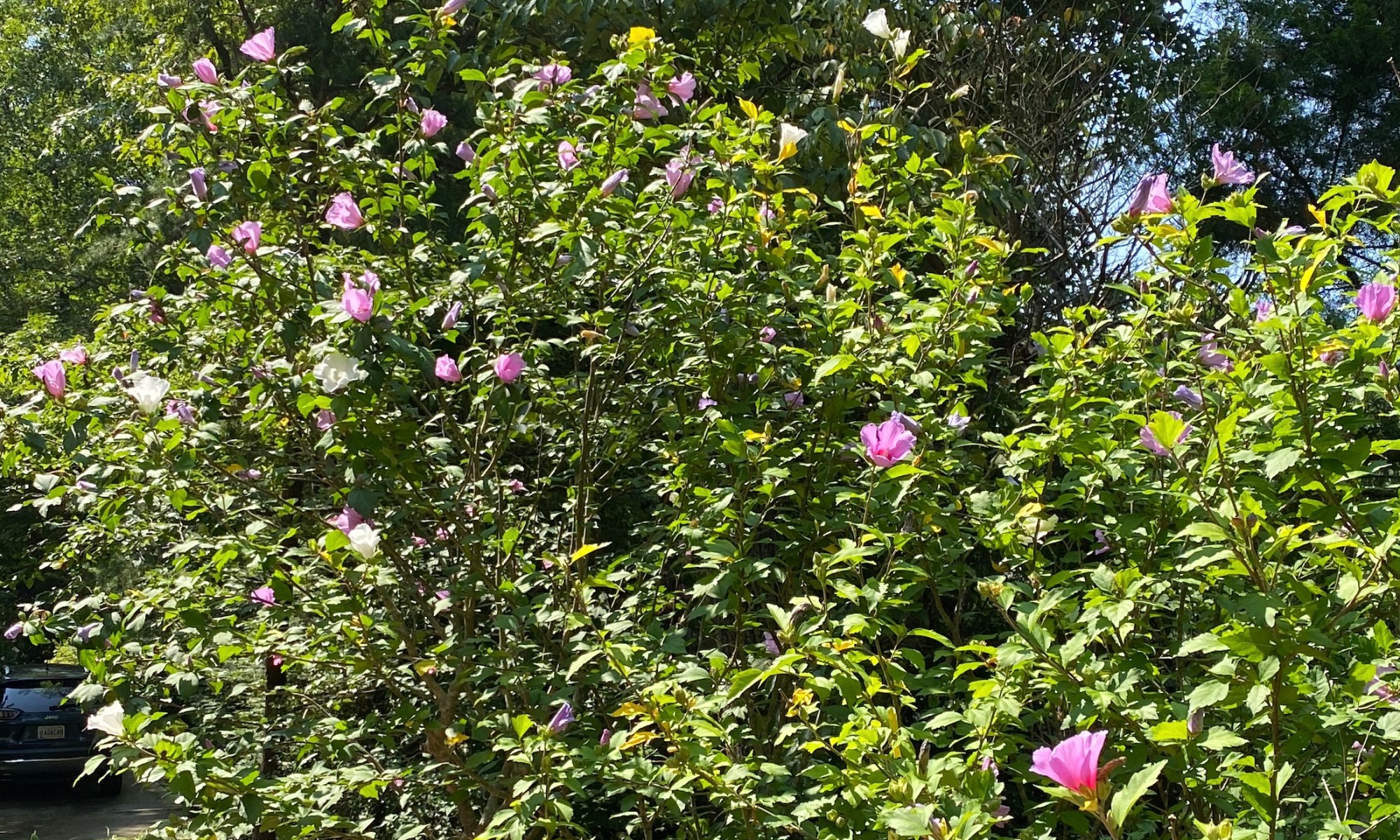
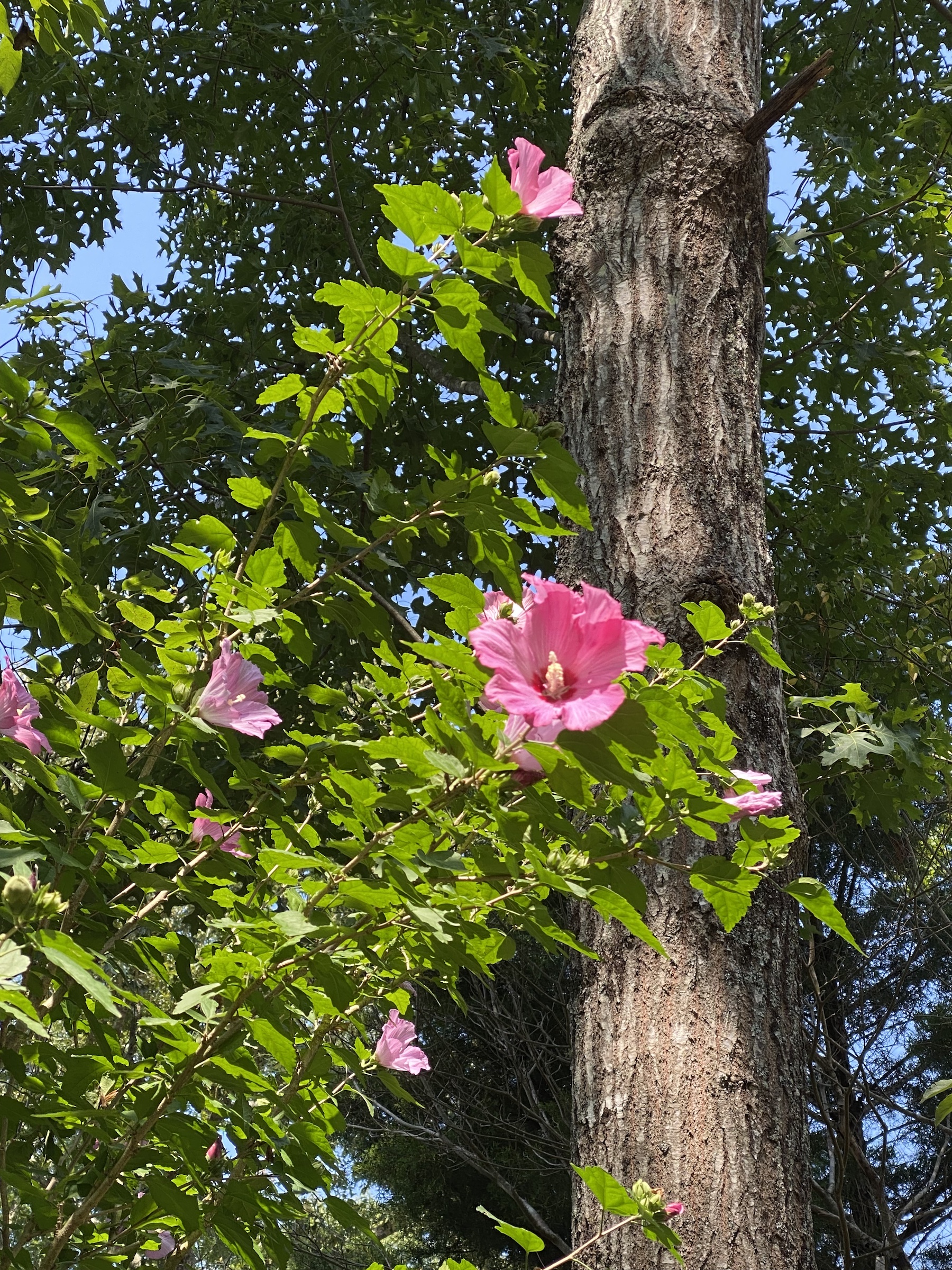
4. My next entry is a non-native, but given its popularity in the American Southeast, that might seem a little surprising. Originating is China, Althea, Rose of Sharon, Common Hibiscus (Hibiscus syriacus ) are all names for this deciduous shrub that propagates itself with annoying ease. Throughout the spring and summer, I pull up and discard one to two inch Rose of Sharon seedlings. Still, I maintain numerous bushes. A few might even be considered small trees. The flowers are attractive to the eye and inviting to the bees and hummingbirds; moreover, their colors come in a rich and diverse palette of purple, pinks, and white.
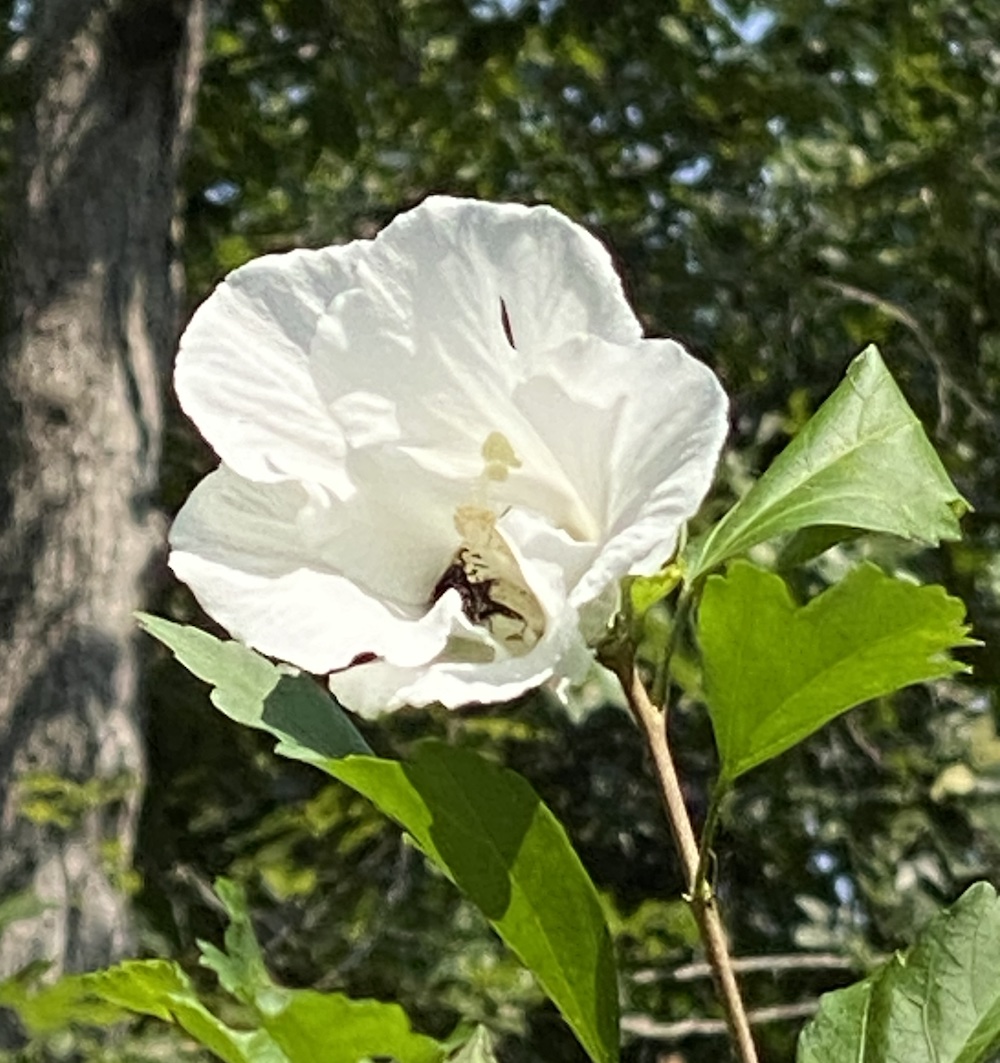

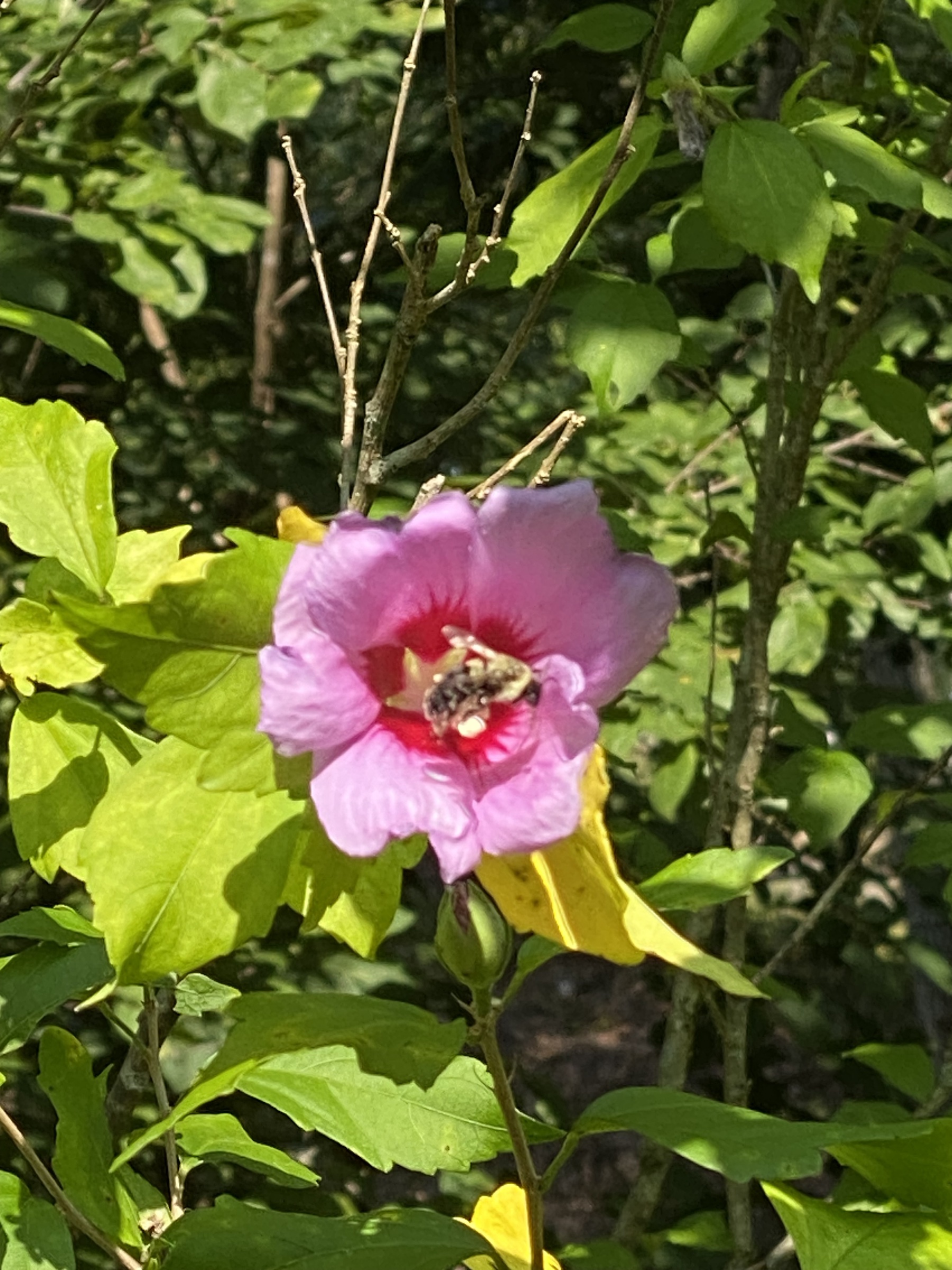
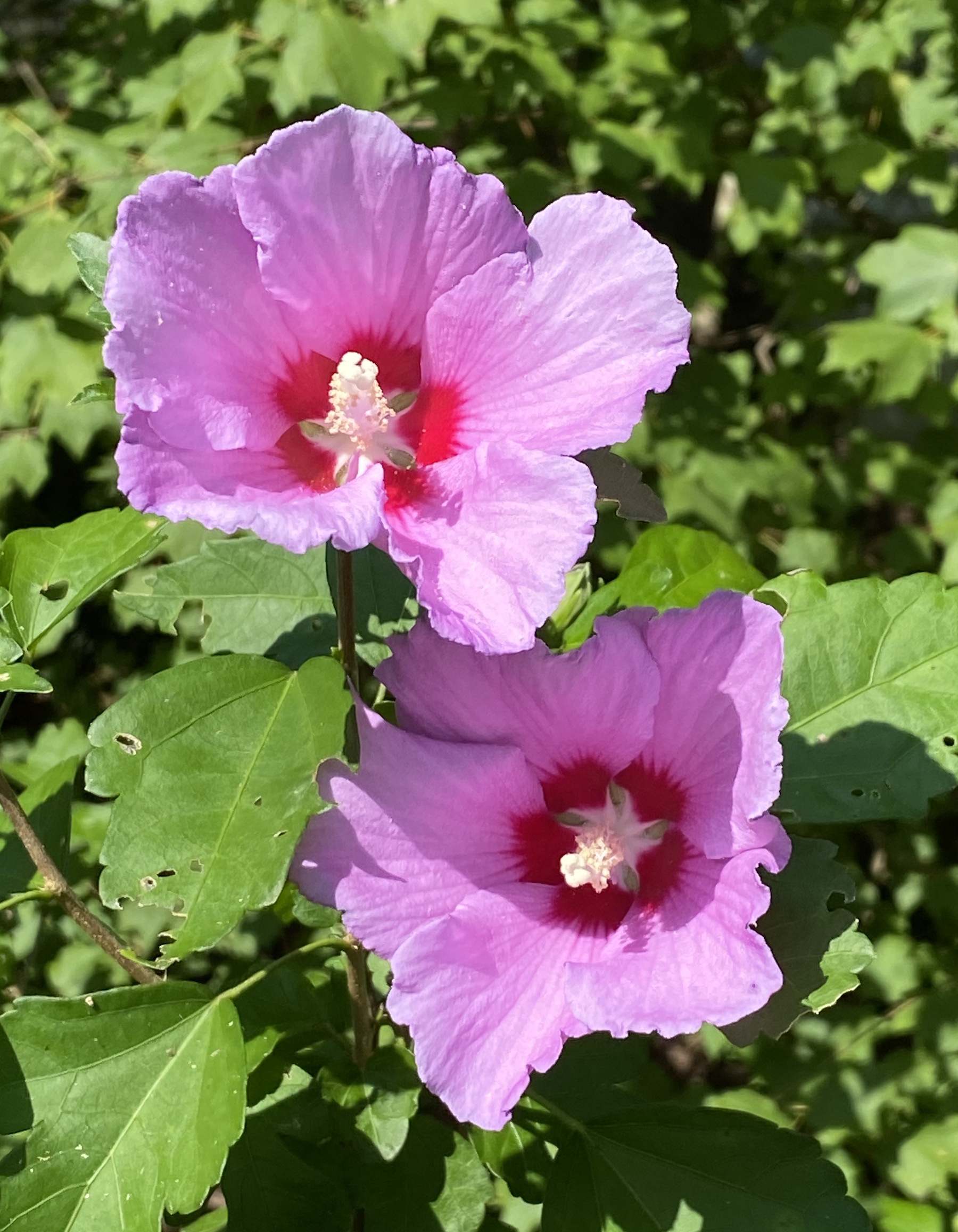
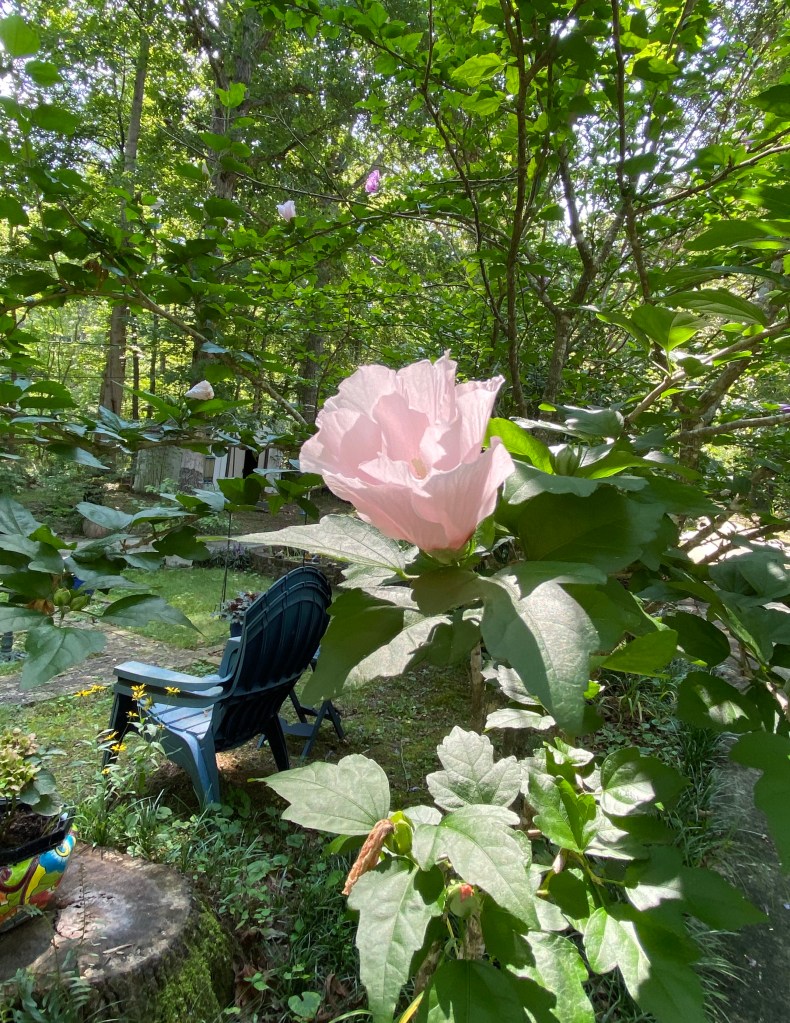
The most delicate color I’ve seen appeared on a volunteer bush a few years ago. I’ve tried several times to capture that color in other Six on Saturday posts in the past—and failed. This time, though, I think I succeeded.
5. Back to natives for the fifth entry; however, it’s a reptile, not a plant. This little, bright green fellow on Japanese anemone leaves stood out in spite of himself. The green anole, or Anolis carolinensis, can change color from this lime-green to a range of shades of brown to match his background. These small lizards are quite common in the garden, but usually sport a duller green or one of those brown tones.

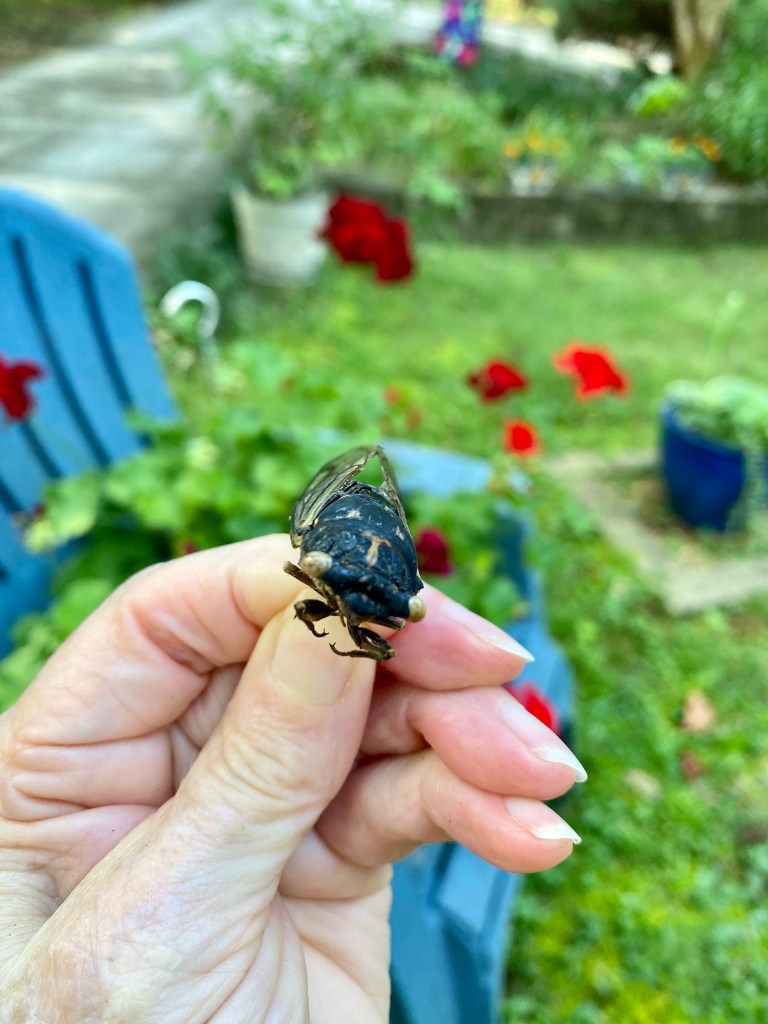
6. The final photo for today is of another non-plant. In this case, an insect, a cicada—the voice of the summer night. And it is final. Found among the bits and pieces of leaves and twigs on the driveway this morning, he seemed a fitting icon for the weather—a “hot bug,” as my grandmother called them, fallen victim to the heat.
Stay as cool, hydrated, and happy as you can everyone.
 After Eden
Thank you for your tour, I like all your native plants, especially the black eyed susans and thanks for including the creatures too, it is good to learn about these things.
LikeLiked by 1 person
Pulling Rose of Sharon seedlings is a task that I share with you. I have planted several to shield a power line easement and they work well there. I love those with white blooms.
LikeLiked by 1 person
The white are my favorites as well.
LikeLike
A wonderful gathering of photos, Susan. My Turk’s Cap Lilies (Lilium superbum), glorious but short-lived in unusual mountain heat, have just about finished their bloom. I’ve been meaning to ask you why one big Turk’s Cap lily bloomed dark pink this year instead of the usual orange. Just a mutant? Caused by higher temperatures than usual? It was beautiful but puzzlilng.
LikeLiked by 1 person
Soil pH is the usual cause of change in flower color, but a wayward pollinator could be the culprit. And, you are right, it could be a happy mutation. There is a lot of chemistry going on in that plant. (Of course, there is always the possibility of magic.) If you can, note the location and see whether that plant self-seeds next year. I won’t ask you to get out there and dig for the bulb! Although replanting it would result in an interesting trial.
LikeLike
Lovely tour 🌸🌼 Love your Rose of Sharon volunteers, that Blush pink one is lovely.
LikeLiked by 1 person
Now that is hot. I live in Ireland and for us, a heatwave is high 20s C! We honestly start to melt when it hits about 75 F.
Your Carolina lily is just so lovely (and wild?). Your black-eyed-Susan plant looks perfectly happy, too. My favorite is the hibiscus. Your little green lizard is very sweet, too. I like critters that don’t pose any harm 🙂
LikeLiked by 1 person
Black eyed Susan has not changed much over the years, if at all. I suppose that one can not improve upon perfection. You would think that by now, many more varieties of this species would have been developed, or that the varieties that were developed would be more popular than they are. Heck, even the naturally perfect California poppy has been tampered with.
LikeLike