
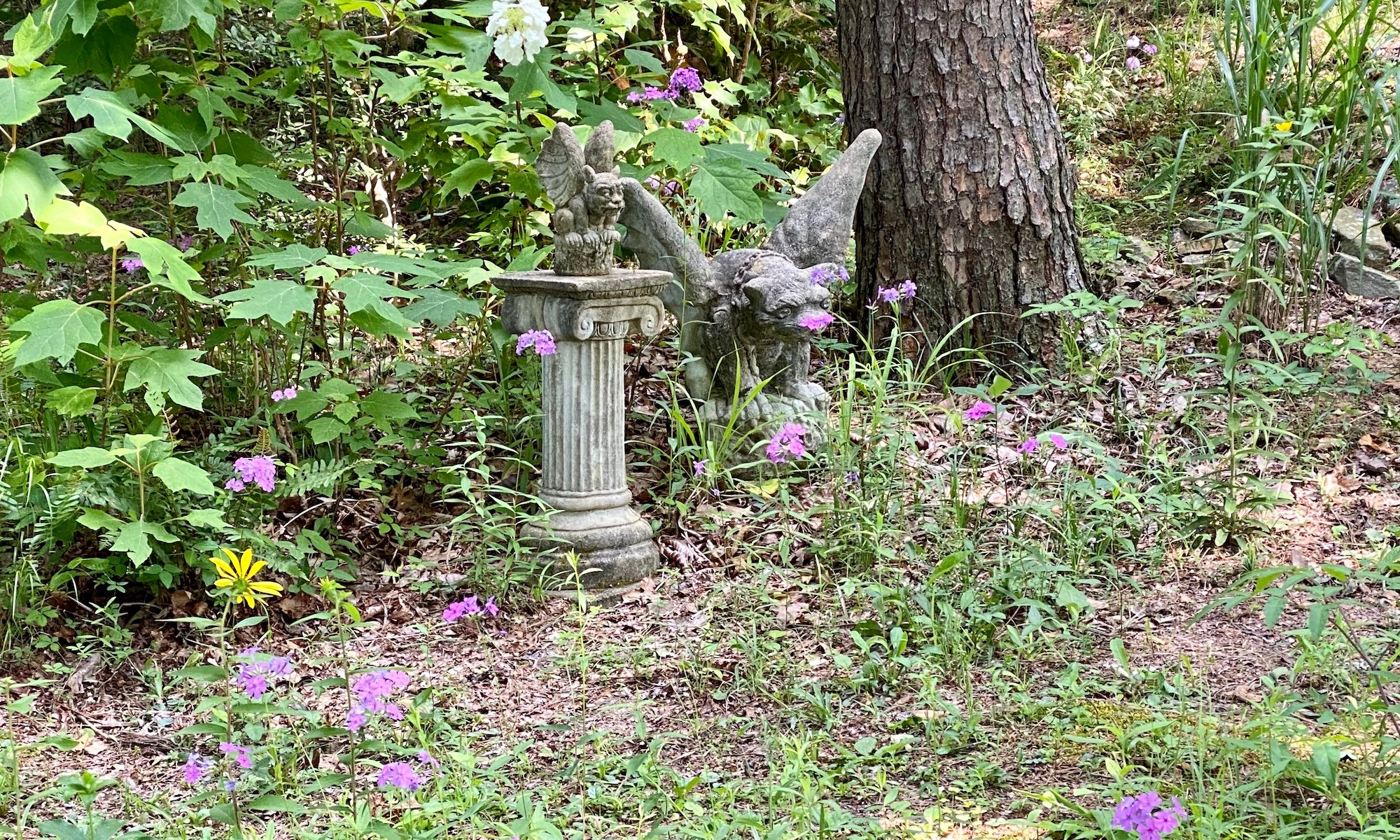
This week’s six are blooms at the close and opening of their seasons and one major pruning job. But before I begin, I want to note the hub of our Saturday sharing, Jim Stephens’ site at Garden Ruminations. You’ll find a link there for guidelines for joining in and links for posts from gardens around the globe in the comments. And now to some much more localized natives and an import or two.
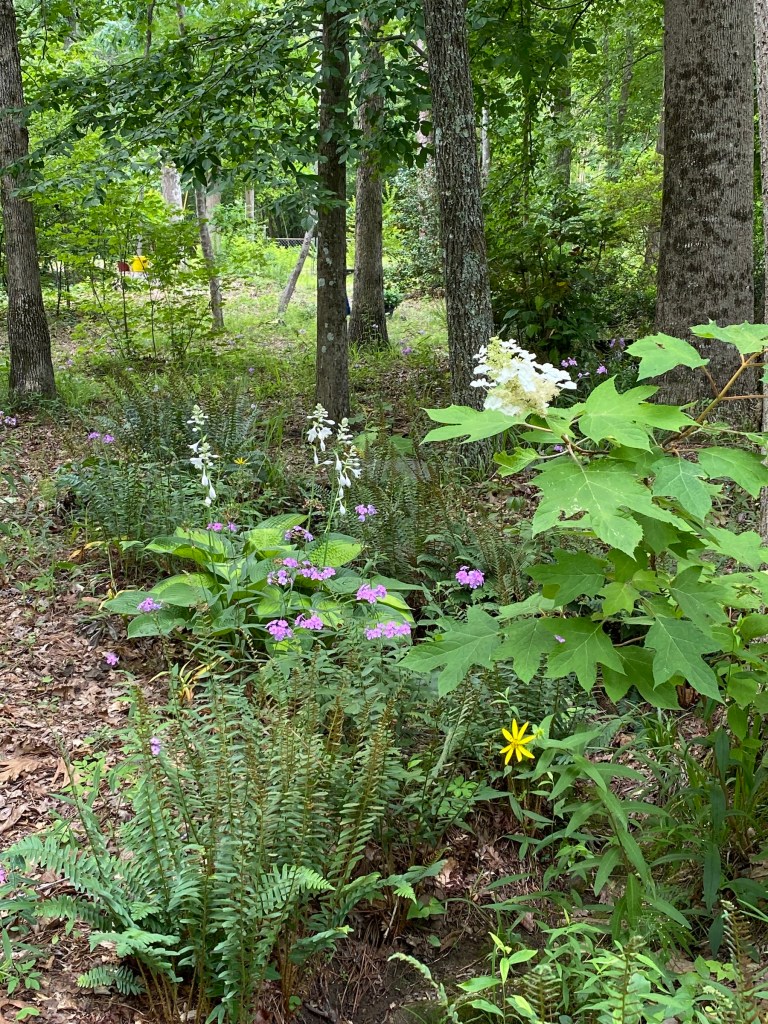
1. As the featured image shows, the woodland phlox (Phlox divaricata) are at the end of their late spring show. I allow lots of other weedy things to grow in order to have this North American native wildflower come up on its own, where it will. In the first photo below, the tall phlox are growing amid Carolina lilies, Black-eyed Susans, and Angelica venenosa, all of which will bloom later. I trim this patch back as the summer weeks go on and the plants bloom. The Black-eyed Susans should be next. By mid August, there will be a clean canvas. The second image shows a few remaining woodland phlox among blooming hosta and oakleaf hydrangea.

I have not seen many butterflies yet this year, but this Spicebush Swallowtail is enjoying the phlox. I’m fascinated that the underside of their wings are so differently colored than the tops.


2. Rosinweed, (Silphium integrifolium) another native herbaceous perennial, is blooming now. This is a tall plant with a stout stem and very rough leaves. The top two photos below are Silphium integrifolium and the two below are starry rosinweed, or Silphium astericus–or so my apps tell me.
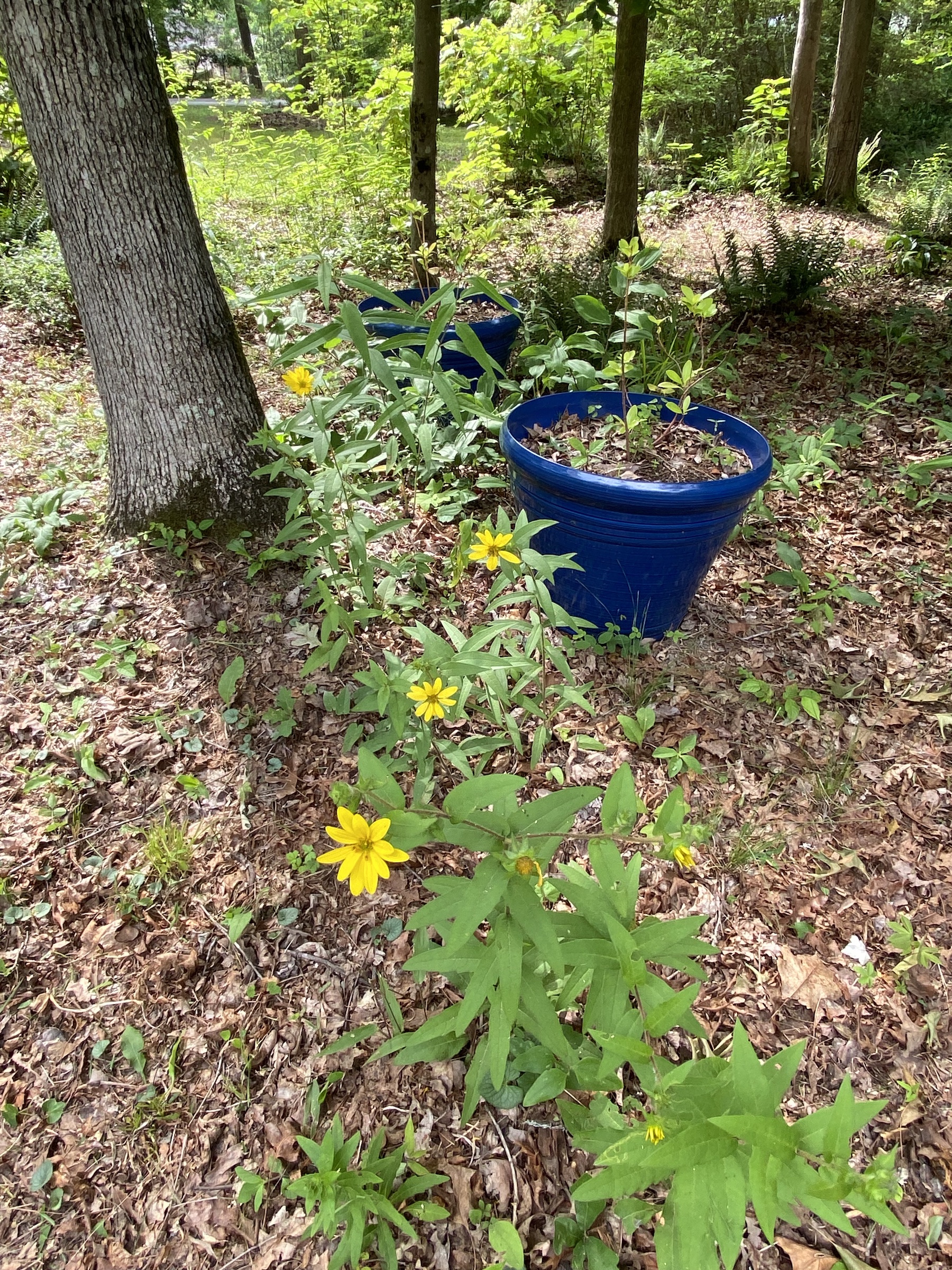

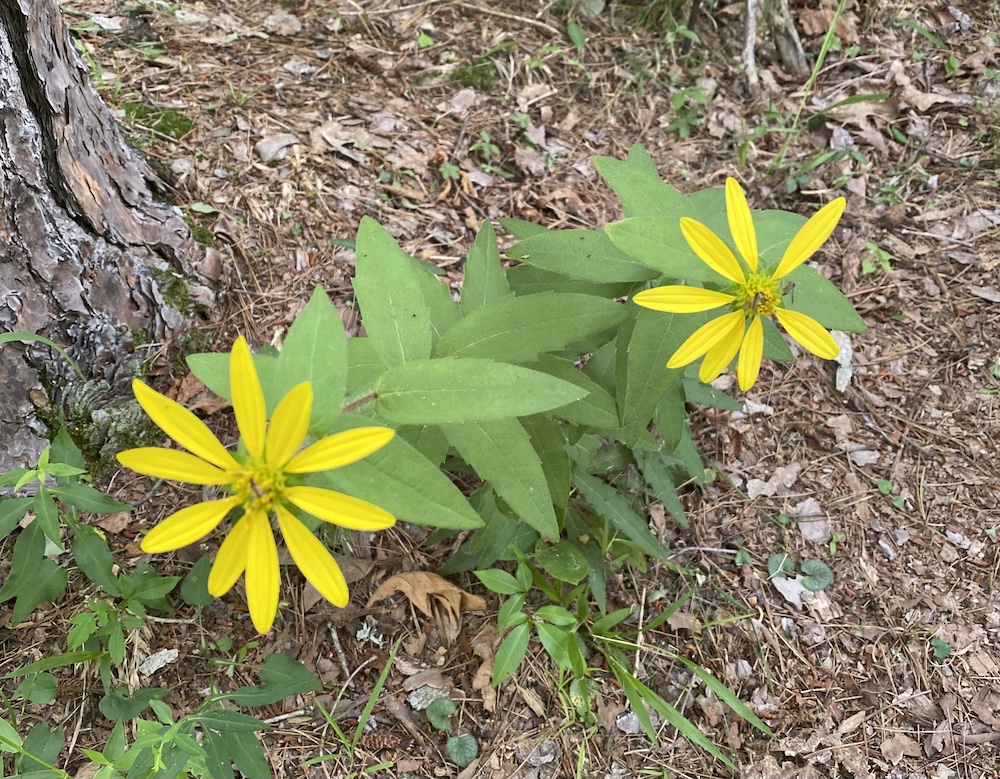

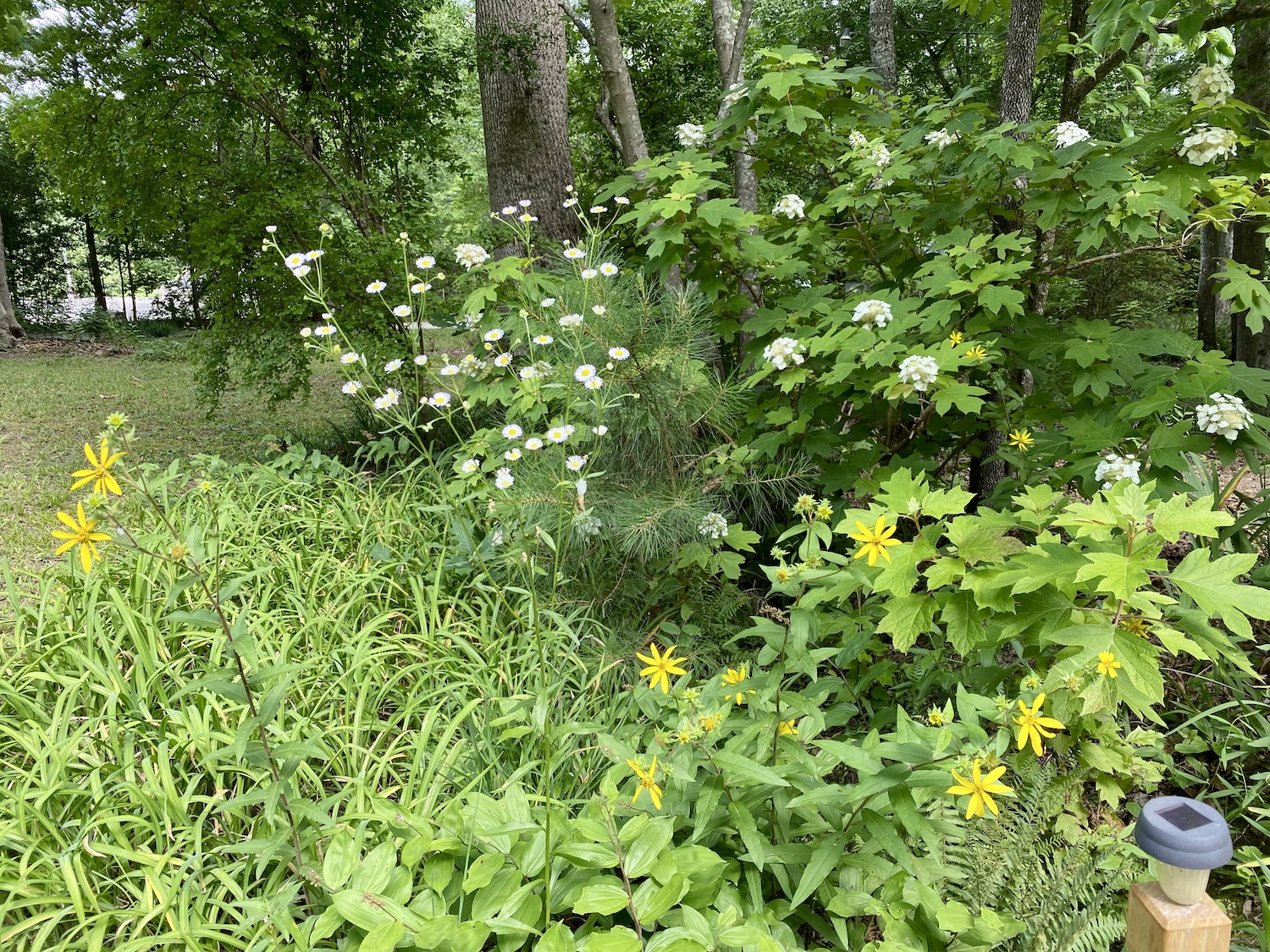
3. Woodland sunflowers (Helianthus divaricatus) will eventually offer similar flowers much later in the summer. They are growing in a fairly large patch, or rather one large and a few smaller patches. Something soon needs to be done to give them a sense of garden purpose, or at least garden discipline!
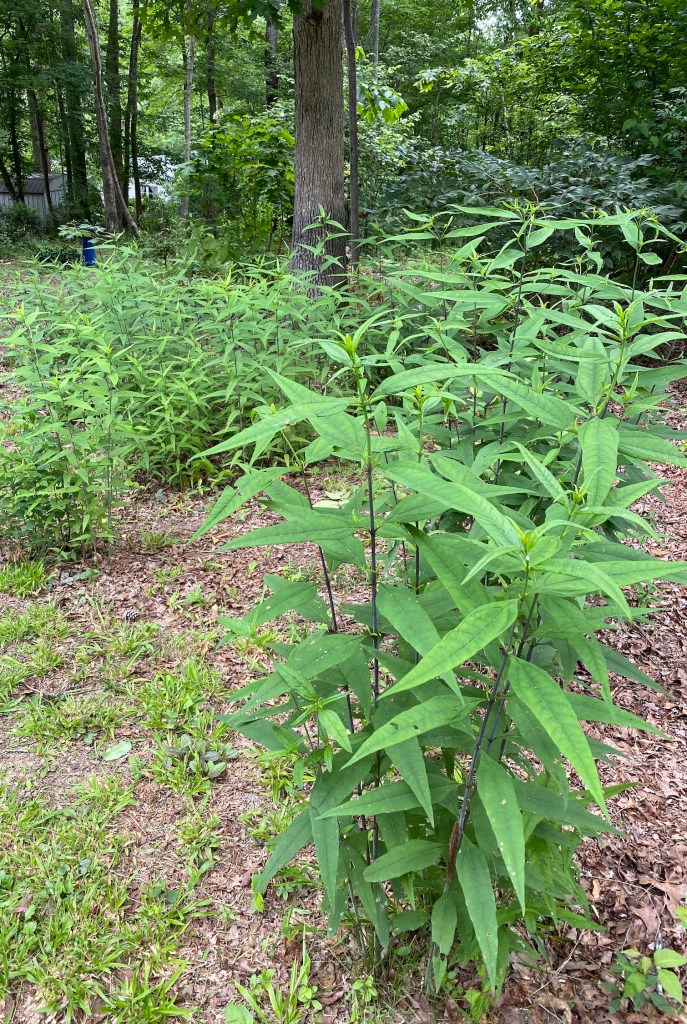

4. Nearby on a couple of what I’ll call tall weeds but could be tall goldenrod, I found this herd of Uroleucon. Other than to put them in the aphid genus, I can’t more specifically identify them. I can, however, say that I’ve presented them with their eviction notice.
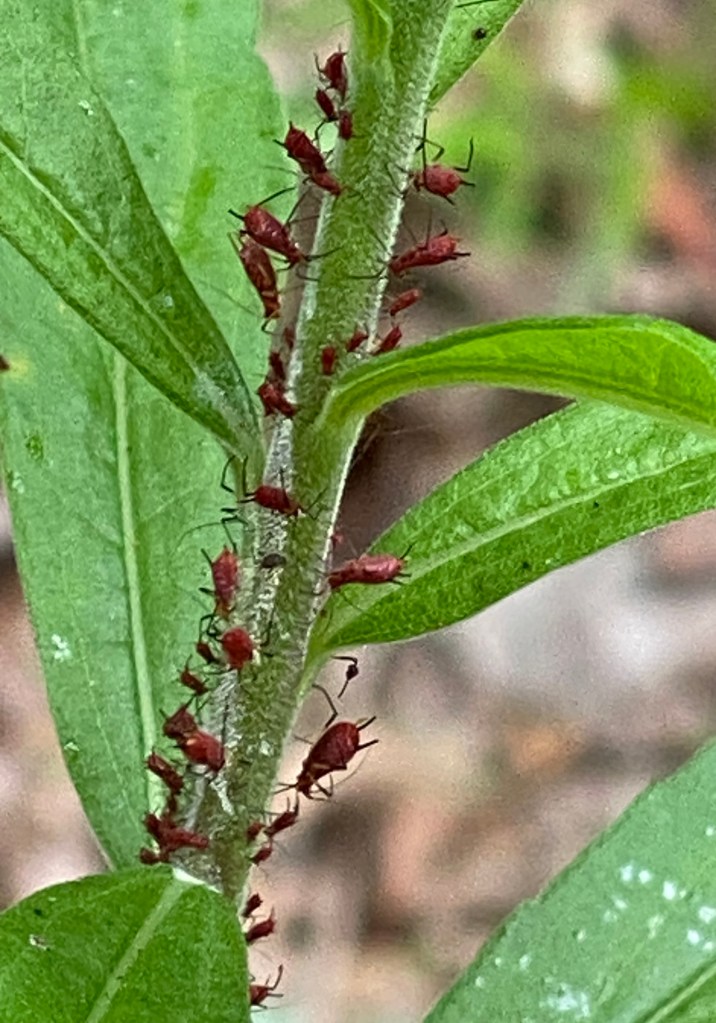
5. On a more pleasant note, the Kerria japonica I bought at the Blount County, Alabama, Master Gardener plant sale in April is producing flowers. I’m delighted because I did not expect that this year. Planted in the wooded area to provide a spot of color, it is already doing an admirable job.


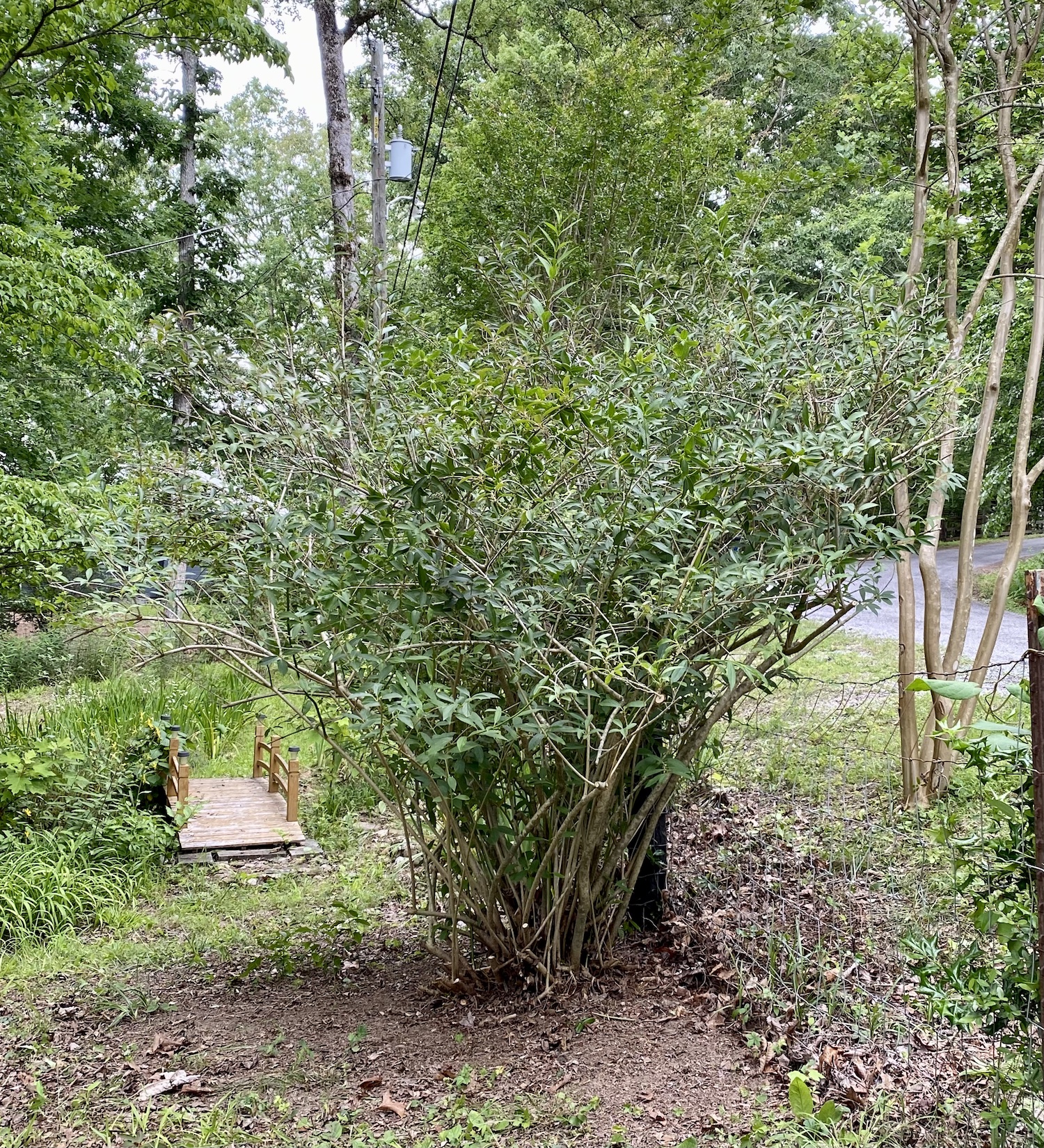
6. And here is the major pruning job. For a year I have been intending to cut back an untended forsythia that just grow rather wildly on its own. I finally did it! It took two days of careful cutting, standing back and eyeing, a little more cutting, scrambling into the middle of the inter-tangled branches, and lots of clean up. But the shrub, which is not a native but a national favorite due to its bright yellow spring-flowering, now has a recognizable shape. Size has been considerable reduced, violating the pruner’s dictum “remove no more than a third at one time.” Dead wood has been removed. Crossing branches have been uncrossed.


And, that closes me out for the week. In my next post I hope to get out of the wooded area and feature some plants deliberately planted in pots, beds, and boarders. In the meantime, may June treat all gardeners well in both hemispheres.

 After Eden
Masterful job on pruning the forsythia. I have had to do the same with my Kerria this spring. There was dieback from the winter freeze and I wanted to control some of its spreading habit. It is thriving now.
LikeLike
Oh, I prune forsythia much more aggressively than that when it is overgrown. I have coppiced them on rare occasion. I prefer to prune canes that are more than two years old to the ground over winter. I could prune out all canes that are older than the prior season, but that does not leave much substance. I like to do it while they are dormant through winter, but they can be pruned after bloom. I just do not like to prune them while they are so active during spring.
LikeLike