
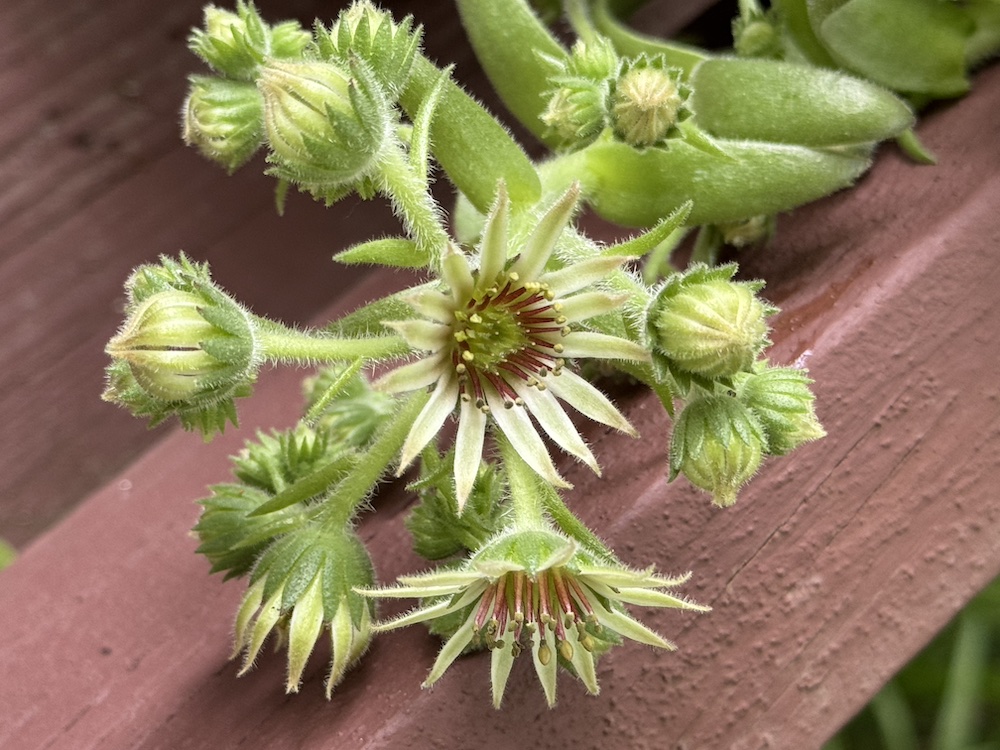
It looks like another post of essentially plant and pot pictures with little about projects this week, but I think I have an interesting place to begin. It’s a record of something I’ve not seen before:
1. Sempervivum, or Hens and Chicks, blooming. The feature image shows some buds in bloom. The two images below show the mother plant and the chicks peeking out from the center on the left and the flower stalk on the right. Since childhood familiarity with this plant, I had never seen it bloom; in fact, I did not know that it did bloom. Chicks, yes. Flowers, no.


2. There a few more plants in pots worth notice. Papyrus for one is growing in conditions that are not ideal for it—not planted in moist, loamy soil and not in full sun. But we have had sufficient rain in north central Alabama that it is surviving well and looking good in its blue pot rising above potted hostas and heuchera.

3. Behind the papyrus stems another blue pot sits with mouse ear hostas. The curly leafed one is Church Mouse. The other two came from a friend who reminded me not to thank her for them, otherwise they would die upon planting. And, I don’t ignore such folk wisdom; consequently, I’ll just keep her updated with photos. A bit of struggling fern provides some comparison for the size of these small hostas. Hardly enough there for a deer or rabbit to bother snacking on.

4. Three more pots for the forth entry this week. This triple combination came about because I wanted more color to balance the overwhelming green in the wooded area of the garden. Also, I got a very good deal on a few end of the day azaleas at last year’s local Master Gardener plant sale. They were small, but had a well defined main stems, almost as though they could be trained as standards. So, a few painted pots, a nicely variegated hosta that was on-hand, and two tiny azaleas became a “composition.” Oh, and three left-over ceramic floor tiles were added to help keep the ants from setting up home in those pots.


5. Actually, this is the brief time in the year when there is some natural color in the wooded area. Woodland phlox seeds, locates, grows, and blooms on its own in May. Phlox divaricata is an eastern North American native that is perfect for understory shade—and it is truly eye-catching in large swaths. First below is one patch of it that blooms yearly next to hosta and ferns along a usually dry creek bed. An oakleaf hydrangea overlooks from the other side of the run. Second is a close up of the cluster of flowers atop this typically tall wildflower.


6. I’ll end with a tribute to another wildflower, although this time a non-native, oxeye daisy (Leucanthemum vulgare). I don’t mow the would be lawn until late May or June when these flowers are fading. I should note that in some states, this plant is considered an invasive weed. However, I find it far more pleasing and desirable than the blue flowered lyreleaf sage that blooms in the “lawn” before it does! If the weather cooperates, daisies and sage will go together within the week, although, I will most likely skirt any Black-eyed Susans that are growing.

As a postscript, I’ll remind readers that they can find guidelines for joining this Saturday sharing of six things in our gardens at Jim Stephens’ Garden Ruminations, the gathering point of our posts.

 After Eden
Good idea re the ceramic tiles.
LikeLike
LikeLike
Thank you for your suggestion, but notice the difference in the inflorescence. Divaricata blooms at the terminal end, not along the stem. Apparently color can range from blue to pale lavender and height from 8″ to 20″. Seek from iNaturalist identifies these as divaricata. See the Lady Bird Wildflower Center, too: https://www.wildflower.org/plants/result.php?id_plant=phdi5. I agree with your appreciation of the succulents–amazing plants.
LikeLiked by 1 person
Thanks for the clarification!
LikeLike
Opps – sorry. I had some kind of computer hiccup and so double posted!
LikeLike
I like lyre leaf sage often seen along roadsides in the early spring. The woodland phlox is also such a beauty in woodland settings. My oak leaf hydrangeas are blooming wonderfully this spring.
LikeLike
I love the painted pots. They always add a nice touch of colour 🙂
LikeLiked by 2 people