
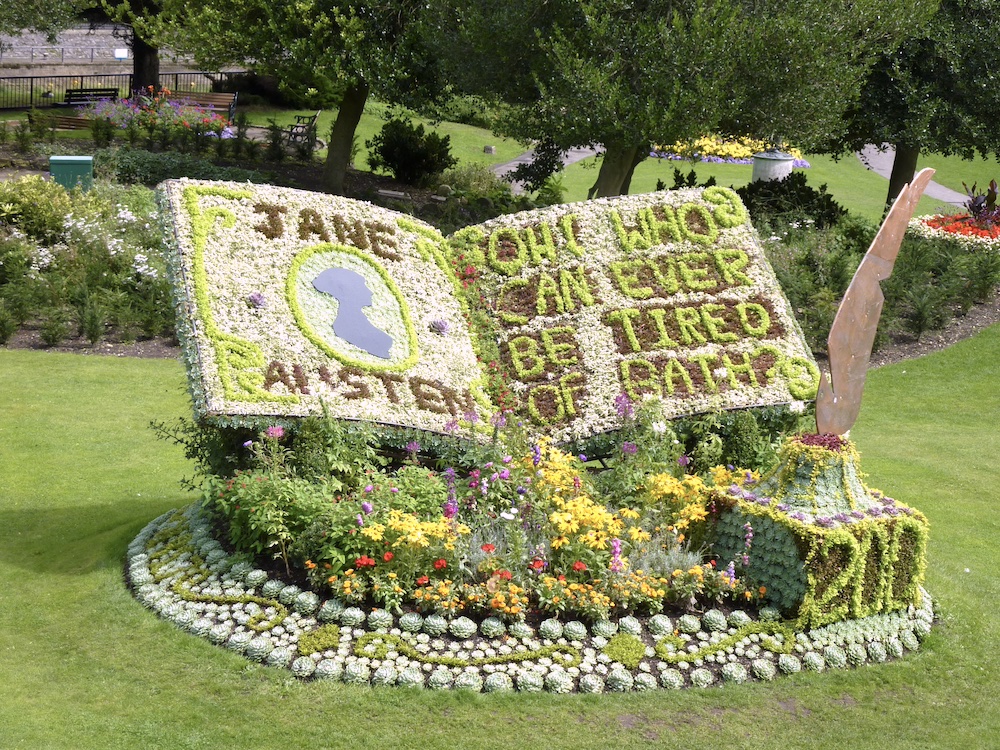
The feature photo for this set of notes comes from neither Roman Bath nor even late medieval Bath. “Oh! Who can be ever tired of Bath?” dates from 19th-century Regency Bath and Jane Austen’s delightful send up of Bath’s social primacy and gothic novels’ popularity, Northanger Abbey. I recommend it to anyone who likes satire and come-of-age- romances that are more properly come-to-common-sense journeys.
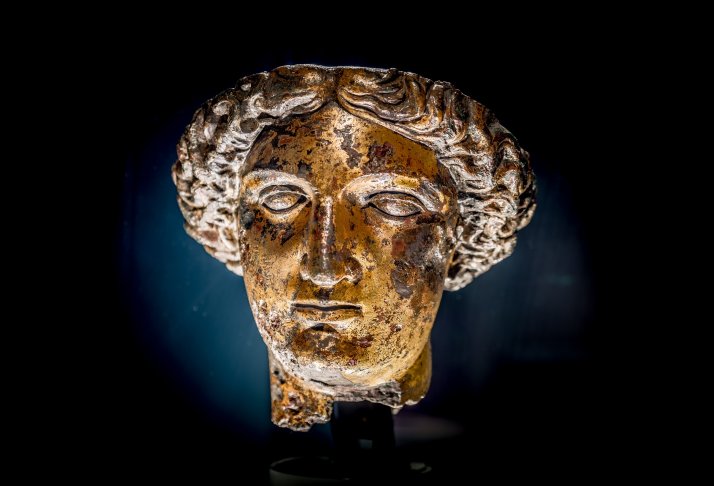
On to Roman Bath, though, or I should say on to Aquae Sulis, the Roman’s name for their 1st-century CE settlement that is now Bath. The Latin name means “waters of Sulis,” a Celtic goddess associated by the Romans with Minerva. Below is a bronze head of Sulis Minerva on display in the bath complex. This photo is not mine, but from the Roman Baths tourist and information site. Keep in mind that the original complex was much larger than the existing baths.
Note the classical temple center right in the model photo below. Be on the lookout for the Gorgon’s head that decorated the pediment of that temple.


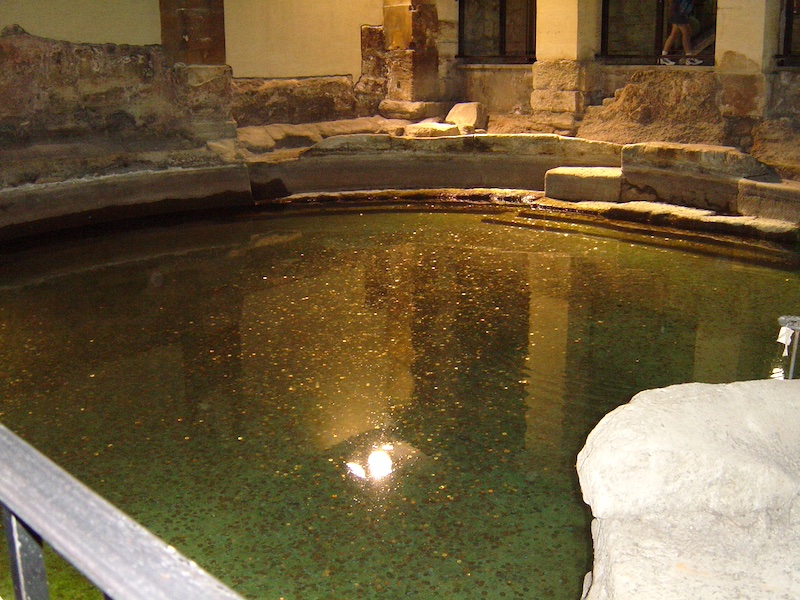
The Great Bath as it exists today is green due to algae that grows in the water; the Roman canopy over the pool originally inhibited algae growth. Only the column bases at the edges of the water are original. Most of the building structure that now encases the Roman baths is 18th-century.

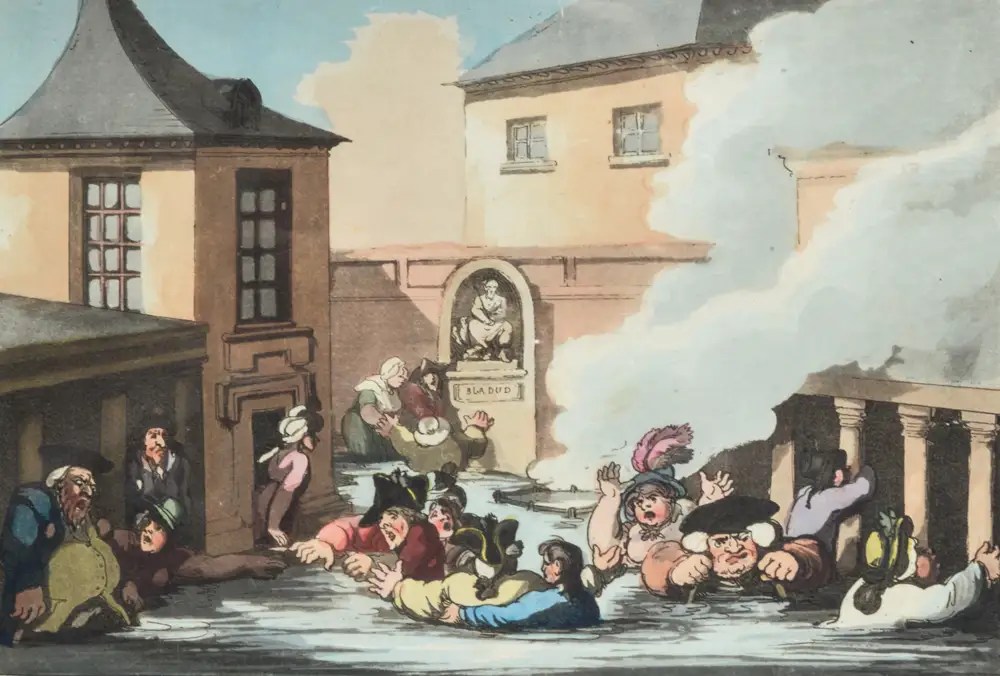
The King’s Bath, built over the Sacred Spring that fills the baths is watched over by a statue of King Bladud, mentioned in Geoffrey of Monmouth’s History of the Kings of Britain and supposedly the founder of Bath after a poultice made from warm mud sourced nearby cured his leprosy. By the late 18th-century and early 19th-century, the baths became popular sites for curative bathing satirized in 1798 by the cartoonist Thomas Rowlandson in The Comforts of Bath.

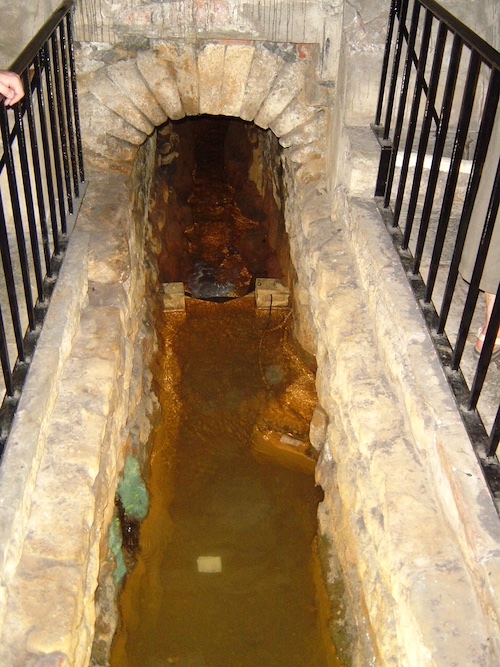
For over 2000 years the Sacred Spring has continued to run and maintains a temperature of 115° F or 46° C. The run-off from the spring still moves down the original Roman drain to the River Avon.

Two final items I suggest that you be on the lookout for are of a hypocaust floor of heated rooms, familiar to us from Chedworth, and the cold plunge pool, an important part of the Roman bathing ritual. There is a brief but informative summary of Roman bath practices on the same Roman Bath site I referred to above. Give it a quick look.

The other major Bath site on our itinerary is the Abbey. Although the history of a religious house at Bath goes back to a late 7th-century convent under Abbess Bertana, today’s Abbey, officially the Abbey Church of St. Peter and St. Paul, dates primarily from building in the 12th, 16th, and 19th centuries.

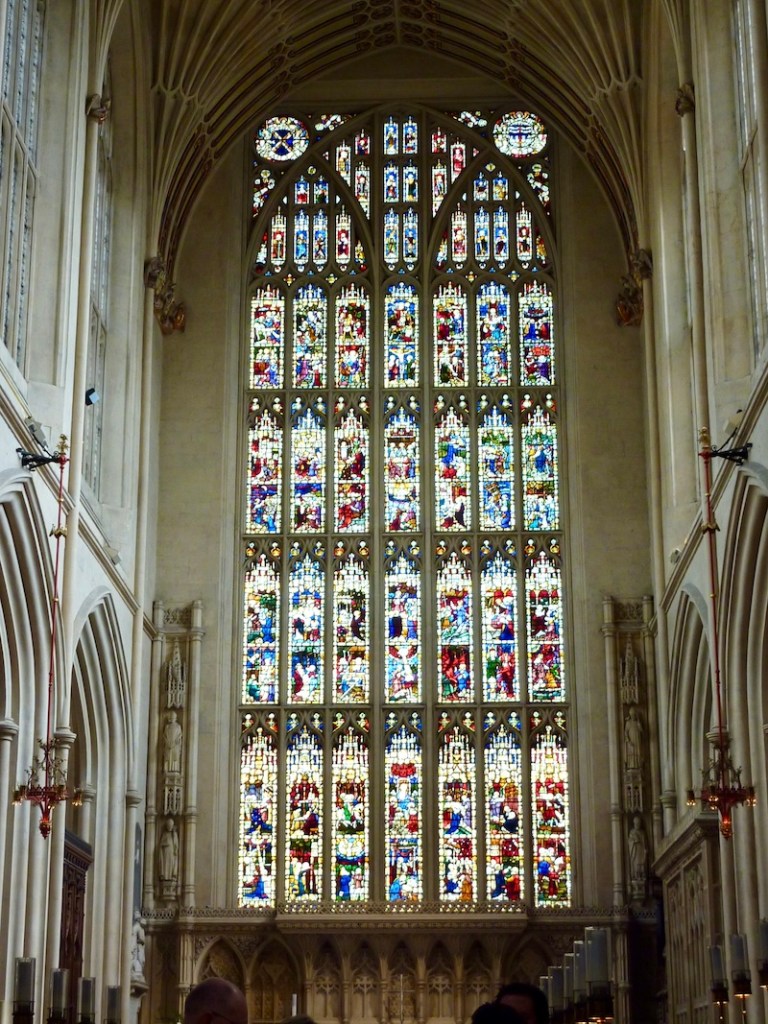
The interior is essentially Victorian Gothic (remodeled 1864-1874). A major renovation during this decade was the replacement of the previous wooden ceiling with stone vaulting. Make certain to look up and appreciate the lovely fan work. The great west window, 1894, illustrates the first five books of the Bible.

A significant feature of the Abbey’s east front are the (Jacob’s?) ladders ascending each of the towers. These date from the late 15th-century and show angels climbing toward heaven.

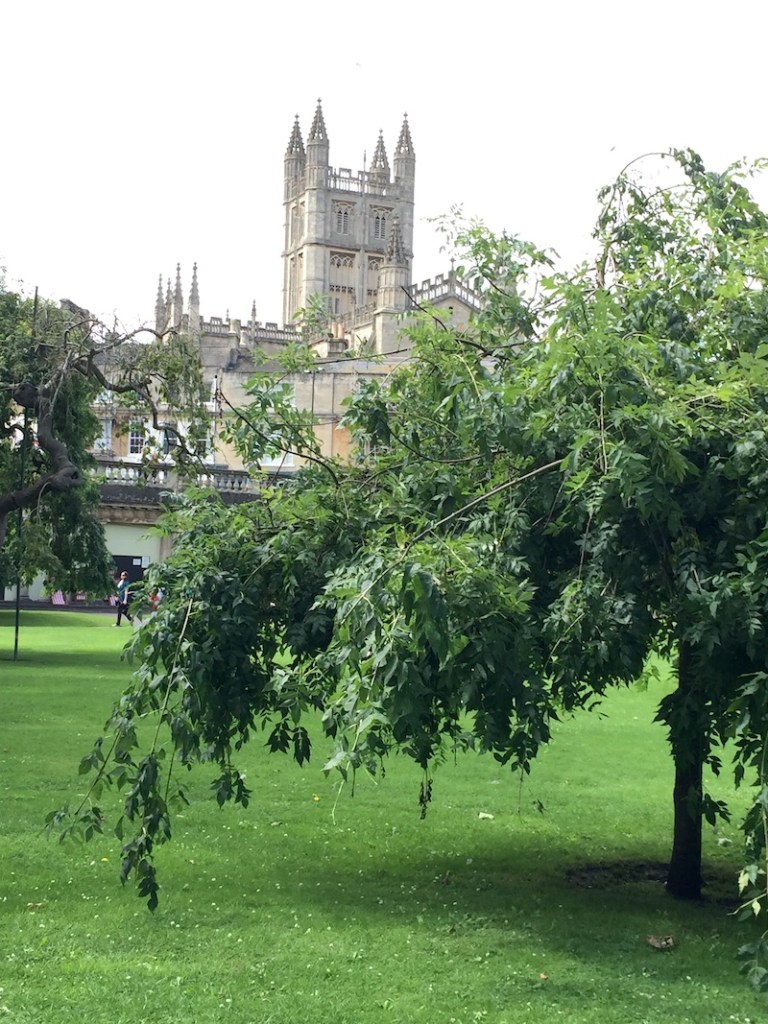
My final photos come from the Parade Garden on the other side of a road behind the Abbey. It is also the site of Jane Austen floral display that opens this post. For a rundown of Bath’s Regency features including the Pump Room, the Assembly Rooms, and the city’s social season, read Austen’s Northanger Abbey en route. Most, if not all, of you will find it a delightful preview of Bath.


 After Eden
I really enjoyed this. Inspires me to learn more of Bath.
LikeLiked by 1 person
Good! It is an interesting city.
LikeLike