
From the Romans to the Tudors for this next set of notes, but I’ll return to the Romans in Bath for the next installment. This post, though, includes castles and gardens related to two wives of Henry VIII. We chose these sites in part for their historical connections but in large because there are features in their gardens that fell well into our itinerary. The wives are Anne Boleyn, second wife of Henry VIII and Queen for all of 1000 days, 1533-1536. In those days though, she gave birth to the child to become Queen Elizabeth I, a significant force in British history. Much of Anne’s childhood was spent at Hever Castle. Queen from 1543-1547, Catherine Parr was Henry’s last wife and the only one to outlive him–even if by only 20 months. Her final days were spent at Sudeley Castle where she is entombed in the castle chapel that also serves as a parish church.
First, a few things to look for at Hever, built in 1383. The castle and grounds comprise 125 acres. Below is an aerial view of Hever’s central area.
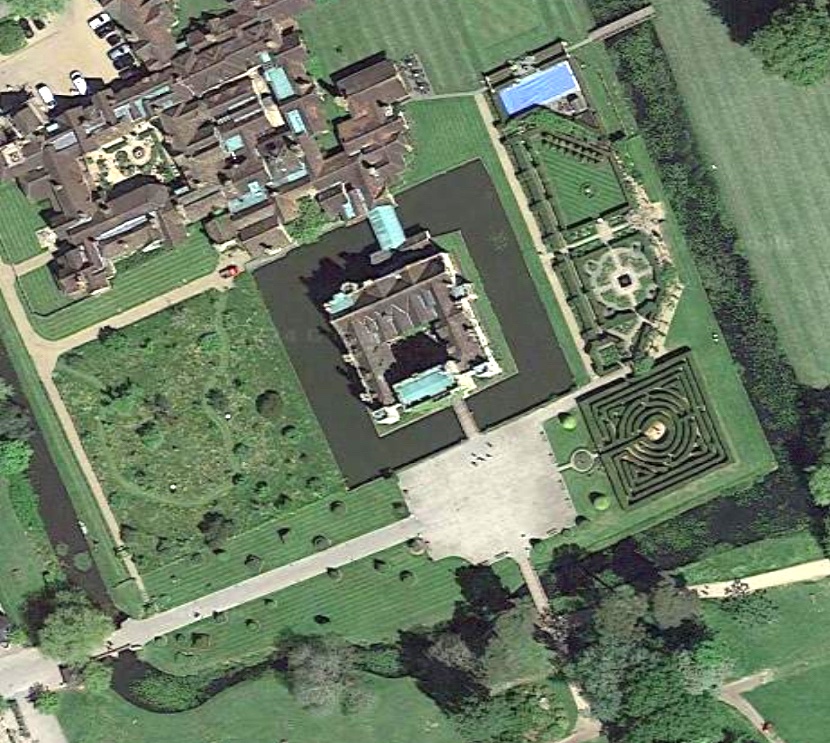
The Gate 1 itinerary touts Hever’s “famous yew maze,” which you can easily identify on the right in the photo above. But don’t be fooled into thinking that Anne Boleyn ever played within it. Created in 1904 by William Waldorf Astor, the maze is Edwardian, not Tudor. A water maze, some short distance from the central gardens is even newer, 1999. In spite of its recent construction, it continues the popularity of a water joke that goes back at least to the Elizabethan era. Hydraulics under pavers near fountains would splash unsuspecting garden strollers when the pavers were depressed. The water maze might or might not be open when we visit.
Above the yew maze in the photo two Tudor gardens can be seen. The round garden is of typical Tudor design with clipped hedges, herbs, roses, and central fountain. The Chess Garden lies above it with chess pieces cut from golden yews and a central astrolabe dating from Anne’s time. There is as well an Italian and a rose garden. It has been well over a decade since I visited Hever, and I don’t have any good photos, so for a quick rundown of them all, I suggest a look at this garden page on the castle’s official website. A final word about Hever: look around for other topiaries and for the koi in the moat.
I do have recent photos of Sudeley Castle gardens. I’ll begin with an aerial view, though. The gardens we will be touring are essentially on the right side of the photo.
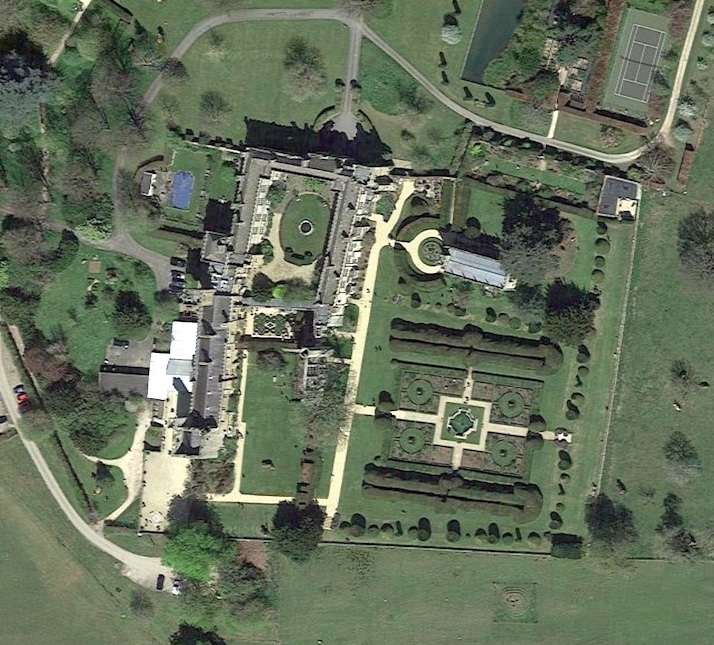
The linear building standing alone on the right is St. Mary’s Church, the resting place of Catherine Parr. Do go in the church to see the tomb. Not of general interest to gardeners, but certainly to me, is a window in the church showing Beckett’s martyrdom in Canterbury.


To the north of the church is the Secret Garden and to the south is the White Garden. The large garden of four-part design with crossing axes—a design based on the Persian Chahar Bagh plan that finds its beginning in 600 BCE—is the Queens’ Garden, a focal piece of Sudeley’s gardens. The following quotation is from the Sudeley Castle website. (Notice Catherine with a K.)
The Queens’ Garden is the magnificent centrepiece of Sudeley’s gardens. Named after four of England’s Queens –Anne Boleyn, Katherine Parr, Lady Jane Grey and Elizabeth I – the Queens’ Garden is very special indeed. In Tudor times it would have been planted with herbs and possibly also vegetables, and decorative flowers. It has been redesigned many times over the years, but today it boasts more than 80 varieties of roses.

The castle itself, as the perspective above indicates, is an enormous three-sided structure. As a result, there are several impressive border beds. The rectangular Knot Garden, another high point of our visit, lies in the middle of the inverted U shape of the castle building below the oval courtyard.


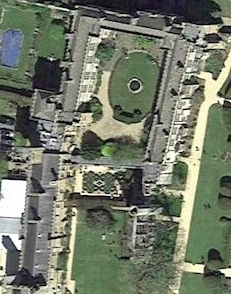
I remember Sudeley as a site of tawny brown and green perspectives, whether of long stone extension or deep embracing hedges. Look for the intimacy of the Secret Garden and the small East Garden in front of St. Mary’s.
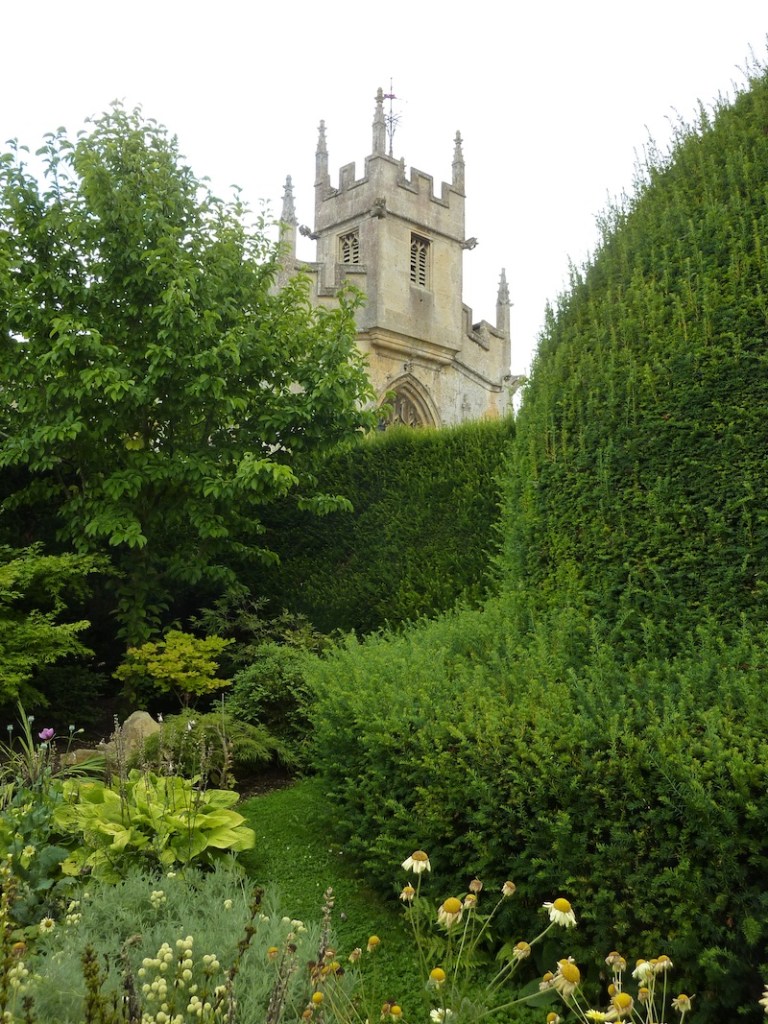
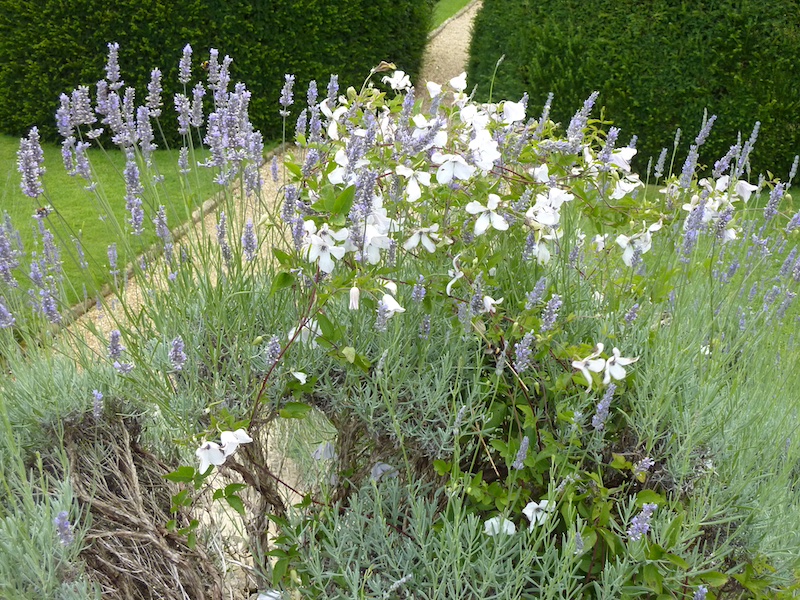

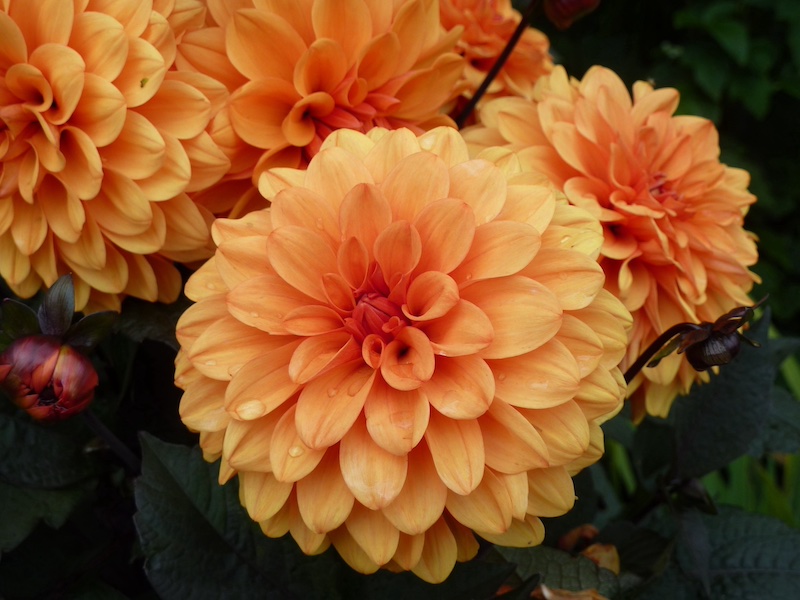
The center image above is from the top of the steps to the Queens’ Garden as seen in the photo on the right. Oddly, it along with the orange dahlias are my most persistent memories of Sudeley. As my photos suggest, my focus was on the gardens and the “back” of Sudeley. To build a larger picture, I recommend a quick visit to the Sudeley Castle and Gardens “Plan Your Visit” site. Wander around there a little and you’ll find much more than how to rent the place for your next grand fete!
 After Eden
It is going to be a fantastic trip.
LikeLike
Thank you for the historical background and wonderful photos.
LikeLiked by 1 person