

The wildflowers are coming up! Six of the most prolific here in the garden at Highland Lake, Alabama, are my subjects this week.
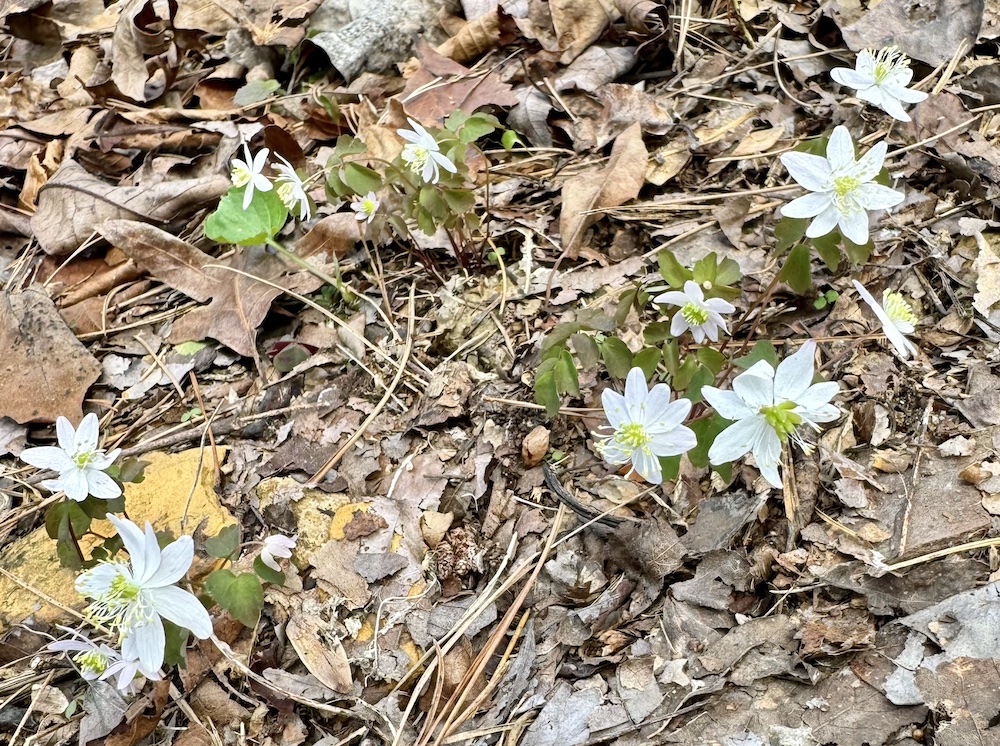
1. The first is my favorite—rue anemone (Thalictrum thalictroides ), a native, woodland perennial. Wonderfully delicate, and really rather tiny, it is easily overlooked among winter’s left-over leaves and pine needles.
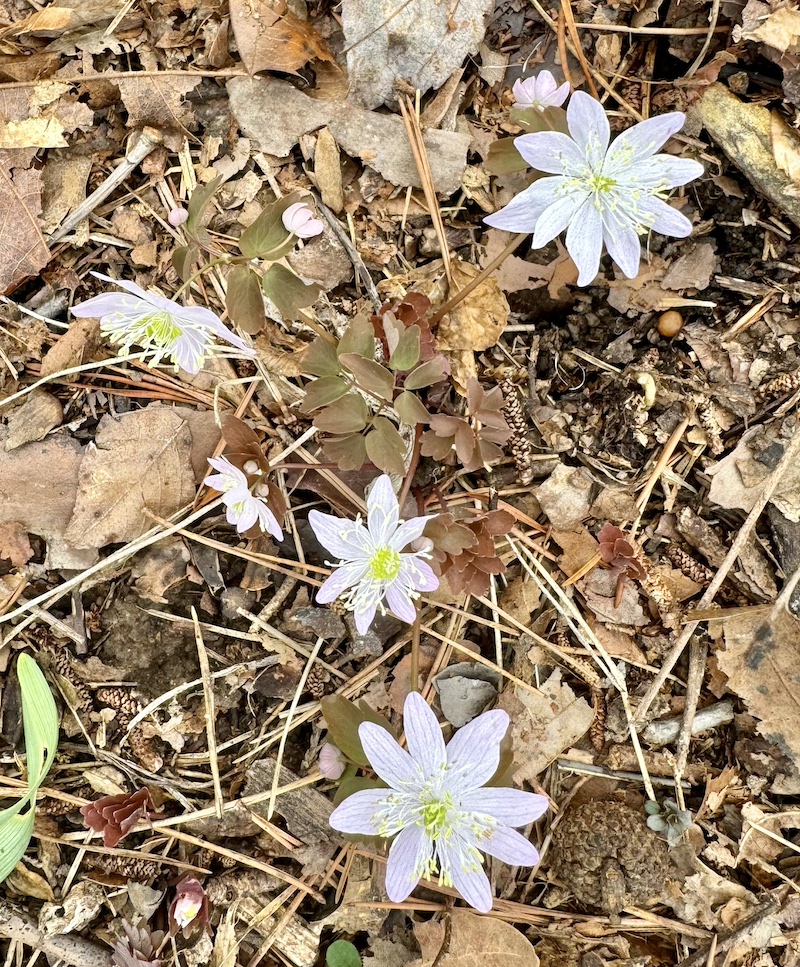
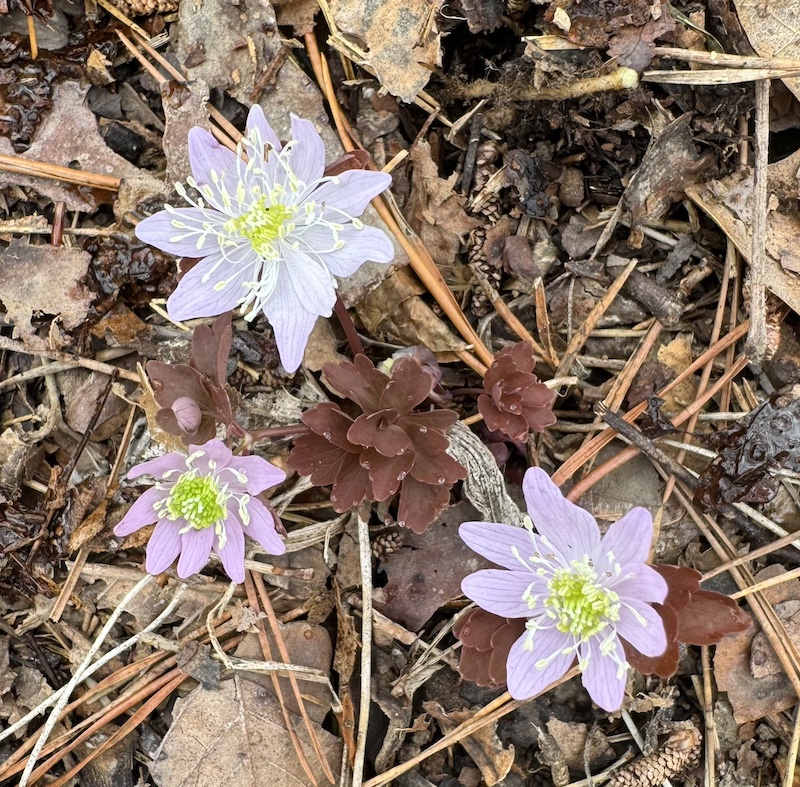
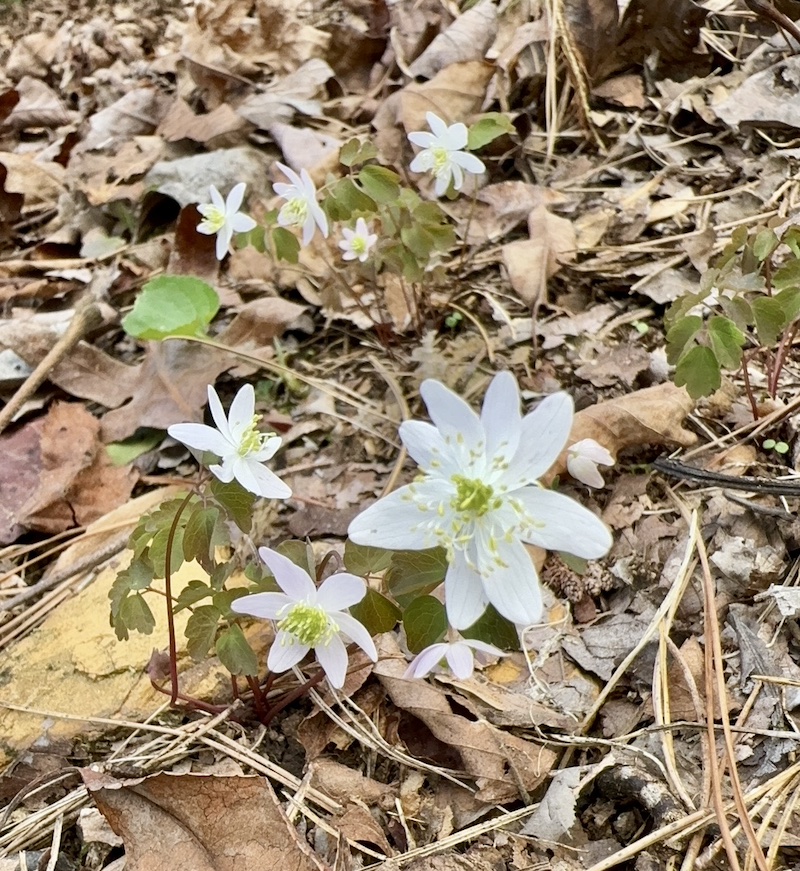
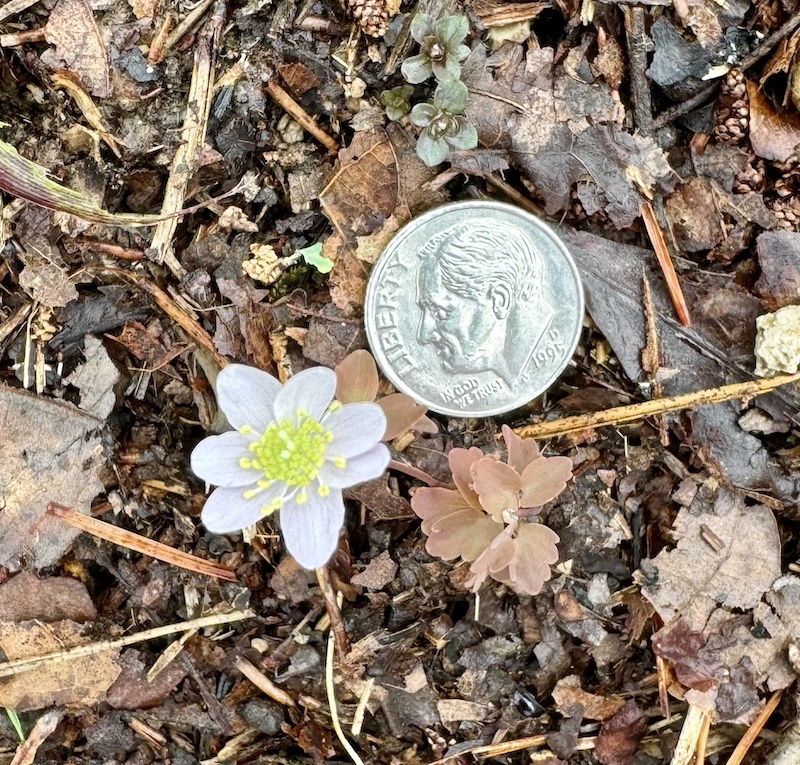
To illustrate how delicate rue anemone can be, the first image below shows one of three small plants coming up along a path compared to the size of a US dime. I’ll transplant them into a wildflower bed; the second photo shows a patch of plants in that bed. The featured image is of that patch as well.
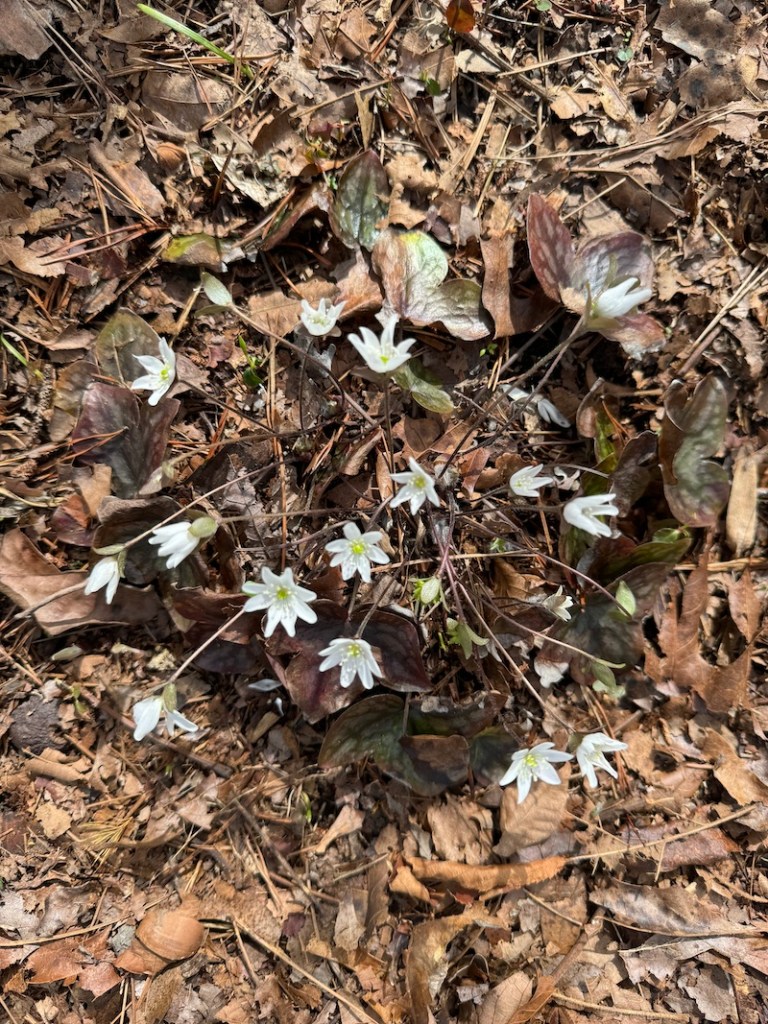
2. The flowers of another ephemeral wildflower, sharp-lobed hepatica (Hepatica acutiloba), look similar to rue anemone–in fact it was previously identified as Anemone acutiloba. It is one of the earliest bloomers on the woodland floor. Sometime, as in the photo below, its dark, mottled leaves blend in with decaying leaves and the flowers almost seem to hover in the air on their own.
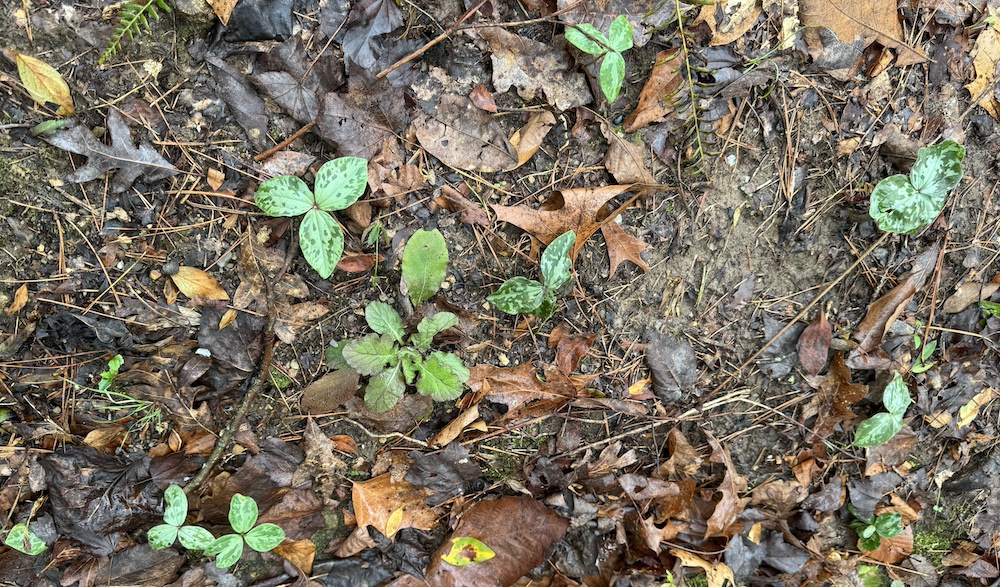
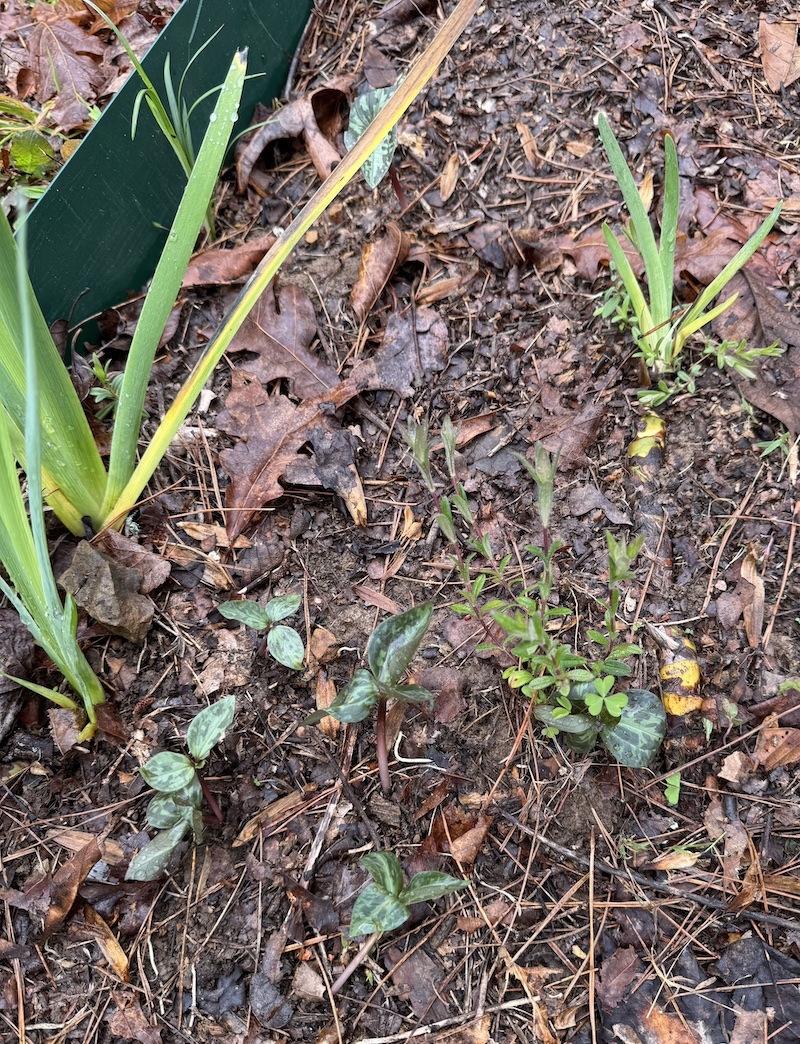
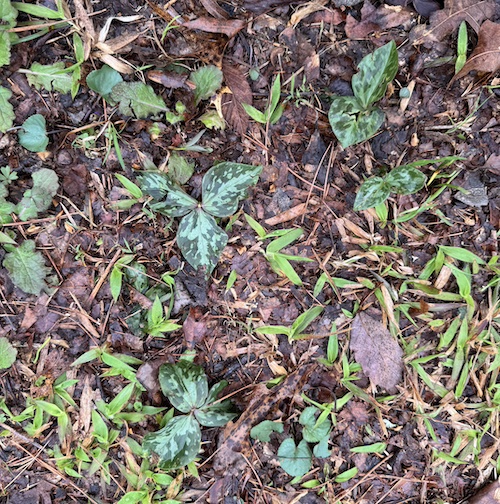
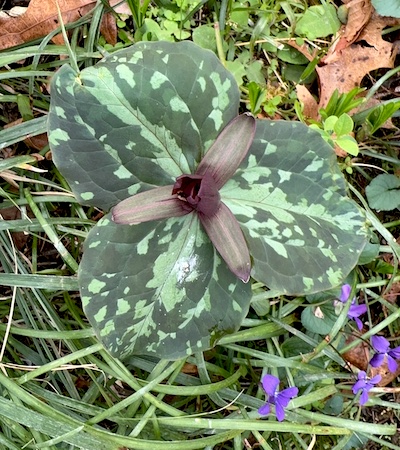
3. My third wildflower is native to and common throughout the Southeast. But it is more than common this year—even prolific—in both the wooded section of the garden and as volunteers in the planted beds. Trillium Little Sweet Betsy (Trillium cuneatum), seems to be everywhere this spring.

In the gallery below, trillium, which is herbaceous, is coming up on its own in a flower bed, along a usually dry creek bed, trailing down a little hill among ferns and wild violets, in an iris bed, and along a path next to that bed. And, Little Sweet Betsy has scattered herself in many other places in the wooded area.


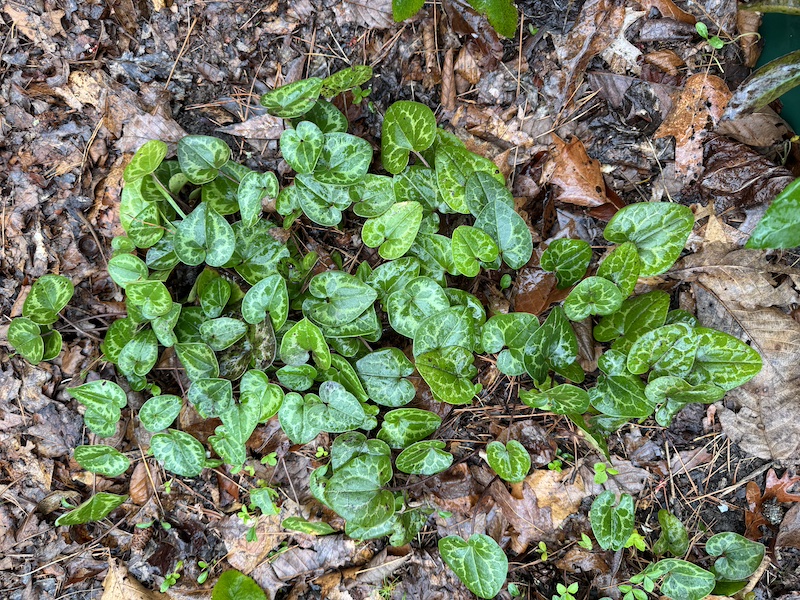
4. Wild ginger (Hexastylis arifolia), an evergreen, also grows at will in the wooded section of the garden. The healthiest patch grows in the wildflower bed I referred to above. This ginger’s common name, little brown jug, comes from the unusual shape of its under-leaf flowers. I’ll be sure to post a photo a little later in the spring.
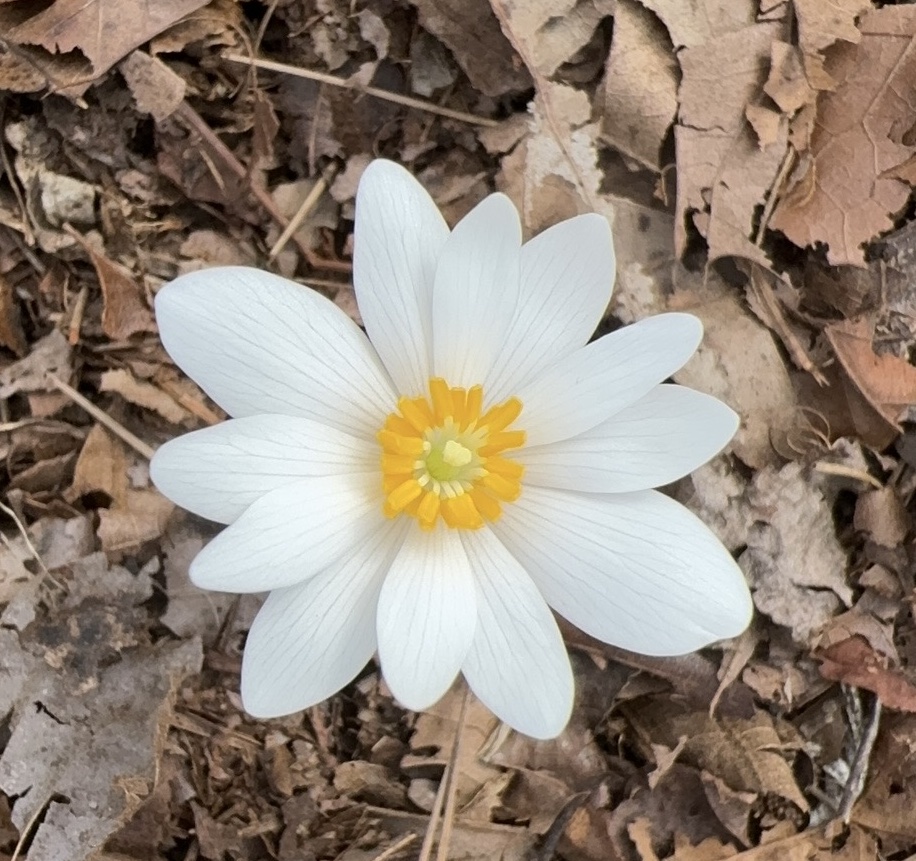
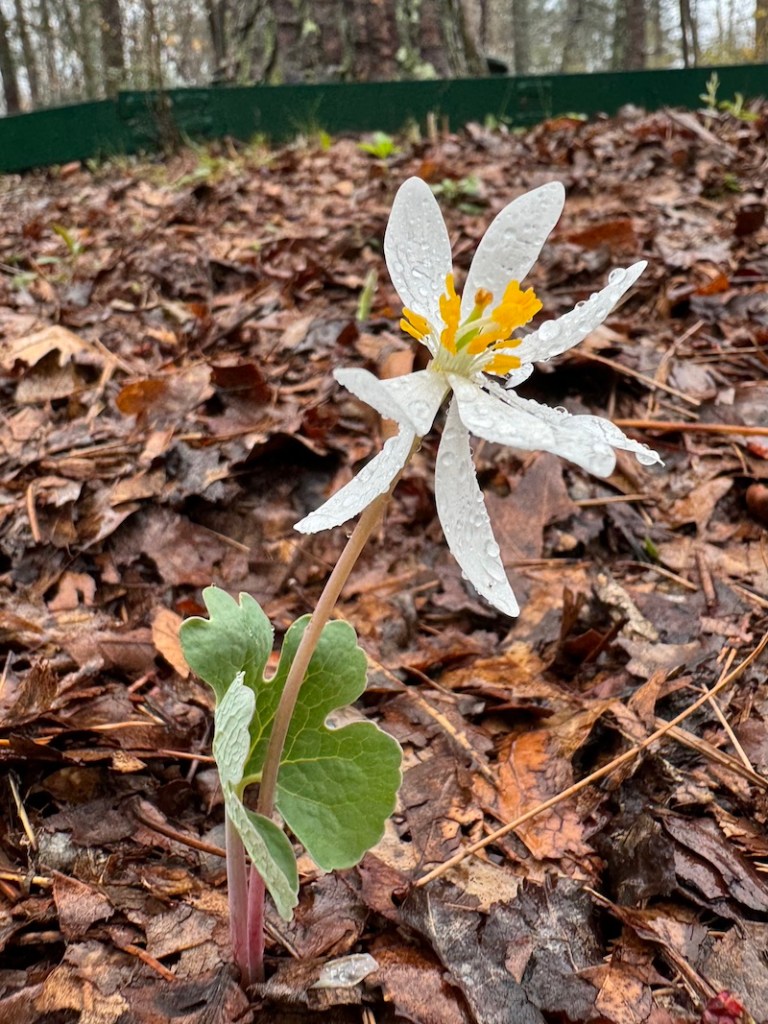
5. None of the wildflowers mentioned so far have been intentionally introduced by me, but the next, bloodroot (Sanguinaria canadensis ), I added to the wildflower bed two years ago. Its name comes from a red sap that runs from the plant, especially the root, when cut. Reportedly, Native Americans used the sap as a red dye. From one transplant, it has increased to at least four, so I hope that means it has settled in and taken hold. May it continue to colonize! The flower is lovely (when not beaten up by rain as in the second photo below).
6. Grape hyacinths (Muscari armeniacum) close out this week. There are not quite as many as usual, but where they appear is entirely of their own choosing. The clump pictured below showed up last year among stones that surround a fire pit, and I let it be. Looks surprisingly healthy this year.
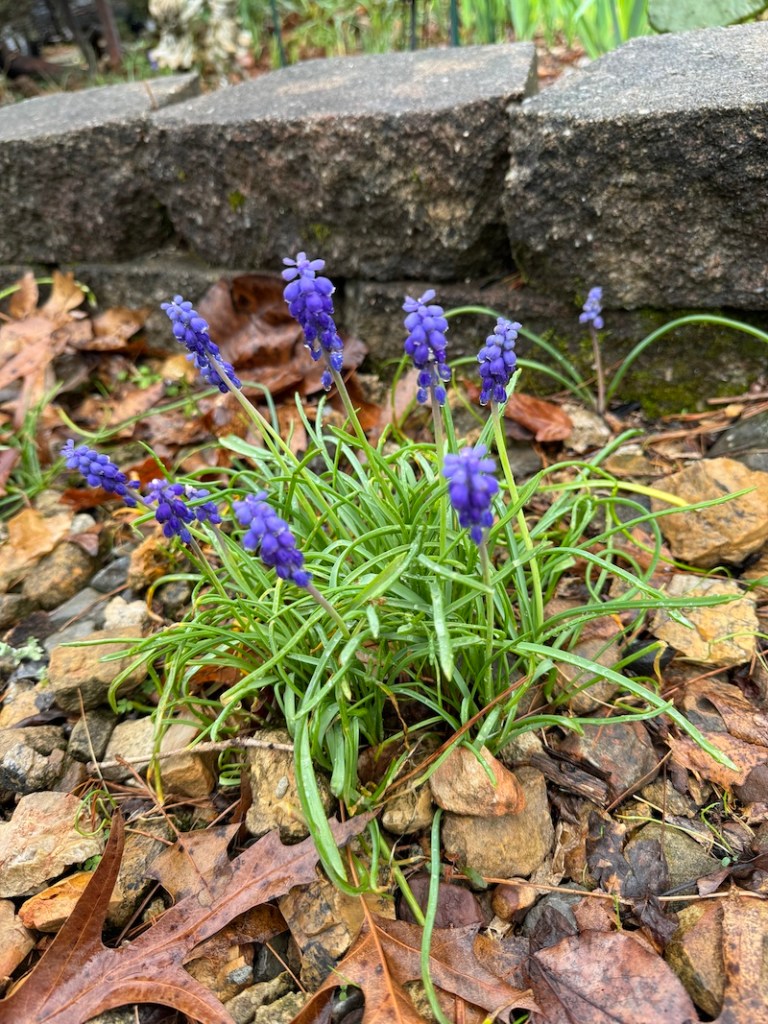
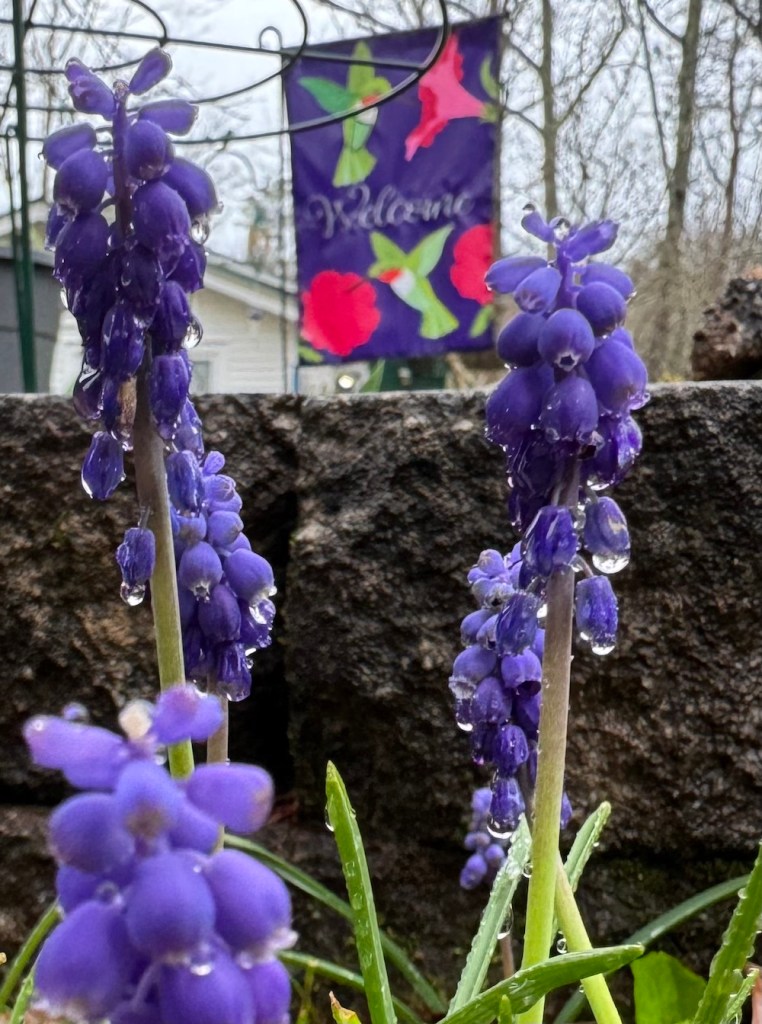
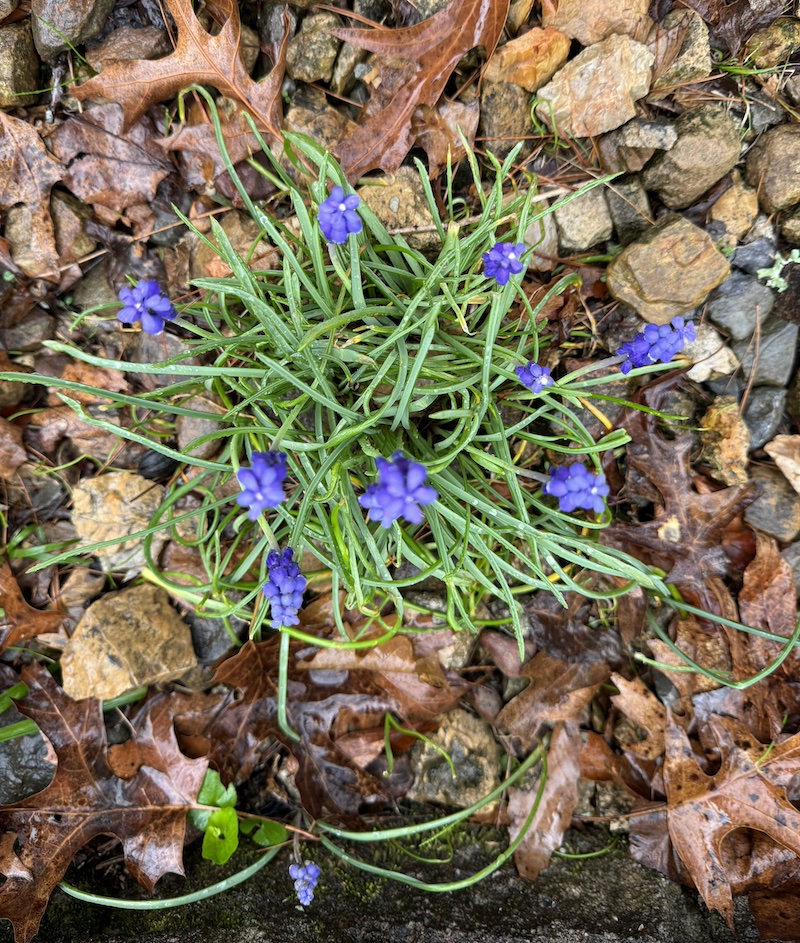
More wildflowers are on the way, including the flower of the little brown jug wild ginger. Maybe in next week’s post. Now though, readers are encouraged to continue garden visits by going to Jim Stephens’ Garden Ruminations, reading his always engaging posts, and following links in the comments section. Guidelines for joining in this sharing of plants, ideas, and other related things of gardening interest can be found there as well.
 After Eden
That was interesting regarding why Sanguinaria canadensis is called bloodroot. Love the rue anemones.
LikeLiked by 1 person
Lovely Anemones and I am a fun of Muscari.
LikeLiked by 1 person
A lovely celebration of wildings here, Susan.
LikeLiked by 1 person
Thank you, Gail. You must be seeing some beautiful mountain “things” blooming—or will be in the next month.
LikeLike
When I lived in Minnesota, I dug up a small clump of bloodroot to plant in a wild area of the backyard. It spread beautifully. It is a favorite of mine, but I am not sure if I have a place or it. I toy with under the spirea, but not sure if it would do well there.
LikeLiked by 1 person
Rue anemone, bloodroot and Carolina spring beauty are my favorite wildflowers this time of year.
LikeLike